

203
8.3.2 Ion-Exchange Method
It is a reversible procedure in which an ion or a radical present in a solution is
removed by simple exchange. The exchange is done with the help of similarly
charged particle that is attached to a stationary solid phase. These exchanged particles may occur naturally as zeolites and clays or synthetically produce organic resins or ion-exchange membrane made up of high molecular mass polyelectrolytes
that have the capability to exchange ions of similar charge. The number of mobile
sites is unique to each rinse that determines the capacity of ions that per unit of the
rinse can exchange. Synthetic rinse is preferred as they can be tailored according to
need and application. The ion-exchange rinse is categorized based on the charge
that it carries. Both ion-exchange and synthetic rinses are prepared from the same
-based polymer. The only difference is the ionizable group is attached to the network of hydrocarbon chains. It is basically the functional unit of the rinse that determines its behavior (Sud et al. 2008).
8.3.3 Electrodialysis
It is a membrane-based procedure where ions are moved due to the difference in
electro-potential gradient across a semipermeable membrane. Like ion exchangers,
these are also selective membrane for cations or anions, i.e., either cations or anions
will permeate through the membrane. For example, the polyelectrolytes on
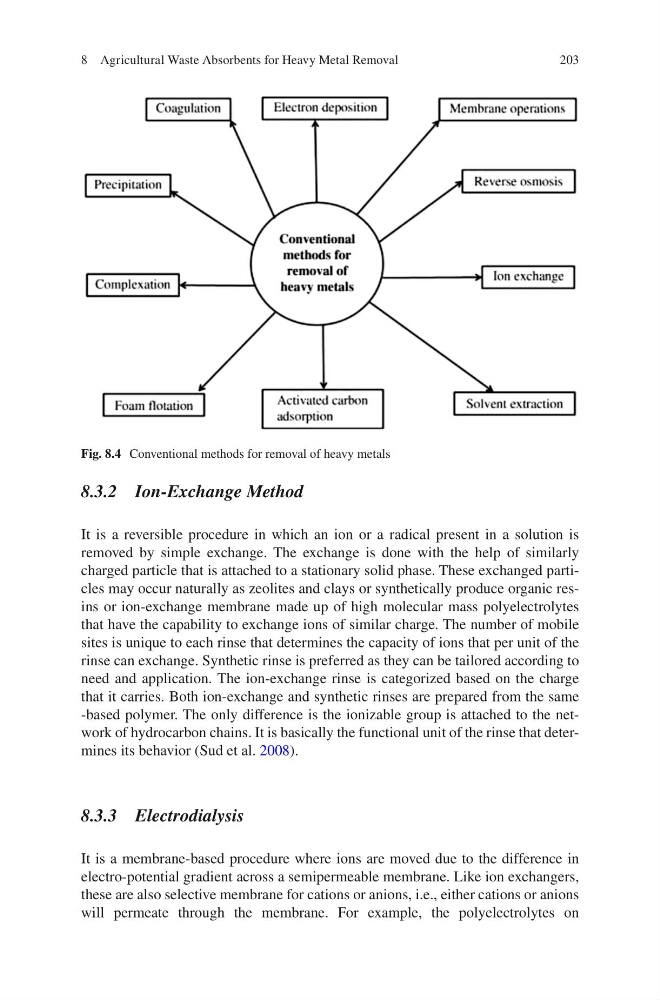
Fig. 8.4 Conventional methods for removal of heavy metals
8 Agricultural Waste Absorbents for Heavy Metal Removal
8.3.2 Ion-Exchange Method
It is a reversible procedure in which an ion or a radical present in a solution is
removed by simple exchange. The exchange is done with the help of similarly
charged particle that is attached to a stationary solid phase. These exchanged particles may occur naturally as zeolites and clays or synthetically produce organic resins or ion-exchange membrane made up of high molecular mass polyelectrolytes
that have the capability to exchange ions of similar charge. The number of mobile
sites is unique to each rinse that determines the capacity of ions that per unit of the
rinse can exchange. Synthetic rinse is preferred as they can be tailored according to
need and application. The ion-exchange rinse is categorized based on the charge
that it carries. Both ion-exchange and synthetic rinses are prepared from the same
-based polymer. The only difference is the ionizable group is attached to the network of hydrocarbon chains. It is basically the functional unit of the rinse that determines its behavior (Sud et al. 2008).
8.3.3 Electrodialysis
It is a membrane-based procedure where ions are moved due to the difference in
electro-potential gradient across a semipermeable membrane. Like ion exchangers,
these are also selective membrane for cations or anions, i.e., either cations or anions
will permeate through the membrane. For example, the polyelectrolytes on
Fig. 8.4 Conventional methods for removal of heavy metals
8 Agricultural Waste Absorbents for Heavy Metal Removal