

116
and amorphous phases. Cellulose gives strength to the plant and is commonly found
in the cell walls of stems, roots, leaves, fruits, seeds, etc. They have porous structure
and are insoluble in water. Commercial cellulose is synthesized mostly from wood
and cotton.
Different forms of cellulosic materials, such as crystallites, nanocrystals, whiskers, nano-fibers, nano-fibrils, etc., are applied nowadays in various fields. They are
synthesized after modifying chemically/physically or enzymatically to enhance the
adsorption capacities. Organic and inorganic acids, bases, oxidizing agents, and
other compounds are applied for modification of celluloses. Monomer grafting by
irradiation to attach a number of specific functional groups is also tried by a number
of researchers (Hokkanen et al. 2016). Cellulose beads are prepared by a series of
chemical treatments followed by freeze-drying of fruit wastes and other cellulosic
materials (Maaloul et al. 2019).
Microcrystalline cellulose is made from natural polymeric cellulose such as hard
wood, soft wood, and other agricultural residues. It is partially depolymerized using
Table 5.1 Cellulose content of various agriculture and forest materials
Material
Cellulose ranges (%)
Source
Vegetables
1–21
Holtzapple (2003)
Fruits
0.6–4.2
Seeds
2–12
Agricultural residues
31–59
Wood
41–53
Flax and hemp
70
Cotton
95
Dried coconut shell
33.61
Ahluwalia and Goyal (2007)
Bagasse
50
Khan et al. (2004)
Wood sawdust
45–50
Sciban et al. (2006b)
Jute
60–65
Hokkanen et al. (2016)
Leaf fiber
55–73
Bamboo
40–55
Barley
48
Oat
44–53
Wheat
49–54
Rice husk
32.24
Chuah et al. (2005)
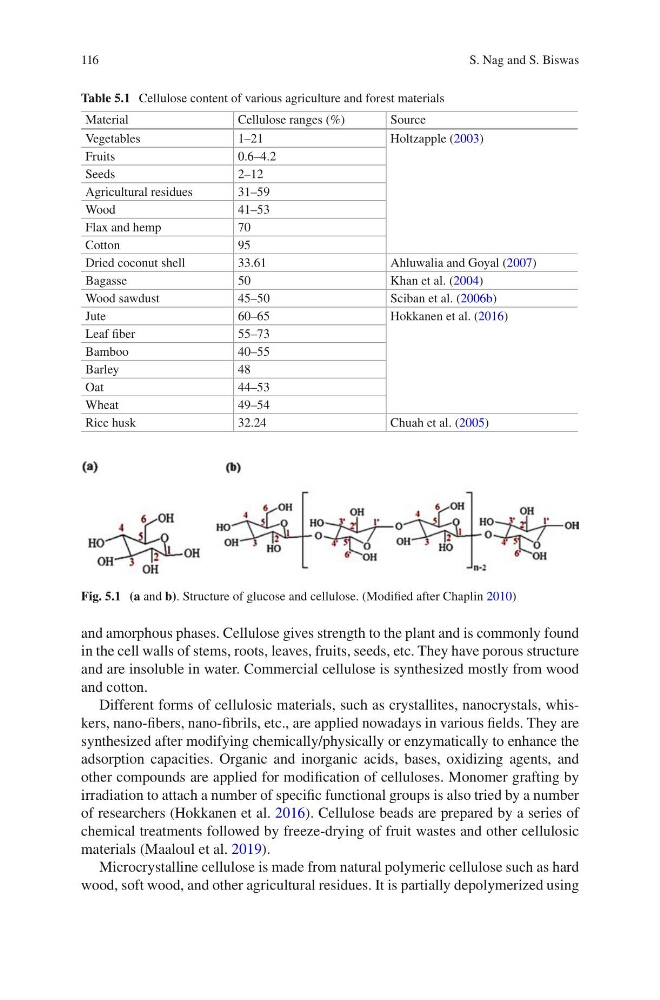
Fig. 5.1 (a and b). Structure of glucose and cellulose. (Modified after Chaplin 2010)
S. Nag and S. Biswas
and amorphous phases. Cellulose gives strength to the plant and is commonly found
in the cell walls of stems, roots, leaves, fruits, seeds, etc. They have porous structure
and are insoluble in water. Commercial cellulose is synthesized mostly from wood
and cotton.
Different forms of cellulosic materials, such as crystallites, nanocrystals, whiskers, nano-fibers, nano-fibrils, etc., are applied nowadays in various fields. They are
synthesized after modifying chemically/physically or enzymatically to enhance the
adsorption capacities. Organic and inorganic acids, bases, oxidizing agents, and
other compounds are applied for modification of celluloses. Monomer grafting by
irradiation to attach a number of specific functional groups is also tried by a number
of researchers (Hokkanen et al. 2016). Cellulose beads are prepared by a series of
chemical treatments followed by freeze-drying of fruit wastes and other cellulosic
materials (Maaloul et al. 2019).
Microcrystalline cellulose is made from natural polymeric cellulose such as hard
wood, soft wood, and other agricultural residues. It is partially depolymerized using
Table 5.1 Cellulose content of various agriculture and forest materials
Material
Cellulose ranges (%)
Source
Vegetables
1–21
Holtzapple (2003)
Fruits
0.6–4.2
Seeds
2–12
Agricultural residues
31–59
Wood
41–53
Flax and hemp
70
Cotton
95
Dried coconut shell
33.61
Ahluwalia and Goyal (2007)
Bagasse
50
Khan et al. (2004)
Wood sawdust
45–50
Sciban et al. (2006b)
Jute
60–65
Hokkanen et al. (2016)
Leaf fiber
55–73
Bamboo
40–55
Barley
48
Oat
44–53
Wheat
49–54
Rice husk
32.24
Chuah et al. (2005)
Fig. 5.1 (a and b). Structure of glucose and cellulose. (Modified after Chaplin 2010)
S. Nag and S. Biswas