

conditions. Likewise, Pandyaswargo and Premakumara (2014) conducted a cost–benefitanalysis of composting plants in Asia and concluded that medium-scale and lower large-scale
composting plants are financially feasible as
compared with smaller and larger capacity
plants. In contrast, Galgani et al. (2016) concluded that composting, anaerobic digestion and
biochar business models were found not to be
economically viable without external subsidies
and access to carbon markets would not change
the situation significantly under Ghana conditions. This indicates that the economic and
environmental sustainability of the nutrient
recovery and reuse models vary across countries
depending on a number of factors such as local
market conditions, processing methods, scale,
technologies and marketing strategies.
6 Conclusions
The potential economic, environmental and
social impacts of nutrient recovery and reuse
models that promote synergies in the waste
management and food sectors need to be assessed to ensure sustainable development. These
synergies with a nexus approach promote sustainable production and consumption patterns by
mitigating the prevailing waste management
problems while addressing soil nutrient depletion
and environmental pollution.
This study examined the economic and environmental viability of a decentralized compost
business model in Nairobi. The analysis was
conducted based on the valuation of environmental and financial benefits and costs associated
with the business model. The environmental
impacts associated with the business model were
estimated based on GHG emissions avoided from
open dumping of MSW and emissions from the
business model, which included emissions from
composting, transportation of inorganic fraction
of MSW to dumpsite and compost to end users.
The highest GHG impact under the decentralized
composting business model is from the process of
composting MSW. Other processes such as
transport of inorganic fraction to dumpsite and
compost to end users did not contribute significantly to the total environmental impacts of the
decentralized compost business. The GHG emissions from the business model were lower than
the emissions under the baseline scenario and
thus the business model resulted in net savings in
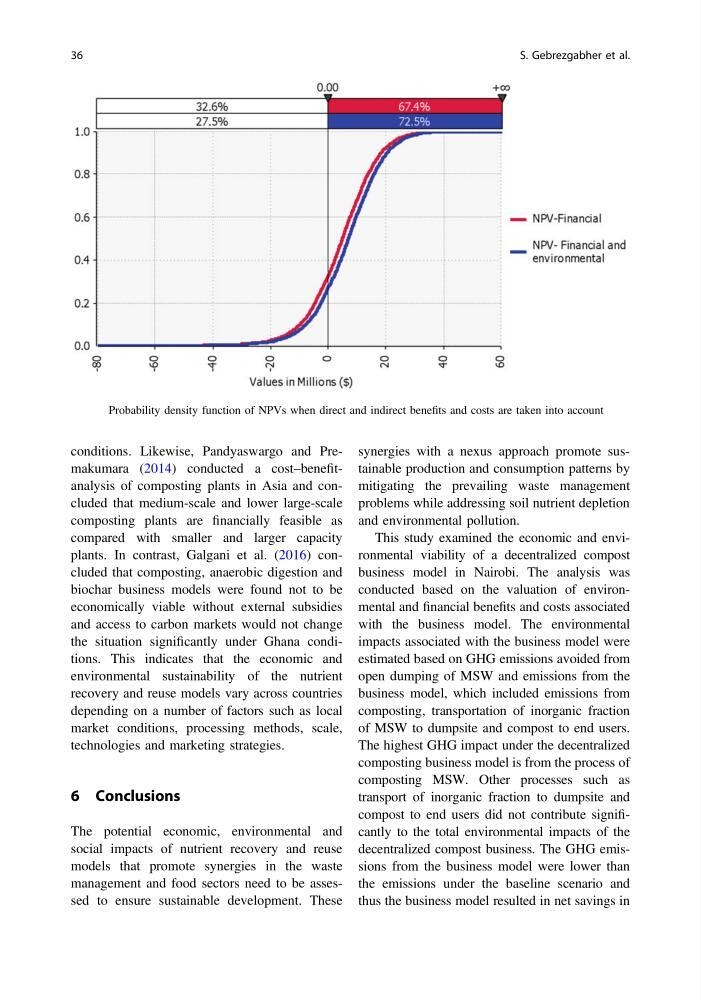
Fig. 6 Probability density function of NPVs when direct and indirect benefits and costs are taken into account
36
S. Gebrezgabher et al.
composting plants are financially feasible as
compared with smaller and larger capacity
plants. In contrast, Galgani et al. (2016) concluded that composting, anaerobic digestion and
biochar business models were found not to be
economically viable without external subsidies
and access to carbon markets would not change
the situation significantly under Ghana conditions. This indicates that the economic and
environmental sustainability of the nutrient
recovery and reuse models vary across countries
depending on a number of factors such as local
market conditions, processing methods, scale,
technologies and marketing strategies.
6 Conclusions
The potential economic, environmental and
social impacts of nutrient recovery and reuse
models that promote synergies in the waste
management and food sectors need to be assessed to ensure sustainable development. These
synergies with a nexus approach promote sustainable production and consumption patterns by
mitigating the prevailing waste management
problems while addressing soil nutrient depletion
and environmental pollution.
This study examined the economic and environmental viability of a decentralized compost
business model in Nairobi. The analysis was
conducted based on the valuation of environmental and financial benefits and costs associated
with the business model. The environmental
impacts associated with the business model were
estimated based on GHG emissions avoided from
open dumping of MSW and emissions from the
business model, which included emissions from
composting, transportation of inorganic fraction
of MSW to dumpsite and compost to end users.
The highest GHG impact under the decentralized
composting business model is from the process of
composting MSW. Other processes such as
transport of inorganic fraction to dumpsite and
compost to end users did not contribute significantly to the total environmental impacts of the
decentralized compost business. The GHG emissions from the business model were lower than
the emissions under the baseline scenario and
thus the business model resulted in net savings in
Fig. 6 Probability density function of NPVs when direct and indirect benefits and costs are taken into account
36
S. Gebrezgabher et al.