

(e.g., Integrated Water Management (IWRM) (Al
Radif 1999), Integrated Natural Resource Management (INRM) (Hagmann et al. 2002), WaterFood-Energy Nexus Approach (WEF) (Bazilian
et al. 2011), and a Nexus Approach to the sustainable management of water, soil, and waste
(Hettiarachchi and Ardakanian 2016; Hülsmann
and Ardakanian 2018).
1. Working structure: Recent studies emphasize the interrelatedness between the goals and
targets of the Agenda 2030 (Bringezu et al. 2016;
Mans et al. 2016; Tosun and Leininger 2017).
Therefore, Smajgl (2018) and Hoff (2018) note
the importance of an integrated (nexus) approach
that takes into account the positive and negative
interactions (synergies and conflicts) to achieve
the SDGs. The LAG 21 NRW project approach
envisages the formation of the following interdisciplinary working groups to develop and
implement IMSS in the context of the Agenda
2030: coordination, core group and steering
committee. The different groups are responsible
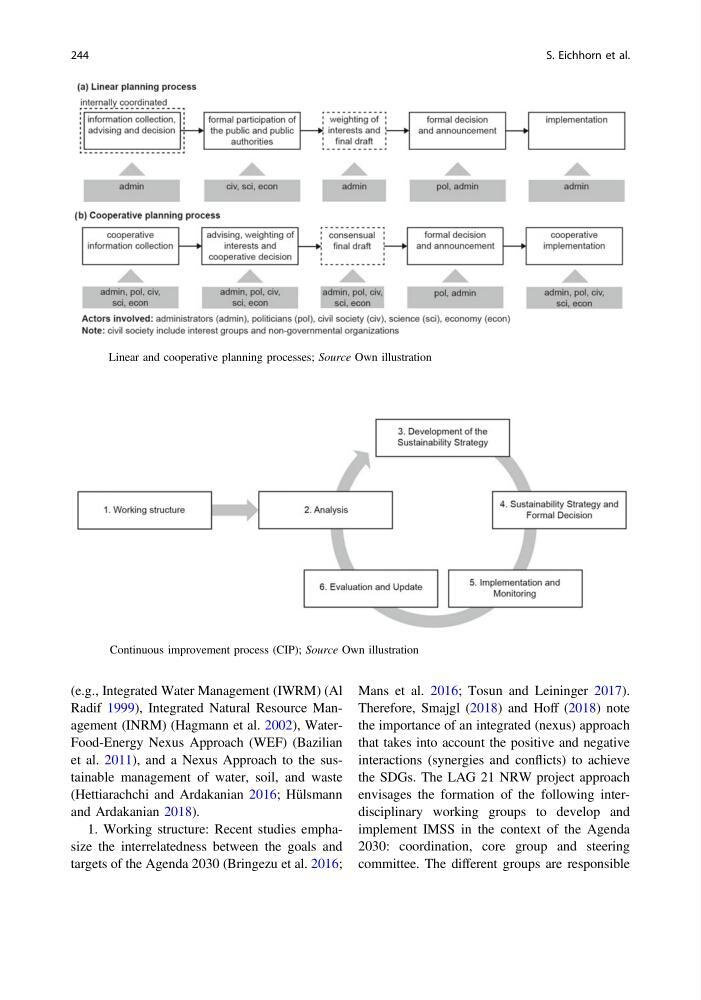
Fig. 1 Linear and cooperative planning processes; Source Own illustration
Fig. 2 Continuous improvement process (CIP); Source Own illustration
244
S. Eichhorn et al.
Radif 1999), Integrated Natural Resource Management (INRM) (Hagmann et al. 2002), WaterFood-Energy Nexus Approach (WEF) (Bazilian
et al. 2011), and a Nexus Approach to the sustainable management of water, soil, and waste
(Hettiarachchi and Ardakanian 2016; Hülsmann
and Ardakanian 2018).
1. Working structure: Recent studies emphasize the interrelatedness between the goals and
targets of the Agenda 2030 (Bringezu et al. 2016;
Mans et al. 2016; Tosun and Leininger 2017).
Therefore, Smajgl (2018) and Hoff (2018) note
the importance of an integrated (nexus) approach
that takes into account the positive and negative
interactions (synergies and conflicts) to achieve
the SDGs. The LAG 21 NRW project approach
envisages the formation of the following interdisciplinary working groups to develop and
implement IMSS in the context of the Agenda
2030: coordination, core group and steering
committee. The different groups are responsible
Fig. 1 Linear and cooperative planning processes; Source Own illustration
Fig. 2 Continuous improvement process (CIP); Source Own illustration
244
S. Eichhorn et al.