

putting their cities’ work into a broader (international) context, in order to get (easier) access
to funding and also more recognition at the
national and international level. For cities that
aim to position themselves as frontrunners in
resilience or climate adaptation, joining a related
network was often seen as a necessary and
strategic move. In this case, the network served
as a platform to showcase their progress or
success. For cities with a certain importance, for
instance, the (regional) capitals or the regions or
countries biggest city, a network membership
was also seen as a necessary formality: These
cities often felt ‘obliged’ to lead and ‘give a
good example’ to others, as the Program Leader
Sustainable City of Antwerp explained. Almost
all interview partners emphasised the positive
role of networks in creating a platform for
knowledge sharing among cities, and many
pointed out that learning was an important reason
to join them. Besides, getting (easier) access to
funding and the chance to easily get in touch
with colleagues from abroad, which allowed
regarding similar issues from a perspective different from the own national one, were identified
as further positive aspects of a membership by
some.
A positive outcome that has been stressed by a
number of interviewees was that the networks
connected municipal policymakers and thus
helped to create valuable personal contacts.
Being a member of a transnational network is a
formal activity, whereas the contacts that result
due to a city’s membership can also evolve into
more informal and personal partnerships. In this
regard, the major importance of mutual trust
among stakeholders and face-to-face interactions
were identified as the determining factor for the
establishment of such partnerships on a personal
level.
According to many interviewees, an important
asset of being part of a transnational network is
that it helped a lot to raise the profile of their
work and the topic of climate change adaptation
or resilience within their own city council. This
was even more impactful, when decision makers
joined network meetings, like in the case of Vejle
where members of the city council, jointly with
the CRO, attended a 100RC event in New
Orleans. The Climate Change Project Manager of
Cascais (Greater Lisbon) emphasised that putting
his own work in a broader context through the
participation in transnational networks helped to
increase the understanding and recognition of the
issue of climate change in other relevant
municipalities departments. Through this,
departments that have access to some funding,
for instance the civil protection for flooding
hazard measures, can be convinced to include
climate change response into the justification of
their work proposals.
What kind of knowledge is transferred and what
knowledge are cities interested in?
The kind of knowledge that is transferred
between network members included information on
projects or initiatives, advice and updates on how to
use shared methodologies or technologies or to
receive technical assistance. It could also be more
implicit and informal, but hence not less important
knowledge, such as advice and on how to prepare
applications for a network or a funding program.
Here, particularly members from the same country,
who also understood the national and cultural context, were pointed out as valuable contacts.
Among the interviewees, sharing best practices and expertise enjoyed popularity since it
allowed a more efficient use of resources. However, it was differentiated between studying best
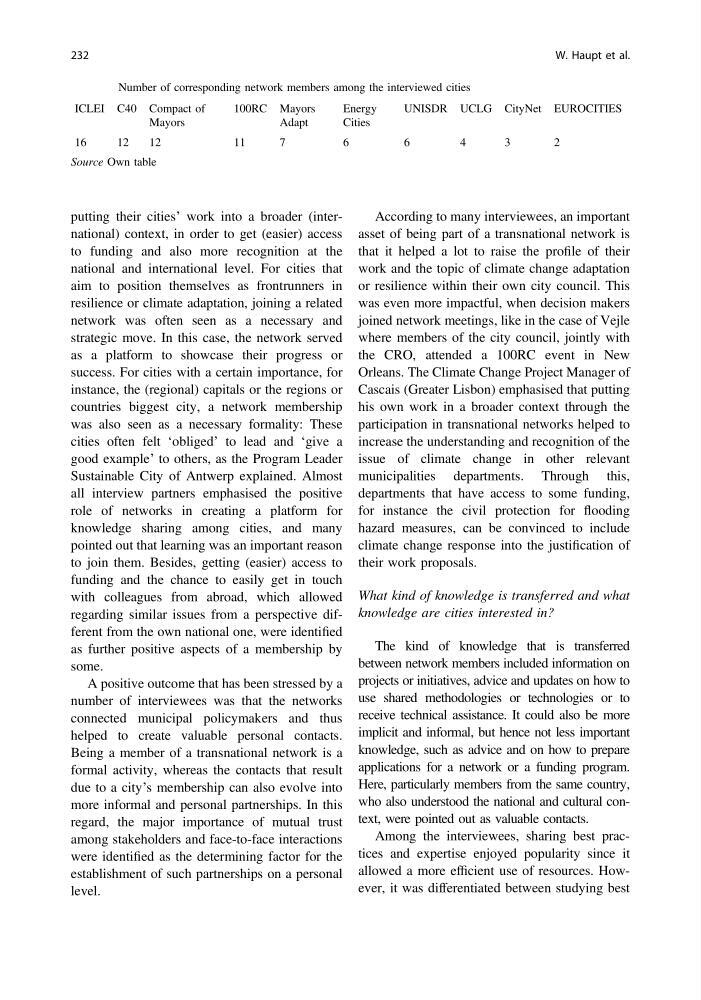
Table 3 Number of corresponding network members among the interviewed cities
ICLEI C40 Compact of
Mayors
100RC Mayors
Adapt
Energy
Cities
UNISDR UCLG CityNet EUROCITIES
16
12
12
11
7
6
6
4
3
2
Source Own table
232
W. Haupt et al.
to funding and also more recognition at the
national and international level. For cities that
aim to position themselves as frontrunners in
resilience or climate adaptation, joining a related
network was often seen as a necessary and
strategic move. In this case, the network served
as a platform to showcase their progress or
success. For cities with a certain importance, for
instance, the (regional) capitals or the regions or
countries biggest city, a network membership
was also seen as a necessary formality: These
cities often felt ‘obliged’ to lead and ‘give a
good example’ to others, as the Program Leader
Sustainable City of Antwerp explained. Almost
all interview partners emphasised the positive
role of networks in creating a platform for
knowledge sharing among cities, and many
pointed out that learning was an important reason
to join them. Besides, getting (easier) access to
funding and the chance to easily get in touch
with colleagues from abroad, which allowed
regarding similar issues from a perspective different from the own national one, were identified
as further positive aspects of a membership by
some.
A positive outcome that has been stressed by a
number of interviewees was that the networks
connected municipal policymakers and thus
helped to create valuable personal contacts.
Being a member of a transnational network is a
formal activity, whereas the contacts that result
due to a city’s membership can also evolve into
more informal and personal partnerships. In this
regard, the major importance of mutual trust
among stakeholders and face-to-face interactions
were identified as the determining factor for the
establishment of such partnerships on a personal
level.
According to many interviewees, an important
asset of being part of a transnational network is
that it helped a lot to raise the profile of their
work and the topic of climate change adaptation
or resilience within their own city council. This
was even more impactful, when decision makers
joined network meetings, like in the case of Vejle
where members of the city council, jointly with
the CRO, attended a 100RC event in New
Orleans. The Climate Change Project Manager of
Cascais (Greater Lisbon) emphasised that putting
his own work in a broader context through the
participation in transnational networks helped to
increase the understanding and recognition of the
issue of climate change in other relevant
municipalities departments. Through this,
departments that have access to some funding,
for instance the civil protection for flooding
hazard measures, can be convinced to include
climate change response into the justification of
their work proposals.
What kind of knowledge is transferred and what
knowledge are cities interested in?
The kind of knowledge that is transferred
between network members included information on
projects or initiatives, advice and updates on how to
use shared methodologies or technologies or to
receive technical assistance. It could also be more
implicit and informal, but hence not less important
knowledge, such as advice and on how to prepare
applications for a network or a funding program.
Here, particularly members from the same country,
who also understood the national and cultural context, were pointed out as valuable contacts.
Among the interviewees, sharing best practices and expertise enjoyed popularity since it
allowed a more efficient use of resources. However, it was differentiated between studying best
Table 3 Number of corresponding network members among the interviewed cities
ICLEI C40 Compact of
Mayors
100RC Mayors
Adapt
Energy
Cities
UNISDR UCLG CityNet EUROCITIES
16
12
12
11
7
6
6
4
3
2
Source Own table
232
W. Haupt et al.