

watersheds have substantially contributed to
economic development and food security (Fig. 2)
compared with before the implementation of the
interventions. According to the local farmers’
view and aerial photos, before the introduction of
interventions, there was no water in the gully and
there was barely any fruit and vegetable production in the village (Alemayehu et al. 2009;
Mekonen and Tesfahunegn 2011).
The positive impacts of watershed management interventions are interlinked and have
effects on the nexus (Fig. 3). For instance, SWC
measures (e.g., terraces, trenches, and check
dams) reduce soil and nutrient losses and
improve water retention, soil carbon sequestration, and agricultural production. Such measures
also reduce flood risks and sediment load and
thus improve the water availability for irrigation
and power generation downstream and thereby
agricultural production and overall economic
development in both the upstream and downstream parts of a watershed (Personal observation; Alemu and Kidane 2014).
3.2 Opportunities for the Successful
Adoption of Watershed
Interventions
Previous reports supplemented by information
acquired from farmer and DA discussions at the
selected watersheds (Abraha-Atsbaha, Gerebshelela, Mai-Negus, and Medego) have indicated
that there are many opportunities for the successful implementation of interventions at
watershed level in the Tigray region. The commonly reported opportunities for successful
adoption of watershed practices by the farmers
can be grouped into: (i) socioeconomic/institutional-enabling environment, (ii) awareness on
diversification and intensification, (iii) improved
knowledge about the complementarity of mixed
crop-livestock systems, and (iv) lessons and
experiences acquired from interventions that
improved the natural resources of the degraded
landscape and thereby enhanced crop production
(Gebremichael et al. 2005; Mekonen and Tesfahunegn 2011; Gebregziabher et al. 2016).
3.2.1 Socioeconomic/Institutional
Enabling Environment
Ethiopia has pursued the ADLI policy and
comprehensive natural resources management
strategy for more than two decades. As a result,
this has presented an opportunity for farmers and
experts to have access to extension services such
as training (short and long term), farmer’s days,
field visits, experience sharing, and application
of participatory approaches (Fig. 4a). To support
the dissemination and adoption of watershed
management interventions to the community in
the Tigray region, the number of public universities has expanded from one in the mid-1990s
by more than four-fold in 2016, and research
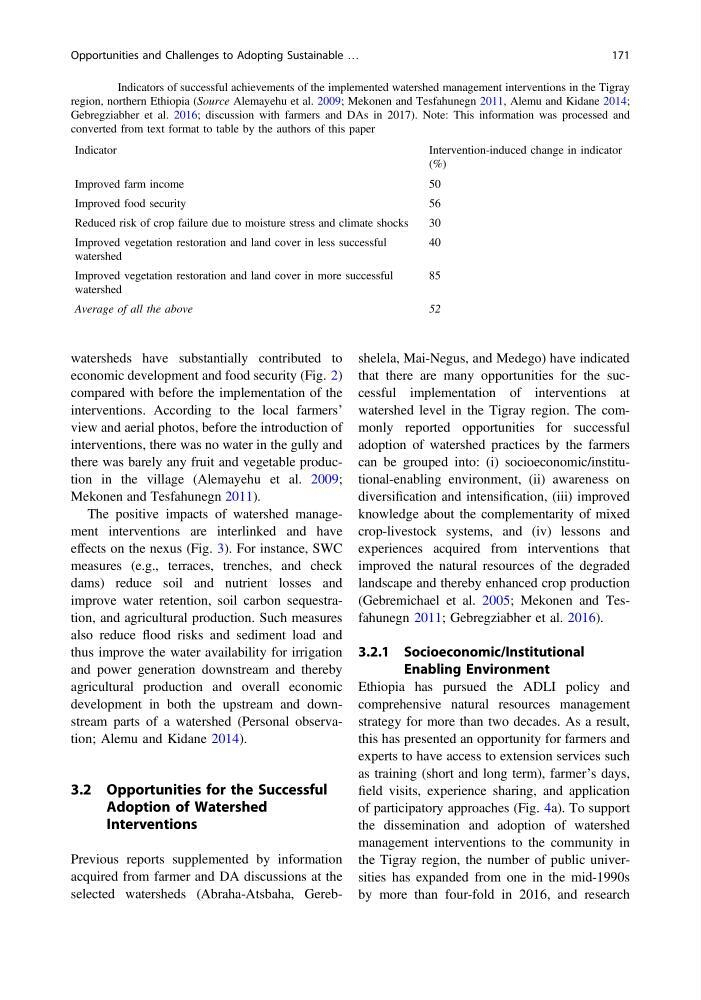
Table 2 Indicators of successful achievements of the implemented watershed management interventions in the Tigray
region, northern Ethiopia (Source Alemayehu et al. 2009; Mekonen and Tesfahunegn 2011, Alemu and Kidane 2014;
Gebregziabher et al. 2016; discussion with farmers and DAs in 2017). Note: This information was processed and
converted from text format to table by the authors of this paper
Indicator
Intervention-induced change in indicator
(%)
Improved farm income
50
Improved food security
56
Reduced risk of crop failure due to moisture stress and climate shocks
30
Improved vegetation restoration and land cover in less successful
watershed
40
Improved vegetation restoration and land cover in more successful
watershed
85
Average of all the above
52
Opportunities and Challenges to Adopting Sustainable …
171
economic development and food security (Fig. 2)
compared with before the implementation of the
interventions. According to the local farmers’
view and aerial photos, before the introduction of
interventions, there was no water in the gully and
there was barely any fruit and vegetable production in the village (Alemayehu et al. 2009;
Mekonen and Tesfahunegn 2011).
The positive impacts of watershed management interventions are interlinked and have
effects on the nexus (Fig. 3). For instance, SWC
measures (e.g., terraces, trenches, and check
dams) reduce soil and nutrient losses and
improve water retention, soil carbon sequestration, and agricultural production. Such measures
also reduce flood risks and sediment load and
thus improve the water availability for irrigation
and power generation downstream and thereby
agricultural production and overall economic
development in both the upstream and downstream parts of a watershed (Personal observation; Alemu and Kidane 2014).
3.2 Opportunities for the Successful
Adoption of Watershed
Interventions
Previous reports supplemented by information
acquired from farmer and DA discussions at the
selected watersheds (Abraha-Atsbaha, Gerebshelela, Mai-Negus, and Medego) have indicated
that there are many opportunities for the successful implementation of interventions at
watershed level in the Tigray region. The commonly reported opportunities for successful
adoption of watershed practices by the farmers
can be grouped into: (i) socioeconomic/institutional-enabling environment, (ii) awareness on
diversification and intensification, (iii) improved
knowledge about the complementarity of mixed
crop-livestock systems, and (iv) lessons and
experiences acquired from interventions that
improved the natural resources of the degraded
landscape and thereby enhanced crop production
(Gebremichael et al. 2005; Mekonen and Tesfahunegn 2011; Gebregziabher et al. 2016).
3.2.1 Socioeconomic/Institutional
Enabling Environment
Ethiopia has pursued the ADLI policy and
comprehensive natural resources management
strategy for more than two decades. As a result,
this has presented an opportunity for farmers and
experts to have access to extension services such
as training (short and long term), farmer’s days,
field visits, experience sharing, and application
of participatory approaches (Fig. 4a). To support
the dissemination and adoption of watershed
management interventions to the community in
the Tigray region, the number of public universities has expanded from one in the mid-1990s
by more than four-fold in 2016, and research
Table 2 Indicators of successful achievements of the implemented watershed management interventions in the Tigray
region, northern Ethiopia (Source Alemayehu et al. 2009; Mekonen and Tesfahunegn 2011, Alemu and Kidane 2014;
Gebregziabher et al. 2016; discussion with farmers and DAs in 2017). Note: This information was processed and
converted from text format to table by the authors of this paper
Indicator
Intervention-induced change in indicator
(%)
Improved farm income
50
Improved food security
56
Reduced risk of crop failure due to moisture stress and climate shocks
30
Improved vegetation restoration and land cover in less successful
watershed
40
Improved vegetation restoration and land cover in more successful
watershed
85
Average of all the above
52
Opportunities and Challenges to Adopting Sustainable …
171