

227
After ingestion via drinking water, the absorption of uranium occurs in the small
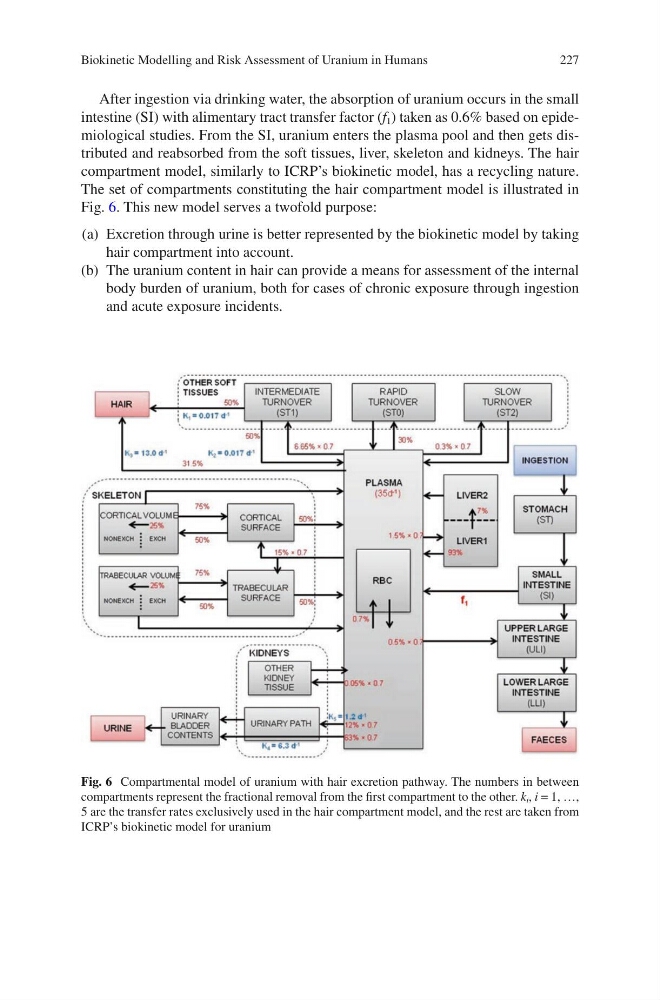
intestine (SI) with alimentary tract transfer factor (f 1 ) taken as 0.6% based on epidemiological studies. From the SI, uranium enters the plasma pool and then gets distributed and reabsorbed from the soft tissues, liver, skeleton and kidneys. The hair
compartment model, similarly to ICRP’s biokinetic model, has a recycling nature.
The set of compartments constituting the hair compartment model is illustrated in
Fig. 6. This new model serves a twofold purpose:
(a) Excretion through urine is better represented by the biokinetic model by taking
hair compartment into account.
(b) The uranium content in hair can provide a means for assessment of the internal
body burden of uranium, both for cases of chronic exposure through ingestion
and acute exposure incidents.
Fig. 6 Compartmental model of uranium with hair excretion pathway. The numbers in between
compartments represent the fractional removal from the first compartment to the other. k i , i = 1, …,
5 are the transfer rates exclusively used in the hair compartment model, and the rest are taken from
ICRP’s biokinetic model for uranium
Biokinetic Modelling and Risk Assessment of Uranium in Humans
After ingestion via drinking water, the absorption of uranium occurs in the small
intestine (SI) with alimentary tract transfer factor (f 1 ) taken as 0.6% based on epidemiological studies. From the SI, uranium enters the plasma pool and then gets distributed and reabsorbed from the soft tissues, liver, skeleton and kidneys. The hair
compartment model, similarly to ICRP’s biokinetic model, has a recycling nature.
The set of compartments constituting the hair compartment model is illustrated in
Fig. 6. This new model serves a twofold purpose:
(a) Excretion through urine is better represented by the biokinetic model by taking
hair compartment into account.
(b) The uranium content in hair can provide a means for assessment of the internal
body burden of uranium, both for cases of chronic exposure through ingestion
and acute exposure incidents.
Fig. 6 Compartmental model of uranium with hair excretion pathway. The numbers in between
compartments represent the fractional removal from the first compartment to the other. k i , i = 1, …,
5 are the transfer rates exclusively used in the hair compartment model, and the rest are taken from
ICRP’s biokinetic model for uranium
Biokinetic Modelling and Risk Assessment of Uranium in Humans