

205
3.2 Chemical Toxicity to Humans
For all but the most insoluble forms of uranium, damage to the kidneys is the adverse
chemical effect of greatest concern (Leggett 1989; ATSDR 2013). Two alternative
approaches to assessing the chemical toxicity of intakes of uranium have been
adopted. In ATSDR (2013), no-observed-adverse-effect levels (NOAELs) or lowestobserved- adverse-effect levels (LOAELs) are established for inhalation and ingestion exposures. Uncertainty factors (see Table 7) are then applied to set minimal risk
levels (MRLs) for human exposure. Table 7 summarises the MRLs recommended
by ATSDR (2013). This topic is discussed further in Wilson and Thorne (2015).
In Table 7, the benchmark dose level (BMDL) is defined by ATSDR (2013) to be
a concentration or intake rate that produces a predetermined change in the response
rate of an adverse effect in an organism compared with background. Thus, a BMDL 10
represents a 10% change in response rate. Acute, intermediate and chronic exposure
durations are 14 days or less, 14–365 days and more than 365 days, respectively.
Note that MRL values for ingestion are expressed per unit of body mass. Thus, they
imply different limits on total intake rates for infants, children and adults.
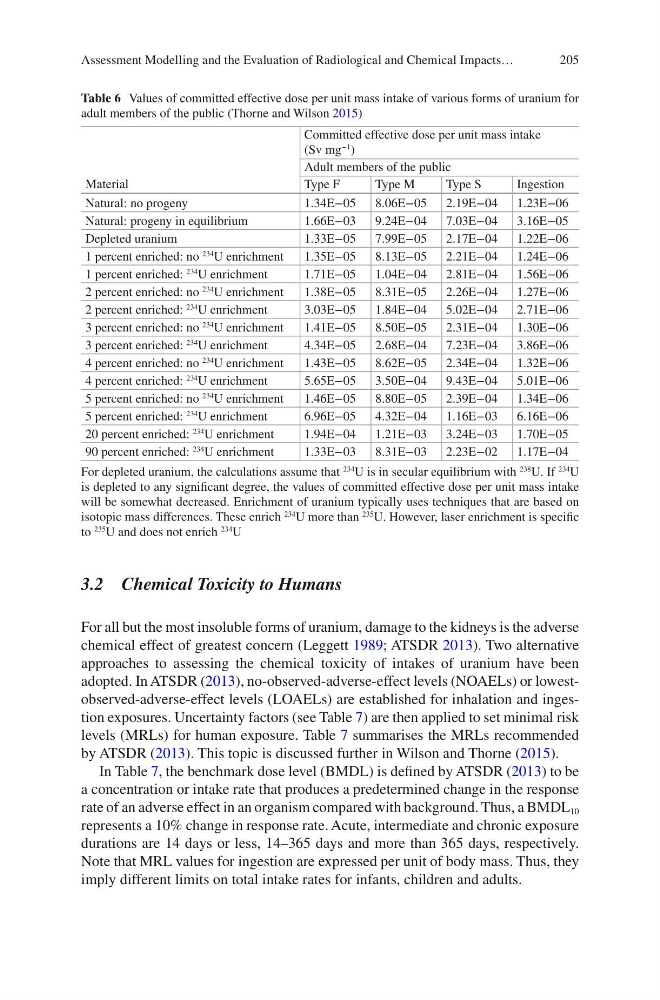
Table 6 Values of committed effective dose per unit mass intake of various forms of uranium for
adult members of the public (Thorne and Wilson 2015)
Material
Committed effective dose per unit mass intake
(Sv mg
−1 )
Adult members of the public
Type F
Type M
Type S
Ingestion
Natural: no progeny
1.34E−05
8.06E−05 2.19E−04 1.23E−06
Natural: progeny in equilibrium
1.66E−03
9.24E−04 7.03E−04 3.16E−05
Depleted uranium
1.33E−05
7.99E−05 2.17E−04 1.22E−06
1 percent enriched: no
234
U enrichment
1.35E−05
8.13E−05 2.21E−04 1.24E−06
1 percent enriched:
234 U enrichment
1.71E−05
1.04E−04 2.81E−04 1.56E−06
2 percent enriched: no
234 U enrichment
1.38E−05
8.31E−05 2.26E−04 1.27E−06
2 percent enriched:
234
U enrichment
3.03E−05
1.84E−04 5.02E−04 2.71E−06
3 percent enriched: no
234
U enrichment
1.41E−05
8.50E−05 2.31E−04 1.30E−06
3 percent enriched:
234 U enrichment
4.34E−05
2.68E−04 7.23E−04 3.86E−06
4 percent enriched: no
234
U enrichment
1.43E−05
8.62E−05 2.34E−04 1.32E−06
4 percent enriched:
234
U enrichment
5.65E−05
3.50E−04 9.43E−04 5.01E−06
5 percent enriched: no
234 U enrichment
1.46E−05
8.80E−05 2.39E−04 1.34E−06
5 percent enriched:
234 U enrichment
6.96E−05
4.32E−04 1.16E−03 6.16E−06
20 percent enriched:
234
U enrichment
1.94E−04
1.21E−03 3.24E−03 1.70E−05
90 percent enriched:
234
U enrichment
1.33E−03
8.31E−03 2.23E−02 1.17E−04
For depleted uranium, the calculations assume that
234
U is in secular equilibrium with
238 U. If
234
U
is depleted to any significant degree, the values of committed effective dose per unit mass intake
will be somewhat decreased. Enrichment of uranium typically uses techniques that are based on
isotopic mass differences. These enrich
234 U more than
235 U. However, laser enrichment is specific
to
235 U and does not enrich
234
U
Assessment Modelling and the Evaluation of Radiological and Chemical Impacts…
3.2 Chemical Toxicity to Humans
For all but the most insoluble forms of uranium, damage to the kidneys is the adverse
chemical effect of greatest concern (Leggett 1989; ATSDR 2013). Two alternative
approaches to assessing the chemical toxicity of intakes of uranium have been
adopted. In ATSDR (2013), no-observed-adverse-effect levels (NOAELs) or lowestobserved- adverse-effect levels (LOAELs) are established for inhalation and ingestion exposures. Uncertainty factors (see Table 7) are then applied to set minimal risk
levels (MRLs) for human exposure. Table 7 summarises the MRLs recommended
by ATSDR (2013). This topic is discussed further in Wilson and Thorne (2015).
In Table 7, the benchmark dose level (BMDL) is defined by ATSDR (2013) to be
a concentration or intake rate that produces a predetermined change in the response
rate of an adverse effect in an organism compared with background. Thus, a BMDL 10
represents a 10% change in response rate. Acute, intermediate and chronic exposure
durations are 14 days or less, 14–365 days and more than 365 days, respectively.
Note that MRL values for ingestion are expressed per unit of body mass. Thus, they
imply different limits on total intake rates for infants, children and adults.
Table 6 Values of committed effective dose per unit mass intake of various forms of uranium for
adult members of the public (Thorne and Wilson 2015)
Material
Committed effective dose per unit mass intake
(Sv mg
−1 )
Adult members of the public
Type F
Type M
Type S
Ingestion
Natural: no progeny
1.34E−05
8.06E−05 2.19E−04 1.23E−06
Natural: progeny in equilibrium
1.66E−03
9.24E−04 7.03E−04 3.16E−05
Depleted uranium
1.33E−05
7.99E−05 2.17E−04 1.22E−06
1 percent enriched: no
234
U enrichment
1.35E−05
8.13E−05 2.21E−04 1.24E−06
1 percent enriched:
234 U enrichment
1.71E−05
1.04E−04 2.81E−04 1.56E−06
2 percent enriched: no
234 U enrichment
1.38E−05
8.31E−05 2.26E−04 1.27E−06
2 percent enriched:
234
U enrichment
3.03E−05
1.84E−04 5.02E−04 2.71E−06
3 percent enriched: no
234
U enrichment
1.41E−05
8.50E−05 2.31E−04 1.30E−06
3 percent enriched:
234 U enrichment
4.34E−05
2.68E−04 7.23E−04 3.86E−06
4 percent enriched: no
234
U enrichment
1.43E−05
8.62E−05 2.34E−04 1.32E−06
4 percent enriched:
234
U enrichment
5.65E−05
3.50E−04 9.43E−04 5.01E−06
5 percent enriched: no
234 U enrichment
1.46E−05
8.80E−05 2.39E−04 1.34E−06
5 percent enriched:
234 U enrichment
6.96E−05
4.32E−04 1.16E−03 6.16E−06
20 percent enriched:
234
U enrichment
1.94E−04
1.21E−03 3.24E−03 1.70E−05
90 percent enriched:
234
U enrichment
1.33E−03
8.31E−03 2.23E−02 1.17E−04
For depleted uranium, the calculations assume that
234
U is in secular equilibrium with
238 U. If
234
U
is depleted to any significant degree, the values of committed effective dose per unit mass intake
will be somewhat decreased. Enrichment of uranium typically uses techniques that are based on
isotopic mass differences. These enrich
234 U more than
235 U. However, laser enrichment is specific
to
235 U and does not enrich
234
U
Assessment Modelling and the Evaluation of Radiological and Chemical Impacts…