

186
significantly by UO 2
2+
, (UO 2 ) 3 (OH) 5
+
, UO 2 (OH) 3
−
, and UO 2 (CO 3 ) 3
4−
. The growth
inhibition effect of the species of uranium in solution was in the order UO 2
2+
> UO
2 (OH) 3
−
> (UO 2 ) 3 (OH) 5
+
> UO 2 (CO 3 ) 3
4−
. The maximum growth inhibition rate on
Azolla-Anabaena reached 56.87%, when the main species of uranium in the solution was UO 2
2+
. The minimum growth inhibition rate on Azolla-Anabaena reached
11.96%, when the main species of uranium in the solution was (UO 2 ) 3 (OH) 5
+
.
However, the growth of the Azolla-Anabaena was promoted significantly by
UO 2 PO 4
−
, and the growth promotion rate reached 28.71%. This is because the addition of phosphorus in solution can significantly promote the growth of AzollaAnabaena (Chen 2003). To summarize, the growth inhibition rates on
Azolla-Anabaena were significantly different under the stresses of five species of
uranium in solution; UO 2
2+
, (UO 2 ) 3 (OH) 5
+
, UO 2 (OH) 3
−
, and UO 2 (CO 3 ) 3
4−
could
inhibit the growth of Azolla-Anabaena, while UO 2 PO 4
−
could promote the growth
of Azolla-Anabaena.
3.2 Variation of Uranium Concentrations in Different
Hydroponic Solutions
The concentrations of uranium in five solutions of uranium species with the uranium concentration of 2 mg L
−1
for the cultivation of Azolla-Anabaena were analyzed (Fig. 4). As shown in Fig. 4, the concentration of uranium in hydroponic
solution decreased by about 3/4 in the first 3 days, and the decline of uranium concentration became slow when the main species of uranium in the solutions were
UO 2
2+
and (UO 2 ) 3 (OH) 5
+
. The minimum concentration of uranium in hydroponic
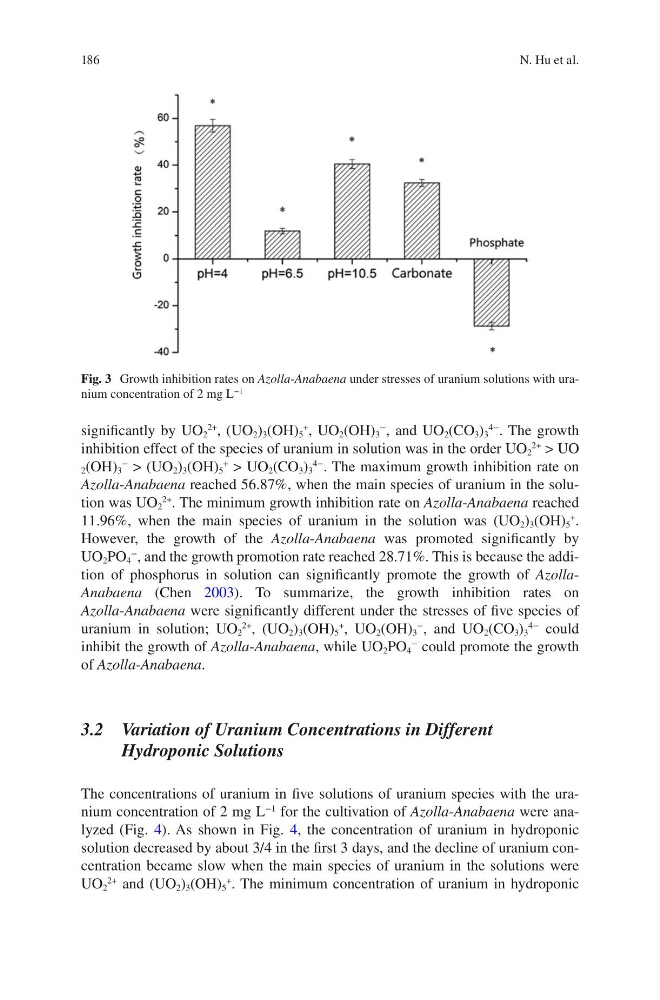
Fig. 3 Growth inhibition rates on Azolla-Anabaena under stresses of uranium solutions with uranium concentration of 2 mg L
−1
N. Hu et al.
significantly by UO 2
2+
, (UO 2 ) 3 (OH) 5
+
, UO 2 (OH) 3
−
, and UO 2 (CO 3 ) 3
4−
. The growth
inhibition effect of the species of uranium in solution was in the order UO 2
2+
> UO
2 (OH) 3
−
> (UO 2 ) 3 (OH) 5
+
> UO 2 (CO 3 ) 3
4−
. The maximum growth inhibition rate on
Azolla-Anabaena reached 56.87%, when the main species of uranium in the solution was UO 2
2+
. The minimum growth inhibition rate on Azolla-Anabaena reached
11.96%, when the main species of uranium in the solution was (UO 2 ) 3 (OH) 5
+
.
However, the growth of the Azolla-Anabaena was promoted significantly by
UO 2 PO 4
−
, and the growth promotion rate reached 28.71%. This is because the addition of phosphorus in solution can significantly promote the growth of AzollaAnabaena (Chen 2003). To summarize, the growth inhibition rates on
Azolla-Anabaena were significantly different under the stresses of five species of
uranium in solution; UO 2
2+
, (UO 2 ) 3 (OH) 5
+
, UO 2 (OH) 3
−
, and UO 2 (CO 3 ) 3
4−
could
inhibit the growth of Azolla-Anabaena, while UO 2 PO 4
−
could promote the growth
of Azolla-Anabaena.
3.2 Variation of Uranium Concentrations in Different
Hydroponic Solutions
The concentrations of uranium in five solutions of uranium species with the uranium concentration of 2 mg L
−1
for the cultivation of Azolla-Anabaena were analyzed (Fig. 4). As shown in Fig. 4, the concentration of uranium in hydroponic
solution decreased by about 3/4 in the first 3 days, and the decline of uranium concentration became slow when the main species of uranium in the solutions were
UO 2
2+
and (UO 2 ) 3 (OH) 5
+
. The minimum concentration of uranium in hydroponic
Fig. 3 Growth inhibition rates on Azolla-Anabaena under stresses of uranium solutions with uranium concentration of 2 mg L
−1
N. Hu et al.