

130
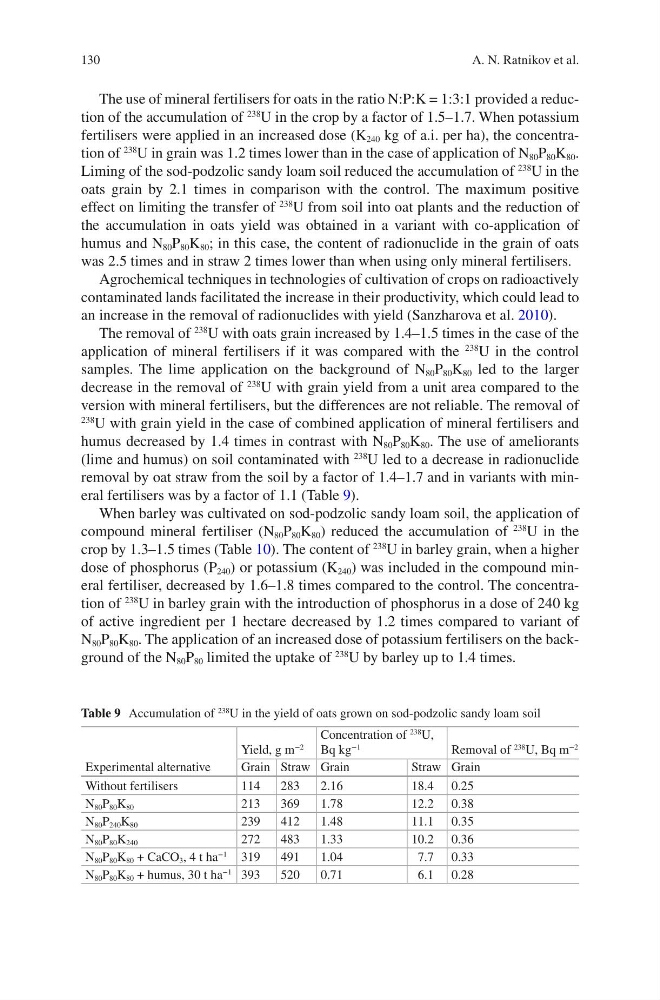
The use of mineral fertilisers for oats in the ratio N:P:K = 1:3:1 provided a reduction of the accumulation of
238
U in the crop by a factor of 1.5–1.7. When potassium
fertilisers were applied in an increased dose (K 240 kg of a.i. per ha), the concentration of
238
U in grain was 1.2 times lower than in the case of application of N 80 P 80 K 80 .
Liming of the sod-podzolic sandy loam soil reduced the accumulation of
238
U in the
oats grain by 2.1 times in comparison with the control. The maximum positive
effect on limiting the transfer of
238
U from soil into oat plants and the reduction of
the accumulation in oats yield was obtained in a variant with co-application of
humus and N 80 P 80 K 80 ; in this case, the content of radionuclide in the grain of oats
was 2.5 times and in straw 2 times lower than when using only mineral fertilisers.
Agrochemical techniques in technologies of cultivation of crops on radioactively
contaminated lands facilitated the increase in their productivity, which could lead to
an increase in the removal of radionuclides with yield (Sanzharova et al. 2010).
The removal of
238
U with oats grain increased by 1.4–1.5 times in the case of the
application of mineral fertilisers if it was compared with the
238
U in the control
samples. The lime application on the background of N 80 P 80 K 80 led to the larger
decrease in the removal of
238
U with grain yield from a unit area compared to the
version with mineral fertilisers, but the differences are not reliable. The removal of
238
U with grain yield in the case of combined application of mineral fertilisers and
humus decreased by 1.4 times in contrast with N 80 P 80 K 80 . The use of ameliorants
(lime and humus) on soil contaminated with
238
U led to a decrease in radionuclide
removal by oat straw from the soil by a factor of 1.4–1.7 and in variants with mineral fertilisers was by a factor of 1.1 (Table 9).
When barley was cultivated on sod-podzolic sandy loam soil, the application of
compound mineral fertiliser (N 80 P 80 K 80 ) reduced the accumulation of
238
U in the
crop by 1.3–1.5 times (Table 10). The content of
238
U in barley grain, when a higher
dose of phosphorus (P 240 ) or potassium (K 240 ) was included in the compound mineral fertiliser, decreased by 1.6–1.8 times compared to the control. The concentration of
238
U in barley grain with the introduction of phosphorus in a dose of 240 kg
of active ingredient per 1 hectare decreased by 1.2 times compared to variant of
N 80 P 80 K 80 . The application of an increased dose of potassium fertilisers on the background of the N 80 P 80 limited the uptake of
238
U by barley up to 1.4 times.
Table 9 Accumulation of
238
U in the yield of oats grown on sod-podzolic sandy loam soil
Experimental alternative
Yield, g m
−2
Concentration of
238 U,
Bq kg
−1
Removal of
238
U, Bq m
−2
Grain Straw Grain
Straw Grain
Without fertilisers
114
283
2.16
18.4 0.25
N 80 P 80 K 80
213
369
1.78
12.2 0.38
N 80 P 240 K 80
239
412
1.48
11.1 0.35
N 80 P 80 K 240
272
483
1.33
10.2 0.36
N 80 P 80 K 80 + CaCO 3 , 4 t ha
−1
319
491
1.04
7.7 0.33
N 80 P 80 K 80 + humus, 30 t ha
−1 393
520
0.71
6.1 0.28
A. N. Ratnikov et al.
The use of mineral fertilisers for oats in the ratio N:P:K = 1:3:1 provided a reduction of the accumulation of
238
U in the crop by a factor of 1.5–1.7. When potassium
fertilisers were applied in an increased dose (K 240 kg of a.i. per ha), the concentration of
238
U in grain was 1.2 times lower than in the case of application of N 80 P 80 K 80 .
Liming of the sod-podzolic sandy loam soil reduced the accumulation of
238
U in the
oats grain by 2.1 times in comparison with the control. The maximum positive
effect on limiting the transfer of
238
U from soil into oat plants and the reduction of
the accumulation in oats yield was obtained in a variant with co-application of
humus and N 80 P 80 K 80 ; in this case, the content of radionuclide in the grain of oats
was 2.5 times and in straw 2 times lower than when using only mineral fertilisers.
Agrochemical techniques in technologies of cultivation of crops on radioactively
contaminated lands facilitated the increase in their productivity, which could lead to
an increase in the removal of radionuclides with yield (Sanzharova et al. 2010).
The removal of
238
U with oats grain increased by 1.4–1.5 times in the case of the
application of mineral fertilisers if it was compared with the
238
U in the control
samples. The lime application on the background of N 80 P 80 K 80 led to the larger
decrease in the removal of
238
U with grain yield from a unit area compared to the
version with mineral fertilisers, but the differences are not reliable. The removal of
238
U with grain yield in the case of combined application of mineral fertilisers and
humus decreased by 1.4 times in contrast with N 80 P 80 K 80 . The use of ameliorants
(lime and humus) on soil contaminated with
238
U led to a decrease in radionuclide
removal by oat straw from the soil by a factor of 1.4–1.7 and in variants with mineral fertilisers was by a factor of 1.1 (Table 9).
When barley was cultivated on sod-podzolic sandy loam soil, the application of
compound mineral fertiliser (N 80 P 80 K 80 ) reduced the accumulation of
238
U in the
crop by 1.3–1.5 times (Table 10). The content of
238
U in barley grain, when a higher
dose of phosphorus (P 240 ) or potassium (K 240 ) was included in the compound mineral fertiliser, decreased by 1.6–1.8 times compared to the control. The concentration of
238
U in barley grain with the introduction of phosphorus in a dose of 240 kg
of active ingredient per 1 hectare decreased by 1.2 times compared to variant of
N 80 P 80 K 80 . The application of an increased dose of potassium fertilisers on the background of the N 80 P 80 limited the uptake of
238
U by barley up to 1.4 times.
Table 9 Accumulation of
238
U in the yield of oats grown on sod-podzolic sandy loam soil
Experimental alternative
Yield, g m
−2
Concentration of
238 U,
Bq kg
−1
Removal of
238
U, Bq m
−2
Grain Straw Grain
Straw Grain
Without fertilisers
114
283
2.16
18.4 0.25
N 80 P 80 K 80
213
369
1.78
12.2 0.38
N 80 P 240 K 80
239
412
1.48
11.1 0.35
N 80 P 80 K 240
272
483
1.33
10.2 0.36
N 80 P 80 K 80 + CaCO 3 , 4 t ha
−1
319
491
1.04
7.7 0.33
N 80 P 80 K 80 + humus, 30 t ha
−1 393
520
0.71
6.1 0.28
A. N. Ratnikov et al.