

Management’ by developing the ‘dynamic capabilities’
approach where the term ‘dynamic’ refers to the capacity to
renew competences to strengthen the ability to deal with the
changing business environment. Their thinking addresses the
limitation of the Peteraf model described here and will be
incorporated in the proposed framework.
In addition, the model is deliberately limited to the reflection of the RBV, which thus excludes some important other
factors of SCA, as was discussed in the review of the literature.
The limitations of the Peteraf Model will be addressed in
the proposed conceptual framework detailed in the next
section. This model was evolved to include some of the
more recent view in the literature and reflect the dynamic
nature of Competitive advantage, to develop a revised conceptual framework, details of which will be explained below.
11 The Proposed Conceptual Framework
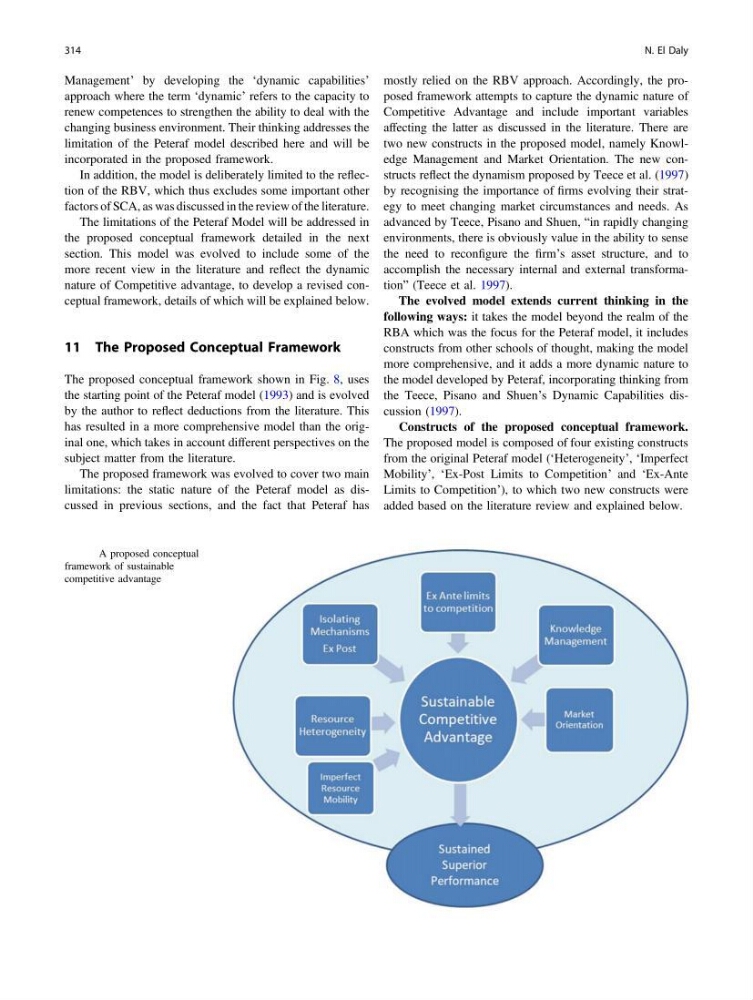
The proposed conceptual framework shown in Fig. 8, uses
the starting point of the Peteraf model (1993) and is evolved
by the author to reflect deductions from the literature. This
has resulted in a more comprehensive model than the original one, which takes in account different perspectives on the
subject matter from the literature.
The proposed framework was evolved to cover two main
limitations: the static nature of the Peteraf model as discussed in previous sections, and the fact that Peteraf has
mostly relied on the RBV approach. Accordingly, the proposed framework attempts to capture the dynamic nature of
Competitive Advantage and include important variables
affecting the latter as discussed in the literature. There are
two new constructs in the proposed model, namely Knowledge Management and Market Orientation. The new constructs reflect the dynamism proposed by Teece et al. (1997)
by recognising the importance of firms evolving their strategy to meet changing market circumstances and needs. As
advanced by Teece, Pisano and Shuen, “in rapidly changing
environments, there is obviously value in the ability to sense
the need to reconfigure the firm’s asset structure, and to
accomplish the necessary internal and external transformation” (Teece et al. 1997).
The evolved model extends current thinking in the
following ways: it takes the model beyond the realm of the
RBA which was the focus for the Peteraf model, it includes
constructs from other schools of thought, making the model
more comprehensive, and it adds a more dynamic nature to
the model developed by Peteraf, incorporating thinking from
the Teece, Pisano and Shuen’s Dynamic Capabilities discussion (1997).
Constructs of the proposed conceptual framework.
The proposed model is composed of four existing constructs
from the original Peteraf model (‘Heterogeneity’, ‘Imperfect
Mobility’, ‘Ex-Post Limits to Competition’ and ‘Ex-Ante
Limits to Competition’), to which two new constructs were
added based on the literature review and explained below.
Fig. 8 A proposed conceptual
framework of sustainable
competitive advantage
314
N. El Daly
approach where the term ‘dynamic’ refers to the capacity to
renew competences to strengthen the ability to deal with the
changing business environment. Their thinking addresses the
limitation of the Peteraf model described here and will be
incorporated in the proposed framework.
In addition, the model is deliberately limited to the reflection of the RBV, which thus excludes some important other
factors of SCA, as was discussed in the review of the literature.
The limitations of the Peteraf Model will be addressed in
the proposed conceptual framework detailed in the next
section. This model was evolved to include some of the
more recent view in the literature and reflect the dynamic
nature of Competitive advantage, to develop a revised conceptual framework, details of which will be explained below.
11 The Proposed Conceptual Framework
The proposed conceptual framework shown in Fig. 8, uses
the starting point of the Peteraf model (1993) and is evolved
by the author to reflect deductions from the literature. This
has resulted in a more comprehensive model than the original one, which takes in account different perspectives on the
subject matter from the literature.
The proposed framework was evolved to cover two main
limitations: the static nature of the Peteraf model as discussed in previous sections, and the fact that Peteraf has
mostly relied on the RBV approach. Accordingly, the proposed framework attempts to capture the dynamic nature of
Competitive Advantage and include important variables
affecting the latter as discussed in the literature. There are
two new constructs in the proposed model, namely Knowledge Management and Market Orientation. The new constructs reflect the dynamism proposed by Teece et al. (1997)
by recognising the importance of firms evolving their strategy to meet changing market circumstances and needs. As
advanced by Teece, Pisano and Shuen, “in rapidly changing
environments, there is obviously value in the ability to sense
the need to reconfigure the firm’s asset structure, and to
accomplish the necessary internal and external transformation” (Teece et al. 1997).
The evolved model extends current thinking in the
following ways: it takes the model beyond the realm of the
RBA which was the focus for the Peteraf model, it includes
constructs from other schools of thought, making the model
more comprehensive, and it adds a more dynamic nature to
the model developed by Peteraf, incorporating thinking from
the Teece, Pisano and Shuen’s Dynamic Capabilities discussion (1997).
Constructs of the proposed conceptual framework.
The proposed model is composed of four existing constructs
from the original Peteraf model (‘Heterogeneity’, ‘Imperfect
Mobility’, ‘Ex-Post Limits to Competition’ and ‘Ex-Ante
Limits to Competition’), to which two new constructs were
added based on the literature review and explained below.
Fig. 8 A proposed conceptual
framework of sustainable
competitive advantage
314
N. El Daly