

Preliminary, the plot of average values of financial
behavior is presented in Fig. 2. It can be noticed that average
financial behavior differs among groups. Moreover, it is
observed, for example, the group with knowledge level 2
exhibits more responsible financial behavior than the group
with knowledge level 3 and 4. Also, the group with
knowledge level 5 shows better financial behavior than the
group with knowledge level 6.
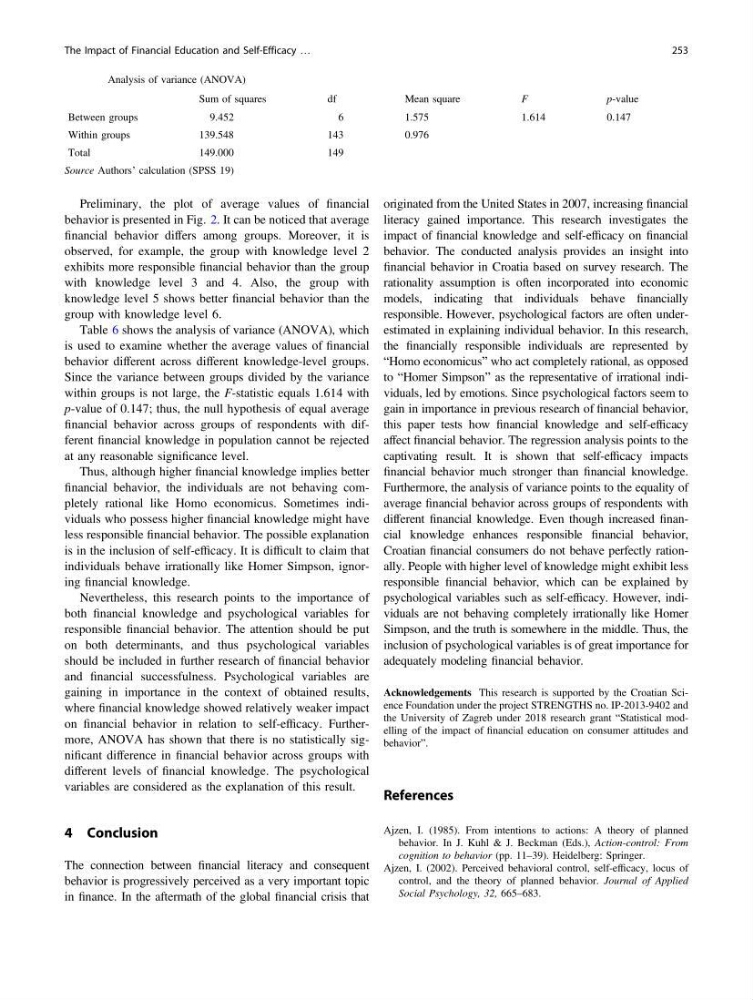
Table 6 shows the analysis of variance (ANOVA), which
is used to examine whether the average values of financial
behavior different across different knowledge-level groups.
Since the variance between groups divided by the variance
within groups is not large, the F-statistic equals 1.614 with
p-value of 0.147; thus, the null hypothesis of equal average
financial behavior across groups of respondents with different financial knowledge in population cannot be rejected
at any reasonable significance level.
Thus, although higher financial knowledge implies better
financial behavior, the individuals are not behaving completely rational like Homo economicus. Sometimes individuals who possess higher financial knowledge might have
less responsible financial behavior. The possible explanation
is in the inclusion of self-efficacy. It is difficult to claim that
individuals behave irrationally like Homer Simpson, ignoring financial knowledge.
Nevertheless, this research points to the importance of
both financial knowledge and psychological variables for
responsible financial behavior. The attention should be put
on both determinants, and thus psychological variables
should be included in further research of financial behavior
and financial successfulness. Psychological variables are
gaining in importance in the context of obtained results,
where financial knowledge showed relatively weaker impact
on financial behavior in relation to self-efficacy. Furthermore, ANOVA has shown that there is no statistically significant difference in financial behavior across groups with
different levels of financial knowledge. The psychological
variables are considered as the explanation of this result.
4 Conclusion
The connection between financial literacy and consequent
behavior is progressively perceived as a very important topic
in finance. In the aftermath of the global financial crisis that
originated from the United States in 2007, increasing financial
literacy gained importance. This research investigates the
impact of financial knowledge and self-efficacy on financial
behavior. The conducted analysis provides an insight into
financial behavior in Croatia based on survey research. The
rationality assumption is often incorporated into economic
models, indicating that individuals behave financially
responsible. However, psychological factors are often underestimated in explaining individual behavior. In this research,
the financially responsible individuals are represented by
“Homo economicus” who act completely rational, as opposed
to “Homer Simpson” as the representative of irrational individuals, led by emotions. Since psychological factors seem to
gain in importance in previous research of financial behavior,
this paper tests how financial knowledge and self-efficacy
affect financial behavior. The regression analysis points to the
captivating result. It is shown that self-efficacy impacts
financial behavior much stronger than financial knowledge.
Furthermore, the analysis of variance points to the equality of
average financial behavior across groups of respondents with
different financial knowledge. Even though increased financial knowledge enhances responsible financial behavior,
Croatian financial consumers do not behave perfectly rationally. People with higher level of knowledge might exhibit less
responsible financial behavior, which can be explained by
psychological variables such as self-efficacy. However, individuals are not behaving completely irrationally like Homer
Simpson, and the truth is somewhere in the middle. Thus, the
inclusion of psychological variables is of great importance for
adequately modeling financial behavior.
Acknowledgements This research is supported by the Croatian Science Foundation under the project STRENGTHS no. IP-2013-9402 and
the University of Zagreb under 2018 research grant “Statistical modelling of the impact of financial education on consumer attitudes and
behavior”.
References
Ajzen, I. (1985). From intentions to actions: A theory of planned
behavior. In J. Kuhl & J. Beckman (Eds.), Action-control: From
cognition to behavior (pp. 11–39). Heidelberg: Springer.
Ajzen, I. (2002). Perceived behavioral control, self-efficacy, locus of
control, and the theory of planned behavior. Journal of Applied
Social Psychology, 32, 665–683.
Table 6 Analysis of variance (ANOVA)
Sum of squares
df
Mean square
F
p -value
Between groups
9.452
6
1.575
1.614
0.147
Within groups
139.548
143
0.976
Total
149.000
149
Source Authors’ calculation (SPSS 19)
The Impact of Financial Education and Self-Efficacy …
253
behavior is presented in Fig. 2. It can be noticed that average
financial behavior differs among groups. Moreover, it is
observed, for example, the group with knowledge level 2
exhibits more responsible financial behavior than the group
with knowledge level 3 and 4. Also, the group with
knowledge level 5 shows better financial behavior than the
group with knowledge level 6.
Table 6 shows the analysis of variance (ANOVA), which
is used to examine whether the average values of financial
behavior different across different knowledge-level groups.
Since the variance between groups divided by the variance
within groups is not large, the F-statistic equals 1.614 with
p-value of 0.147; thus, the null hypothesis of equal average
financial behavior across groups of respondents with different financial knowledge in population cannot be rejected
at any reasonable significance level.
Thus, although higher financial knowledge implies better
financial behavior, the individuals are not behaving completely rational like Homo economicus. Sometimes individuals who possess higher financial knowledge might have
less responsible financial behavior. The possible explanation
is in the inclusion of self-efficacy. It is difficult to claim that
individuals behave irrationally like Homer Simpson, ignoring financial knowledge.
Nevertheless, this research points to the importance of
both financial knowledge and psychological variables for
responsible financial behavior. The attention should be put
on both determinants, and thus psychological variables
should be included in further research of financial behavior
and financial successfulness. Psychological variables are
gaining in importance in the context of obtained results,
where financial knowledge showed relatively weaker impact
on financial behavior in relation to self-efficacy. Furthermore, ANOVA has shown that there is no statistically significant difference in financial behavior across groups with
different levels of financial knowledge. The psychological
variables are considered as the explanation of this result.
4 Conclusion
The connection between financial literacy and consequent
behavior is progressively perceived as a very important topic
in finance. In the aftermath of the global financial crisis that
originated from the United States in 2007, increasing financial
literacy gained importance. This research investigates the
impact of financial knowledge and self-efficacy on financial
behavior. The conducted analysis provides an insight into
financial behavior in Croatia based on survey research. The
rationality assumption is often incorporated into economic
models, indicating that individuals behave financially
responsible. However, psychological factors are often underestimated in explaining individual behavior. In this research,
the financially responsible individuals are represented by
“Homo economicus” who act completely rational, as opposed
to “Homer Simpson” as the representative of irrational individuals, led by emotions. Since psychological factors seem to
gain in importance in previous research of financial behavior,
this paper tests how financial knowledge and self-efficacy
affect financial behavior. The regression analysis points to the
captivating result. It is shown that self-efficacy impacts
financial behavior much stronger than financial knowledge.
Furthermore, the analysis of variance points to the equality of
average financial behavior across groups of respondents with
different financial knowledge. Even though increased financial knowledge enhances responsible financial behavior,
Croatian financial consumers do not behave perfectly rationally. People with higher level of knowledge might exhibit less
responsible financial behavior, which can be explained by
psychological variables such as self-efficacy. However, individuals are not behaving completely irrationally like Homer
Simpson, and the truth is somewhere in the middle. Thus, the
inclusion of psychological variables is of great importance for
adequately modeling financial behavior.
Acknowledgements This research is supported by the Croatian Science Foundation under the project STRENGTHS no. IP-2013-9402 and
the University of Zagreb under 2018 research grant “Statistical modelling of the impact of financial education on consumer attitudes and
behavior”.
References
Ajzen, I. (1985). From intentions to actions: A theory of planned
behavior. In J. Kuhl & J. Beckman (Eds.), Action-control: From
cognition to behavior (pp. 11–39). Heidelberg: Springer.
Ajzen, I. (2002). Perceived behavioral control, self-efficacy, locus of
control, and the theory of planned behavior. Journal of Applied
Social Psychology, 32, 665–683.
Table 6 Analysis of variance (ANOVA)
Sum of squares
df
Mean square
F
p -value
Between groups
9.452
6
1.575
1.614
0.147
Within groups
139.548
143
0.976
Total
149.000
149
Source Authors’ calculation (SPSS 19)
The Impact of Financial Education and Self-Efficacy …
253