

is a case with the lowest average of illuminance. The measurements were conducted in advance to help the simulation,
using Revit software, to find the best-case.
1. Mango Case Study
The average luminous level for the fitting rooms seen in
Figs. 9 and 10 is approximated to 1414.3 (lux). A distance of
1.5 m is found between 14 overhead lights. The height of the
fitting room is approximated at 2.8 m. One yellow color
spotlight and one mirror on the side from the floor to the
ceiling are found in the room to comfort the customers and
to create the sensation of a large space. Based on the conducted survey, it was found that most women preferred this
type of room and intensity of light. Accordingly, Revit
software was used to draw the plan in order to create the
simulation.
2. Zara Case Study
The average luminous level for the fitting rooms shown in
Fig. 11 is approximated to 466.3 (lux). A distance of 1.16 m
is found between 20 overhead lights. The height of the fitting
room is approximated to 3 m. It is noticed that this store has
one spotlight in each room that is yellow in color (warm
color). Customers preferred the lighting in Mango more than
the case of Zara. After spending enough time in Zara, people
tended to feel the need to leave because the light made them
feel depressed and gloomy. However, the fitting room has
also two mirrors on both sides from the floor to the ceiling so
that the customers would feel the sensation of a large space.
Similarly, Revit software was used to draw the plan in order
to create the simulation (Figs. 12, 13).
3. Matalan Case Study
The average luminous level for the fitting rooms shown in
Fig. 14 is approximated to 1441.67 (lux). A distance of
1.6 m is found between 10 overhead lights. The height of the
fitting room is approximated to 3.5 m. It is noticed that this
store has one white spotlight in each room, (cool color).
Customers preferred the light in Mango over the light used
in Matalan because the light in Matalan is intense and very
high. In a way this can be good because it renders the
clothes’ actual color and details, but on the other hand, the
intensity of light causes headaches as well this light will be
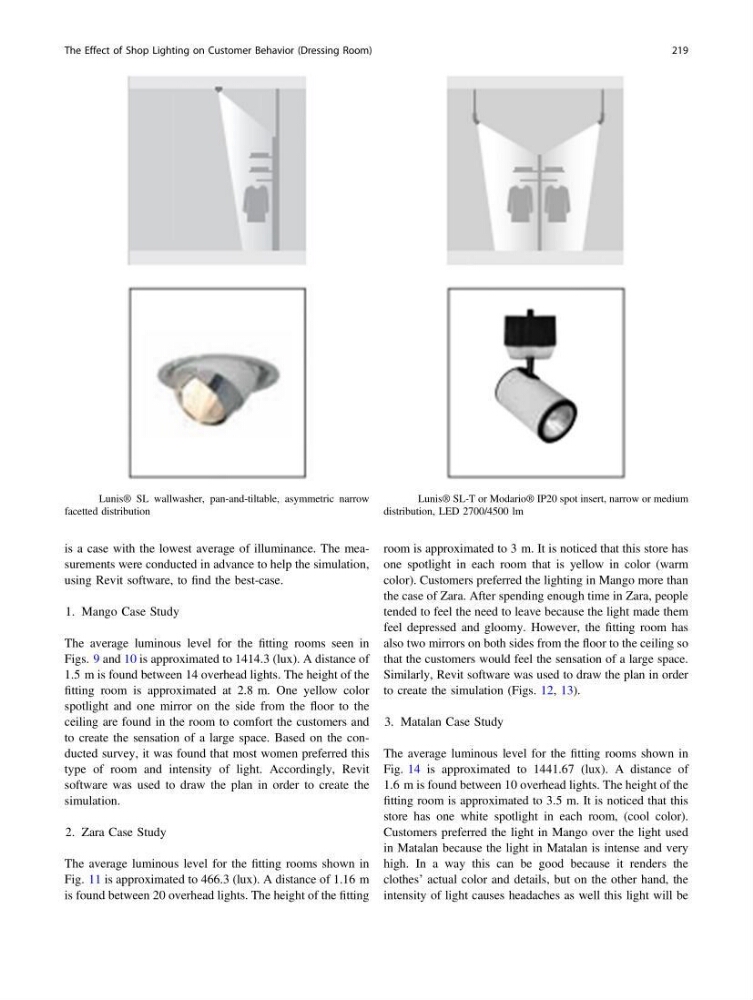
Fig. 6 Lunis® SL wallwasher, pan-and-tiltable, asymmetric narrow
facetted distribution
Fig. 7 Lunis® SL-T or Modario® IP20 spot insert, narrow or medium
distribution, LED 2700/4500 lm
The Effect of Shop Lighting on Customer Behavior (Dressing Room)
219
using Revit software, to find the best-case.
1. Mango Case Study
The average luminous level for the fitting rooms seen in
Figs. 9 and 10 is approximated to 1414.3 (lux). A distance of
1.5 m is found between 14 overhead lights. The height of the
fitting room is approximated at 2.8 m. One yellow color
spotlight and one mirror on the side from the floor to the
ceiling are found in the room to comfort the customers and
to create the sensation of a large space. Based on the conducted survey, it was found that most women preferred this
type of room and intensity of light. Accordingly, Revit
software was used to draw the plan in order to create the
simulation.
2. Zara Case Study
The average luminous level for the fitting rooms shown in
Fig. 11 is approximated to 466.3 (lux). A distance of 1.16 m
is found between 20 overhead lights. The height of the fitting
room is approximated to 3 m. It is noticed that this store has
one spotlight in each room that is yellow in color (warm
color). Customers preferred the lighting in Mango more than
the case of Zara. After spending enough time in Zara, people
tended to feel the need to leave because the light made them
feel depressed and gloomy. However, the fitting room has
also two mirrors on both sides from the floor to the ceiling so
that the customers would feel the sensation of a large space.
Similarly, Revit software was used to draw the plan in order
to create the simulation (Figs. 12, 13).
3. Matalan Case Study
The average luminous level for the fitting rooms shown in
Fig. 14 is approximated to 1441.67 (lux). A distance of
1.6 m is found between 10 overhead lights. The height of the
fitting room is approximated to 3.5 m. It is noticed that this
store has one white spotlight in each room, (cool color).
Customers preferred the light in Mango over the light used
in Matalan because the light in Matalan is intense and very
high. In a way this can be good because it renders the
clothes’ actual color and details, but on the other hand, the
intensity of light causes headaches as well this light will be
Fig. 6 Lunis® SL wallwasher, pan-and-tiltable, asymmetric narrow
facetted distribution
Fig. 7 Lunis® SL-T or Modario® IP20 spot insert, narrow or medium
distribution, LED 2700/4500 lm
The Effect of Shop Lighting on Customer Behavior (Dressing Room)
219