

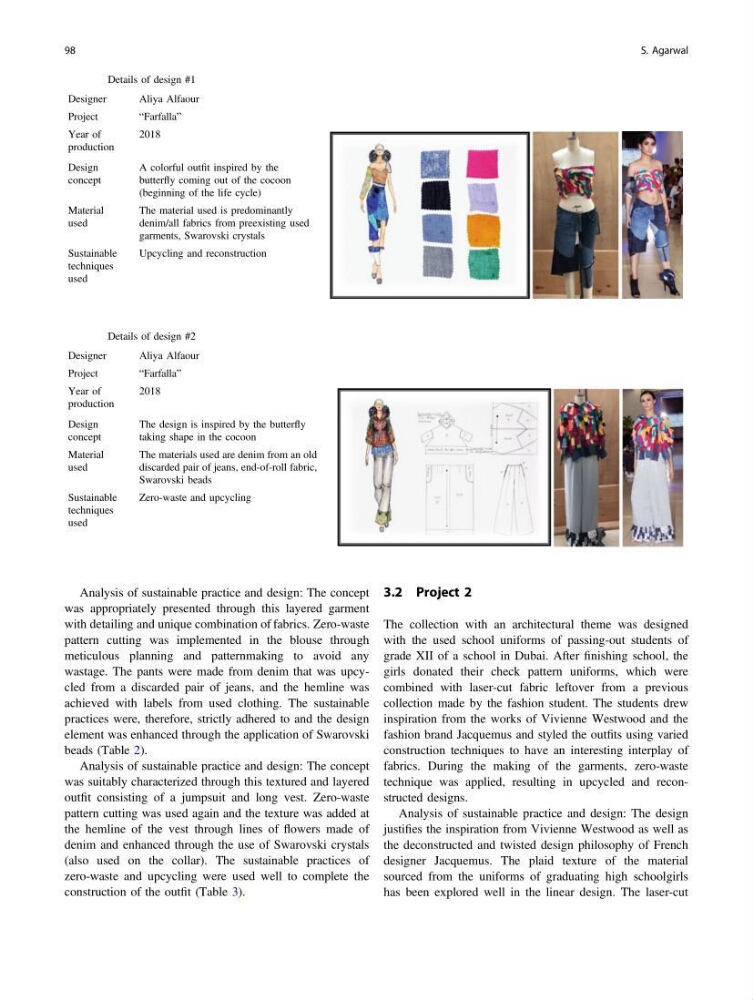
Analysis of sustainable practice and design: The concept
was appropriately presented through this layered garment
with detailing and unique combination of fabrics. Zero-waste
pattern cutting was implemented in the blouse through
meticulous planning and patternmaking to avoid any
wastage. The pants were made from denim that was upcycled from a discarded pair of jeans, and the hemline was
achieved with labels from used clothing. The sustainable
practices were, therefore, strictly adhered to and the design
element was enhanced through the application of Swarovski
beads (Table 2).
Analysis of sustainable practice and design: The concept
was suitably characterized through this textured and layered
outfit consisting of a jumpsuit and long vest. Zero-waste
pattern cutting was used again and the texture was added at
the hemline of the vest through lines of flowers made of
denim and enhanced through the use of Swarovski crystals
(also used on the collar). The sustainable practices of
zero-waste and upcycling were used well to complete the
construction of the outfit (Table 3).
3.2 Project 2
The collection with an architectural theme was designed
with the used school uniforms of passing-out students of
grade XII of a school in Dubai. After finishing school, the
girls donated their check pattern uniforms, which were
combined with laser-cut fabric leftover from a previous
collection made by the fashion student. The students drew
inspiration from the works of Vivienne Westwood and the
fashion brand Jacquemus and styled the outfits using varied
construction techniques to have an interesting interplay of
fabrics. During the making of the garments, zero-waste
technique was applied, resulting in upcycled and reconstructed designs.
Analysis of sustainable practice and design: The design
justifies the inspiration from Vivienne Westwood as well as
the deconstructed and twisted design philosophy of French
designer Jacquemus. The plaid texture of the material
sourced from the uniforms of graduating high schoolgirls
has been explored well in the linear design. The laser-cut
Table 1 Details of design #1
Designer
Aliya Alfaour
Project
“Farfalla”
Year of
production
2018
Design
concept
A colorful outfit inspired by the
butterfly coming out of the cocoon
(beginning of the life cycle)
Material
used
The material used is predominantly
denim/all fabrics from preexisting used
garments, Swarovski crystals
Sustainable
techniques
used
Upcycling and reconstruction
Table 2 Details of design #2
Designer
Aliya Alfaour
Project
“Farfalla”
Year of
production
2018
Design
concept
The design is inspired by the butterfly
taking shape in the cocoon
Material
used
The materials used are denim from an old
discarded pair of jeans, end-of-roll fabric,
Swarovski beads
Sustainable
techniques
used
Zero-waste and upcycling
98
S. Agarwal
was appropriately presented through this layered garment
with detailing and unique combination of fabrics. Zero-waste
pattern cutting was implemented in the blouse through
meticulous planning and patternmaking to avoid any
wastage. The pants were made from denim that was upcycled from a discarded pair of jeans, and the hemline was
achieved with labels from used clothing. The sustainable
practices were, therefore, strictly adhered to and the design
element was enhanced through the application of Swarovski
beads (Table 2).
Analysis of sustainable practice and design: The concept
was suitably characterized through this textured and layered
outfit consisting of a jumpsuit and long vest. Zero-waste
pattern cutting was used again and the texture was added at
the hemline of the vest through lines of flowers made of
denim and enhanced through the use of Swarovski crystals
(also used on the collar). The sustainable practices of
zero-waste and upcycling were used well to complete the
construction of the outfit (Table 3).
3.2 Project 2
The collection with an architectural theme was designed
with the used school uniforms of passing-out students of
grade XII of a school in Dubai. After finishing school, the
girls donated their check pattern uniforms, which were
combined with laser-cut fabric leftover from a previous
collection made by the fashion student. The students drew
inspiration from the works of Vivienne Westwood and the
fashion brand Jacquemus and styled the outfits using varied
construction techniques to have an interesting interplay of
fabrics. During the making of the garments, zero-waste
technique was applied, resulting in upcycled and reconstructed designs.
Analysis of sustainable practice and design: The design
justifies the inspiration from Vivienne Westwood as well as
the deconstructed and twisted design philosophy of French
designer Jacquemus. The plaid texture of the material
sourced from the uniforms of graduating high schoolgirls
has been explored well in the linear design. The laser-cut
Table 1 Details of design #1
Designer
Aliya Alfaour
Project
“Farfalla”
Year of
production
2018
Design
concept
A colorful outfit inspired by the
butterfly coming out of the cocoon
(beginning of the life cycle)
Material
used
The material used is predominantly
denim/all fabrics from preexisting used
garments, Swarovski crystals
Sustainable
techniques
used
Upcycling and reconstruction
Table 2 Details of design #2
Designer
Aliya Alfaour
Project
“Farfalla”
Year of
production
2018
Design
concept
The design is inspired by the butterfly
taking shape in the cocoon
Material
used
The materials used are denim from an old
discarded pair of jeans, end-of-roll fabric,
Swarovski beads
Sustainable
techniques
used
Zero-waste and upcycling
98
S. Agarwal