

92
2 Systematic Descriptions
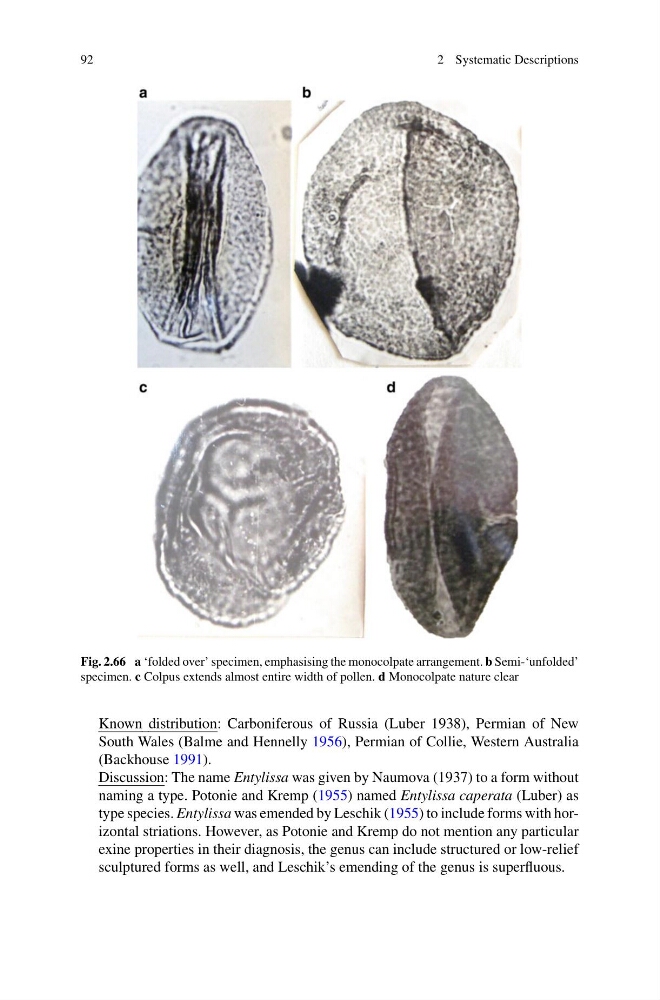
Fig. 2.66 a ‘folded over’ specimen, emphasising the monocolpate arrangement. b Semi-‘unfolded’
specimen. c Colpus extends almost entire width of pollen. d Monocolpate nature clear
Known distribution: Carboniferous of Russia (Luber 1938), Permian of New
South Wales (Balme and Hennelly 1956), Permian of Collie, Western Australia
(Backhouse 1991).
Discussion: The name Entylissa was given by Naumova (1937) to a form without
naming a type. Potonie and Kremp (1955) named Entylissa caperata (Luber) as
type species. Entylissa was emended by Leschik (1955) to include forms with horizontal striations. However, as Potonie and Kremp do not mention any particular
exine properties in their diagnosis, the genus can include structured or low-relief
sculptured forms as well, and Leschik’s emending of the genus is superfluous.
2 Systematic Descriptions
Fig. 2.66 a ‘folded over’ specimen, emphasising the monocolpate arrangement. b Semi-‘unfolded’
specimen. c Colpus extends almost entire width of pollen. d Monocolpate nature clear
Known distribution: Carboniferous of Russia (Luber 1938), Permian of New
South Wales (Balme and Hennelly 1956), Permian of Collie, Western Australia
(Backhouse 1991).
Discussion: The name Entylissa was given by Naumova (1937) to a form without
naming a type. Potonie and Kremp (1955) named Entylissa caperata (Luber) as
type species. Entylissa was emended by Leschik (1955) to include forms with horizontal striations. However, as Potonie and Kremp do not mention any particular
exine properties in their diagnosis, the genus can include structured or low-relief
sculptured forms as well, and Leschik’s emending of the genus is superfluous.