

CHAPTER III
RESULTS AND DISCUSSION
54
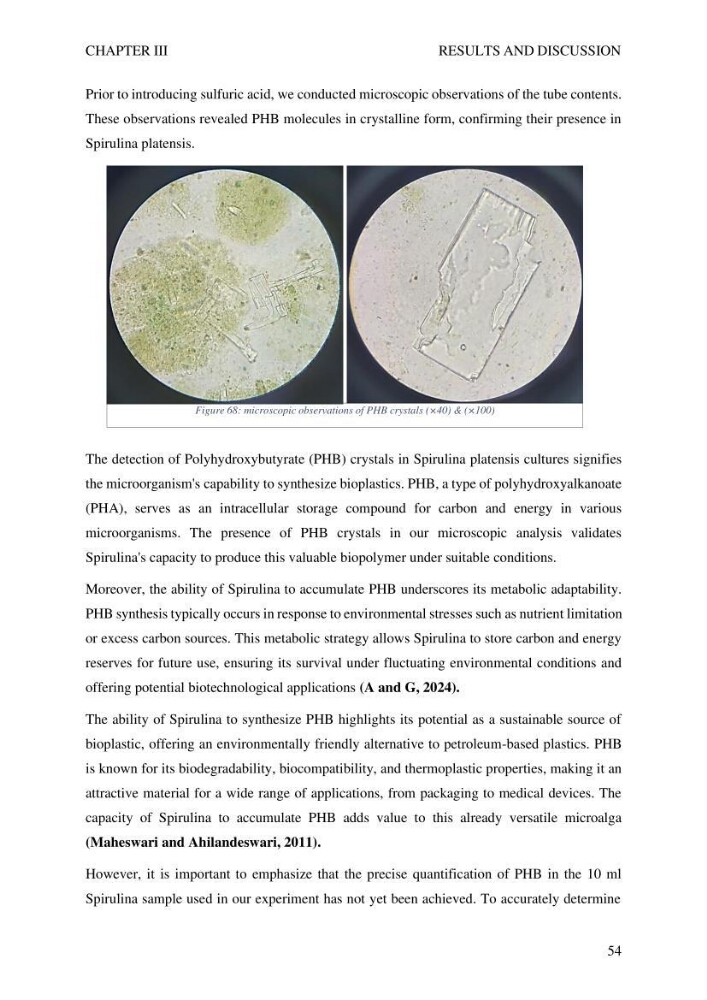
Figure 68: microscopic observations of PHB crystals (×40) & (×100)
Prior to introducing sulfuric acid, we conducted microscopic observations of the tube contents.
These observations revealed PHB molecules in crystalline form, confirming their presence in
Spirulina platensis.
The detection of Polyhydroxybutyrate (PHB) crystals in Spirulina platensis cultures signifies
the microorganism's capability to synthesize bioplastics. PHB, a type of polyhydroxyalkanoate
(PHA), serves as an intracellular storage compound for carbon and energy in various
microorganisms. The presence of PHB crystals in our microscopic analysis validates
Spirulina's capacity to produce this valuable biopolymer under suitable conditions.
Moreover, the ability of Spirulina to accumulate PHB underscores its metabolic adaptability.
PHB synthesis typically occurs in response to environmental stresses such as nutrient limitation
or excess carbon sources. This metabolic strategy allows Spirulina to store carbon and energy
reserves for future use, ensuring its survival under fluctuating environmental conditions and
offering potential biotechnological applications (A and G, 2024).
The ability of Spirulina to synthesize PHB highlights its potential as a sustainable source of
bioplastic, offering an environmentally friendly alternative to petroleum-based plastics. PHB
is known for its biodegradability, biocompatibility, and thermoplastic properties, making it an
attractive material for a wide range of applications, from packaging to medical devices. The
capacity of Spirulina to accumulate PHB adds value to this already versatile microalga
(Maheswari and Ahilandeswari, 2011).
However, it is important to emphasize that the precise quantification of PHB in the 10 ml
Spirulina sample used in our experiment has not yet been achieved. To accurately determine
RESULTS AND DISCUSSION
54
Figure 68: microscopic observations of PHB crystals (×40) & (×100)
Prior to introducing sulfuric acid, we conducted microscopic observations of the tube contents.
These observations revealed PHB molecules in crystalline form, confirming their presence in
Spirulina platensis.
The detection of Polyhydroxybutyrate (PHB) crystals in Spirulina platensis cultures signifies
the microorganism's capability to synthesize bioplastics. PHB, a type of polyhydroxyalkanoate
(PHA), serves as an intracellular storage compound for carbon and energy in various
microorganisms. The presence of PHB crystals in our microscopic analysis validates
Spirulina's capacity to produce this valuable biopolymer under suitable conditions.
Moreover, the ability of Spirulina to accumulate PHB underscores its metabolic adaptability.
PHB synthesis typically occurs in response to environmental stresses such as nutrient limitation
or excess carbon sources. This metabolic strategy allows Spirulina to store carbon and energy
reserves for future use, ensuring its survival under fluctuating environmental conditions and
offering potential biotechnological applications (A and G, 2024).
The ability of Spirulina to synthesize PHB highlights its potential as a sustainable source of
bioplastic, offering an environmentally friendly alternative to petroleum-based plastics. PHB
is known for its biodegradability, biocompatibility, and thermoplastic properties, making it an
attractive material for a wide range of applications, from packaging to medical devices. The
capacity of Spirulina to accumulate PHB adds value to this already versatile microalga
(Maheswari and Ahilandeswari, 2011).
However, it is important to emphasize that the precise quantification of PHB in the 10 ml
Spirulina sample used in our experiment has not yet been achieved. To accurately determine