

CHAPTER III
RESULTS AND DISCUSSION
53
Day 1
Day 3
Day 5
Day 10
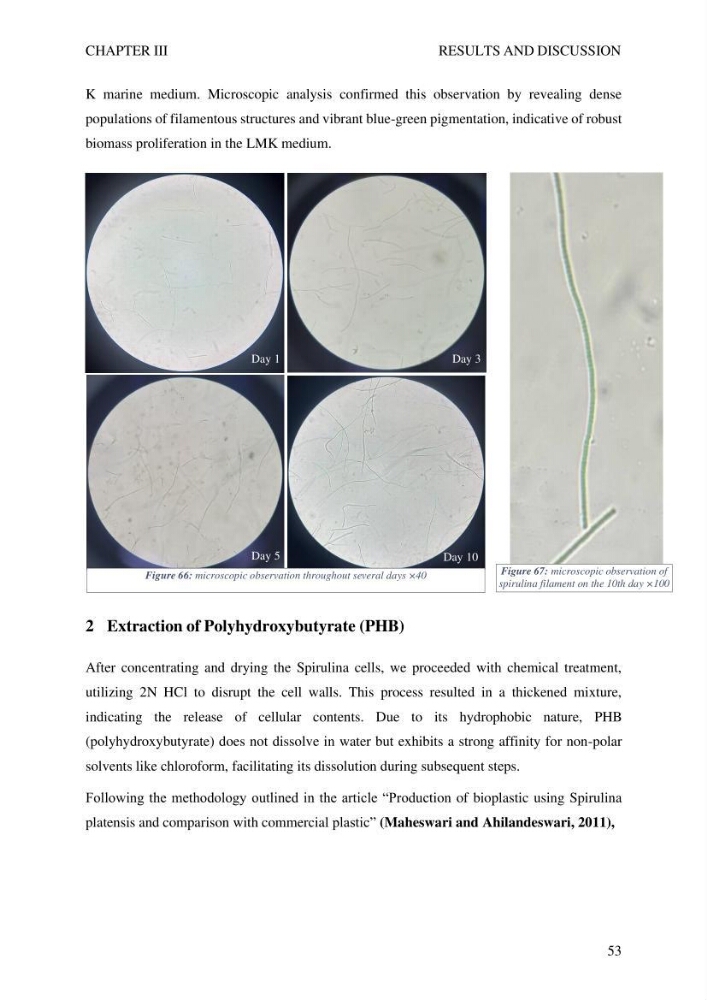
Figure 66: microscopic observation throughout several days ×40
Figure 67: microscopic observation of
spirulina filament on the 10th day ×100
K marine medium. Microscopic analysis confirmed this observation by revealing dense
populations of filamentous structures and vibrant blue-green pigmentation, indicative of robust
biomass proliferation in the LMK medium.
2 Extraction of Polyhydroxybutyrate (PHB)
After concentrating and drying the Spirulina cells, we proceeded with chemical treatment,
utilizing 2N HCl to disrupt the cell walls. This process resulted in a thickened mixture,
indicating the release of cellular contents. Due to its hydrophobic nature, PHB
(polyhydroxybutyrate) does not dissolve in water but exhibits a strong affinity for non-polar
solvents like chloroform, facilitating its dissolution during subsequent steps.
Following the methodology outlined in the article “Production of bioplastic using Spirulina
platensis and comparison with commercial plastic” (Maheswari and Ahilandeswari, 2011),
RESULTS AND DISCUSSION
53
Day 1
Day 3
Day 5
Day 10
Figure 66: microscopic observation throughout several days ×40
Figure 67: microscopic observation of
spirulina filament on the 10th day ×100
K marine medium. Microscopic analysis confirmed this observation by revealing dense
populations of filamentous structures and vibrant blue-green pigmentation, indicative of robust
biomass proliferation in the LMK medium.
2 Extraction of Polyhydroxybutyrate (PHB)
After concentrating and drying the Spirulina cells, we proceeded with chemical treatment,
utilizing 2N HCl to disrupt the cell walls. This process resulted in a thickened mixture,
indicating the release of cellular contents. Due to its hydrophobic nature, PHB
(polyhydroxybutyrate) does not dissolve in water but exhibits a strong affinity for non-polar
solvents like chloroform, facilitating its dissolution during subsequent steps.
Following the methodology outlined in the article “Production of bioplastic using Spirulina
platensis and comparison with commercial plastic” (Maheswari and Ahilandeswari, 2011),