

CHAPTER I
LITTERATURE REVIEW
23
3 Spirulina
3.1 Presentation of Spirulina platensis
Arthrospira (Spirulina) is a spiral blue-green microalgae (Yousefi et al., 2019), represents a
filamentous cyanobacterium characterized by its non-heterocystous nature and multicellular,
cylindrical morphology, often exhibiting screw-like coiled trichomes. This organism thrives
across diverse habitats, including those with elevated salinity levels (Jacquet et al., 2013), it
grows optimally in pH range of 9- 11 and there is least chance of contamination of other
microbes (P., 2014). Its global distribution has led to the isolation of several species and strains,
which have become pivotal subjects in both theoretical and applied research domains. Notably,
Arthrospira has garnered substantial commercial interest and has been developed for the food
industry in local areas, but also for alternative biofuel feedstock, skin-care product resources,
and more. Despite its significant economic value, nothing has been published yet on viruses
associated with the dynamics of this genus. (Jacquet et al., 2013).
Spirulina is one of nature's first photosynthetic organisms, capable of converting light directly
into energy for complex metabolic processes (P., 2014), it is microscopic in size but can grow
up to 0.5 mm long, making it visible. It has a prokaryotic organization, a pluristratified cell
wall, a photosynthetic lamellar system, ribosomes and DNA region fibrils. It is an excellent
source of proteins, vitamins, fatty acids, minerals, photosynthetic pigments and numerous
secondary metabolites (Sánchez-Muros et al., 2020).
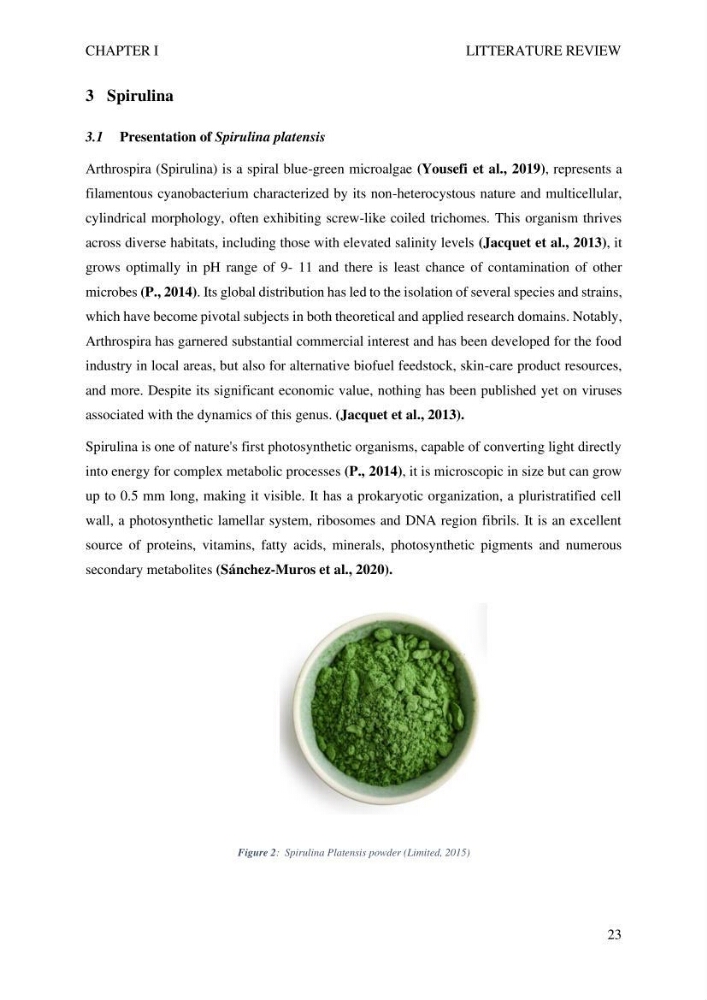
Figure 2: Spirulina Platensis powder (Limited, 2015)
LITTERATURE REVIEW
23
3 Spirulina
3.1 Presentation of Spirulina platensis
Arthrospira (Spirulina) is a spiral blue-green microalgae (Yousefi et al., 2019), represents a
filamentous cyanobacterium characterized by its non-heterocystous nature and multicellular,
cylindrical morphology, often exhibiting screw-like coiled trichomes. This organism thrives
across diverse habitats, including those with elevated salinity levels (Jacquet et al., 2013), it
grows optimally in pH range of 9- 11 and there is least chance of contamination of other
microbes (P., 2014). Its global distribution has led to the isolation of several species and strains,
which have become pivotal subjects in both theoretical and applied research domains. Notably,
Arthrospira has garnered substantial commercial interest and has been developed for the food
industry in local areas, but also for alternative biofuel feedstock, skin-care product resources,
and more. Despite its significant economic value, nothing has been published yet on viruses
associated with the dynamics of this genus. (Jacquet et al., 2013).
Spirulina is one of nature's first photosynthetic organisms, capable of converting light directly
into energy for complex metabolic processes (P., 2014), it is microscopic in size but can grow
up to 0.5 mm long, making it visible. It has a prokaryotic organization, a pluristratified cell
wall, a photosynthetic lamellar system, ribosomes and DNA region fibrils. It is an excellent
source of proteins, vitamins, fatty acids, minerals, photosynthetic pigments and numerous
secondary metabolites (Sánchez-Muros et al., 2020).
Figure 2: Spirulina Platensis powder (Limited, 2015)