

8.9 Practical Application: Recycling at School
187
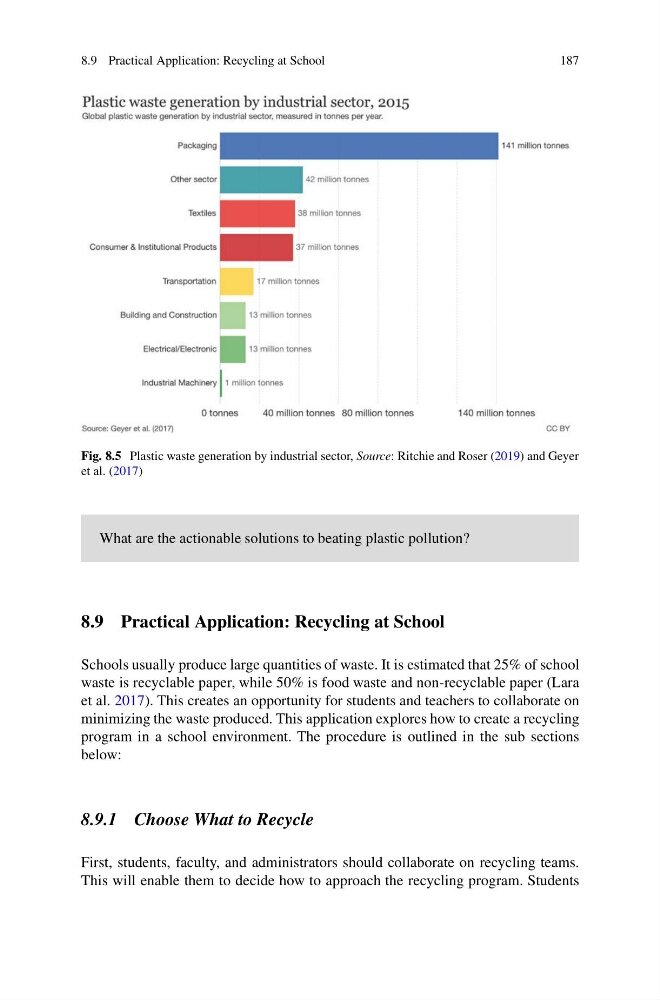
Fig. 8.5 Plastic waste generation by industrial sector, Source: Ritchie and Roser (2019) and Geyer
et al. (2017)
What are the actionable solutions to beating plastic pollution?
8.9 Practical Application: Recycling at School
Schools usually produce large quantities of waste. It is estimated that 25% of school
waste is recyclable paper, while 50% is food waste and non-recyclable paper (Lara
et al. 2017). This creates an opportunity for students and teachers to collaborate on
minimizing the waste produced. This application explores how to create a recycling
program in a school environment. The procedure is outlined in the sub sections
below:
8.9.1 Choose What to Recycle
First, students, faculty, and administrators should collaborate on recycling teams.
This will enable them to decide how to approach the recycling program. Students
187
Fig. 8.5 Plastic waste generation by industrial sector, Source: Ritchie and Roser (2019) and Geyer
et al. (2017)
What are the actionable solutions to beating plastic pollution?
8.9 Practical Application: Recycling at School
Schools usually produce large quantities of waste. It is estimated that 25% of school
waste is recyclable paper, while 50% is food waste and non-recyclable paper (Lara
et al. 2017). This creates an opportunity for students and teachers to collaborate on
minimizing the waste produced. This application explores how to create a recycling
program in a school environment. The procedure is outlined in the sub sections
below:
8.9.1 Choose What to Recycle
First, students, faculty, and administrators should collaborate on recycling teams.
This will enable them to decide how to approach the recycling program. Students