

82
total biomass. Tamai et al. (1983) reported values of 117.6 t/ha for root biomass in
a mangrove forest in Thailand, the roots accounting for 29.5% of the total biomass.
The higher the value of below ground biomass, the greater is the capacity of the
species to hold the soil particles.
Illegal human intervention in the mangrove ecosystem for earning ready money
is also a major cause of accelerating the erosion problem. In Indian Sundarbans, the
Forest Department is actively involved in mass scale plantation of mangroves after
rearing the seedlings in the nursery (Fig. 3.28) with the aim to control erosion.
However the dragging of nets along the mudflats to catch tiger prawn seeds often
uproots these seedlings (Fig. 3.29 and 3.30).
The flow of water along the estuaries of Indian Sundarbans is hindered by
thousands of nets that are laid along the stretch for trapping seeds of tiger prawn
(Penaeus monodon). This profession is extremely detrimental to the ecosystem services provided by mangroves due to massive scale erosion caused by such activities. The Government of West Bengal has already banned the wild fry collection.
Lack of alternative livelihoods for prawn seed collectors is one of the principle
constraints on implementing any policies, laws and/or regulations geared towards
the development of a sustainable resources use strategy as well as conservation
effort for the wise use of the marine, coastal and estuarine resources. For this, the
Government placed the enforcement of the fry collection ban into abeyance (in
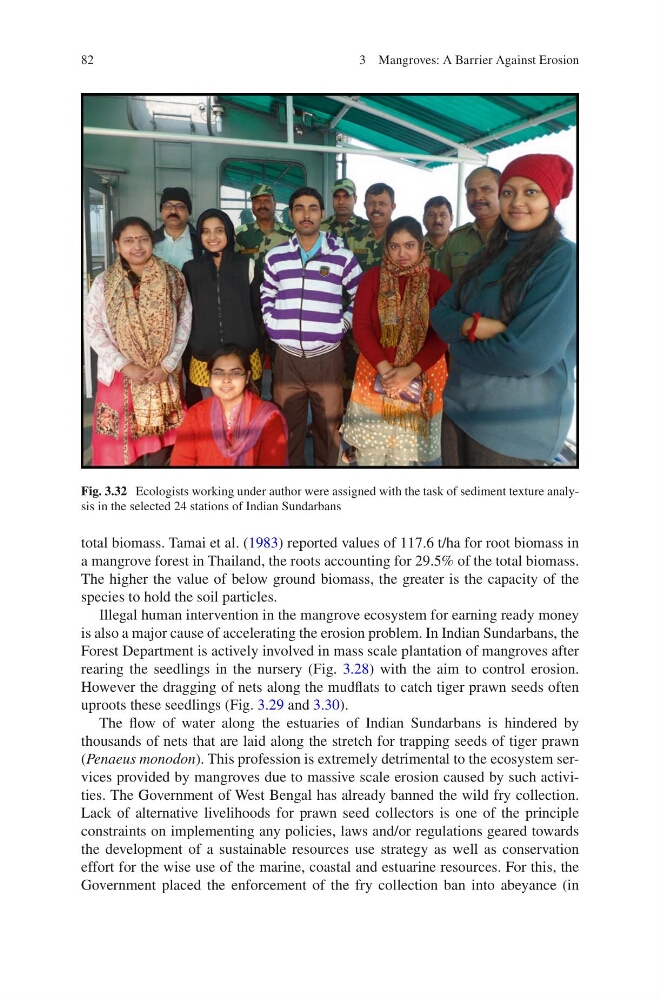
Fig. 3.32 Ecologists working under author were assigned with the task of sediment texture analysis in the selected 24 stations of Indian Sundarbans
3 Mangroves: A Barrier Against Erosion
total biomass. Tamai et al. (1983) reported values of 117.6 t/ha for root biomass in
a mangrove forest in Thailand, the roots accounting for 29.5% of the total biomass.
The higher the value of below ground biomass, the greater is the capacity of the
species to hold the soil particles.
Illegal human intervention in the mangrove ecosystem for earning ready money
is also a major cause of accelerating the erosion problem. In Indian Sundarbans, the
Forest Department is actively involved in mass scale plantation of mangroves after
rearing the seedlings in the nursery (Fig. 3.28) with the aim to control erosion.
However the dragging of nets along the mudflats to catch tiger prawn seeds often
uproots these seedlings (Fig. 3.29 and 3.30).
The flow of water along the estuaries of Indian Sundarbans is hindered by
thousands of nets that are laid along the stretch for trapping seeds of tiger prawn
(Penaeus monodon). This profession is extremely detrimental to the ecosystem services provided by mangroves due to massive scale erosion caused by such activities. The Government of West Bengal has already banned the wild fry collection.
Lack of alternative livelihoods for prawn seed collectors is one of the principle
constraints on implementing any policies, laws and/or regulations geared towards
the development of a sustainable resources use strategy as well as conservation
effort for the wise use of the marine, coastal and estuarine resources. For this, the
Government placed the enforcement of the fry collection ban into abeyance (in
Fig. 3.32 Ecologists working under author were assigned with the task of sediment texture analysis in the selected 24 stations of Indian Sundarbans
3 Mangroves: A Barrier Against Erosion