

81
suited to control erosion in the western and eastern sectors of Indian Sundarbans
(Fig. 3.25), where the salinity is relatively low (ii) Avicennia alba is suited in central Indian Sundarbans (Fig. 3.26) with high salinity in the ambient aquatic phase,
and (iii) Excoecaria agallocha can tolerate a wide range of salinity (Fig. 3.27).
However it is to be noted that E. agallocha cannot be an effective species to control
erosion as the below ground biomass is approximately 26.2% of the total biomass
compared to S. apetala and A. alba where the below ground biomass account for
37.8% and 42.4% respectively. It has been reported that mangroves commonly have
a high root/ shoot ratio and that root biomass can range from 14% to 64% of the
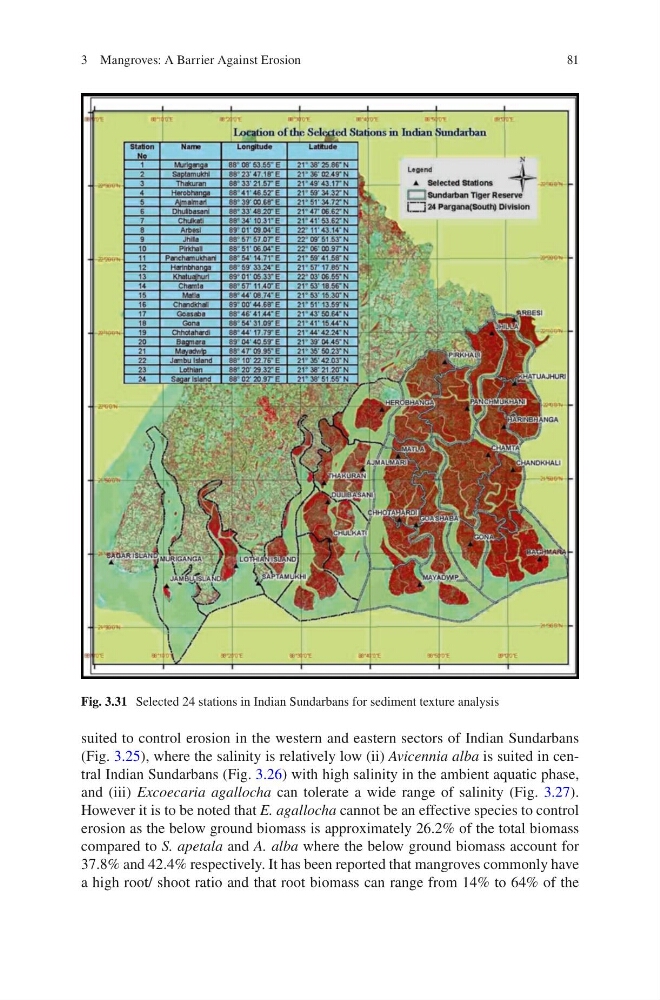
Fig. 3.31 Selected 24 stations in Indian Sundarbans for sediment texture analysis
3 Mangroves: A Barrier Against Erosion
suited to control erosion in the western and eastern sectors of Indian Sundarbans
(Fig. 3.25), where the salinity is relatively low (ii) Avicennia alba is suited in central Indian Sundarbans (Fig. 3.26) with high salinity in the ambient aquatic phase,
and (iii) Excoecaria agallocha can tolerate a wide range of salinity (Fig. 3.27).
However it is to be noted that E. agallocha cannot be an effective species to control
erosion as the below ground biomass is approximately 26.2% of the total biomass
compared to S. apetala and A. alba where the below ground biomass account for
37.8% and 42.4% respectively. It has been reported that mangroves commonly have
a high root/ shoot ratio and that root biomass can range from 14% to 64% of the
Fig. 3.31 Selected 24 stations in Indian Sundarbans for sediment texture analysis
3 Mangroves: A Barrier Against Erosion