

340
Dakshin Rai is the God of the tiger. He is worshipped below a banyan (Ficus
bengalensis), peepal (Ficus religiosa) or neem tree (Azadirachta indica). Wood cutters, boatmen, honey collectors and other communities worship this God especially
on Makar Sankranti day. Dakshin Rai legends sometimes depict him as a warrior
seated on a tiger with a bow and arrow in his hands. He is undoubtedly the main folk
deity and his worship is an important ritual of the cultural and religious history of
the Sundarbans.
Among the folk rites associated with the worship of Dakshin Rai, Jatai has a
special place. This ceremony is observed in the forest at the dead of night. The worship is performed by lighting torches, beating of drums and offering of wine, meat
and hallucinatory drugs. Ducks and goats are sacrificed. In these folk societies various beliefs exist about the divinity and powers of Dakshin Rai. Invocation of
Dakshin Rai is also made in case of diseases of cattle. Dakshin Rai is worshiped
mostly as the God who rescues humans from evil influences and helps in
cultivation.
This religion and culture based ecosystem services of mangroves was also brain
stormed amongst the relevant stakeholders in the frame work of eastern sector
Indian Sundarbans during 2016–2018 through a set of questionnaires (Vide
Annexure 10 A). The entire network of the study consisted of three stages (i)
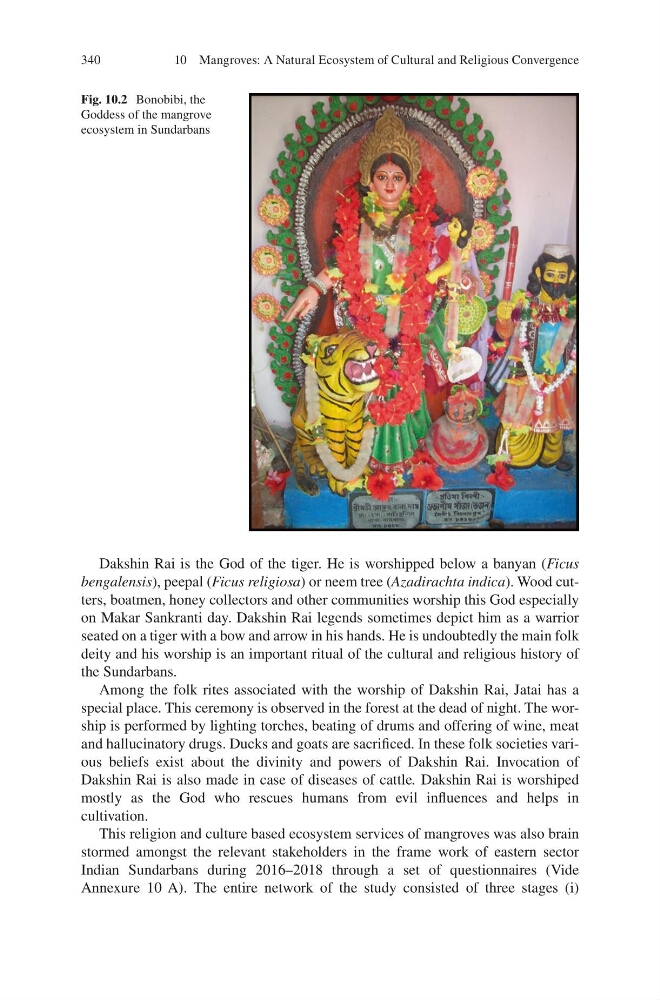
Fig. 10.2 Bonobibi, the
Goddess of the mangrove
ecosystem in Sundarbans
10 Mangroves: A Natural Ecosystem of Cultural and Religious Convergence
Dakshin Rai is the God of the tiger. He is worshipped below a banyan (Ficus
bengalensis), peepal (Ficus religiosa) or neem tree (Azadirachta indica). Wood cutters, boatmen, honey collectors and other communities worship this God especially
on Makar Sankranti day. Dakshin Rai legends sometimes depict him as a warrior
seated on a tiger with a bow and arrow in his hands. He is undoubtedly the main folk
deity and his worship is an important ritual of the cultural and religious history of
the Sundarbans.
Among the folk rites associated with the worship of Dakshin Rai, Jatai has a
special place. This ceremony is observed in the forest at the dead of night. The worship is performed by lighting torches, beating of drums and offering of wine, meat
and hallucinatory drugs. Ducks and goats are sacrificed. In these folk societies various beliefs exist about the divinity and powers of Dakshin Rai. Invocation of
Dakshin Rai is also made in case of diseases of cattle. Dakshin Rai is worshiped
mostly as the God who rescues humans from evil influences and helps in
cultivation.
This religion and culture based ecosystem services of mangroves was also brain
stormed amongst the relevant stakeholders in the frame work of eastern sector
Indian Sundarbans during 2016–2018 through a set of questionnaires (Vide
Annexure 10 A). The entire network of the study consisted of three stages (i)
Fig. 10.2 Bonobibi, the
Goddess of the mangrove
ecosystem in Sundarbans
10 Mangroves: A Natural Ecosystem of Cultural and Religious Convergence