

300
Three sampling stations were selected for this study in and around the Sundarban
mangrove ecosystem namely, Diamond Harbour (Stn. 1), Sagar light house (Stn. 2)
and Junput (Stn. 3). Each of these sampling stations is markedly different from the
other with respect to aquatic salinity due to their location and proximity to the Bay
of Bengal.
Diamond Harbour (Stn. 1) is situated in the low saline upper stretch of Hooghly
estuary, just outside the northern boundary of Indian Sundarbans. The station is very
near to the Haldia port-cum-industrial complex. Salinity of surface water is low
around the station owing to its location far away from the Bay of Bengal in the
extreme upstream region and also due to huge fresh water discharge from the
Hooghly River, which is perennial in nature. The station has three mangrove species
(namely Sonneratia apetala, Excoecaria agallocha and Avicennia alba) along with
few mangrove associates like Porteresia coarctata (salt marsh grass) and seaweeds
(Enteromorpha sp.).
Sagar light house (Stn. 2) is situated in the south western tip of the Sagar Island
and falls in the western sector of Indian Sundarbans. The station has rich mangrove
vegetation and extensive mudflats. Although there are no industrial activities in this
station, but the presence of sizeable number of shrimp farms (presently carrying on
shrimp culture by improved traditional method) has enriched the surrounding water
with nutrients and organic load.
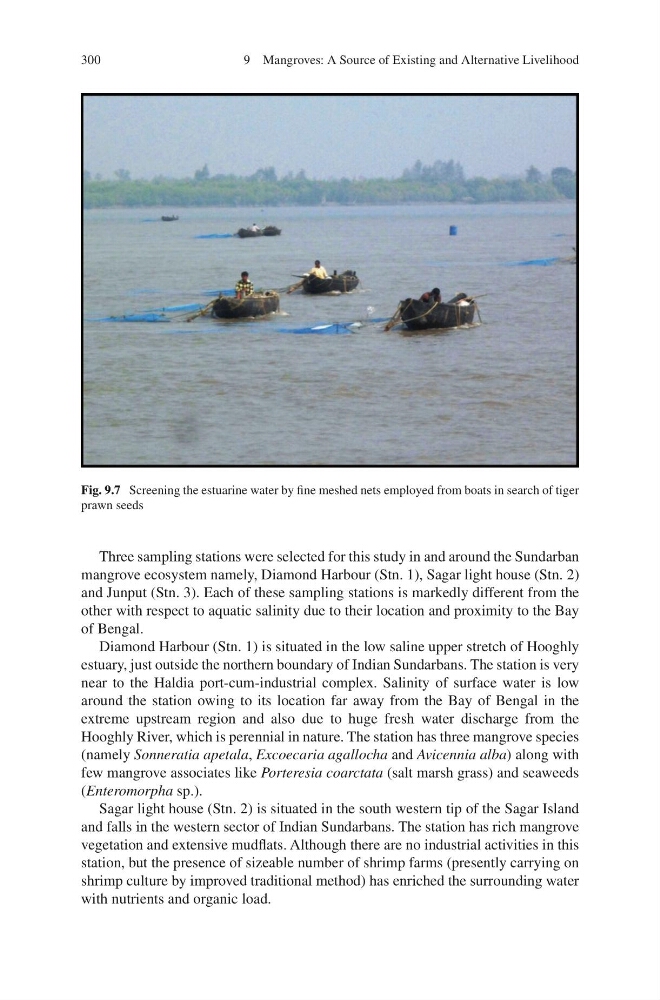
Fig. 9.7 Screening the estuarine water by fine meshed nets employed from boats in search of tiger
prawn seeds
9 Mangroves: A Source of Existing and Alternative Livelihood
Three sampling stations were selected for this study in and around the Sundarban
mangrove ecosystem namely, Diamond Harbour (Stn. 1), Sagar light house (Stn. 2)
and Junput (Stn. 3). Each of these sampling stations is markedly different from the
other with respect to aquatic salinity due to their location and proximity to the Bay
of Bengal.
Diamond Harbour (Stn. 1) is situated in the low saline upper stretch of Hooghly
estuary, just outside the northern boundary of Indian Sundarbans. The station is very
near to the Haldia port-cum-industrial complex. Salinity of surface water is low
around the station owing to its location far away from the Bay of Bengal in the
extreme upstream region and also due to huge fresh water discharge from the
Hooghly River, which is perennial in nature. The station has three mangrove species
(namely Sonneratia apetala, Excoecaria agallocha and Avicennia alba) along with
few mangrove associates like Porteresia coarctata (salt marsh grass) and seaweeds
(Enteromorpha sp.).
Sagar light house (Stn. 2) is situated in the south western tip of the Sagar Island
and falls in the western sector of Indian Sundarbans. The station has rich mangrove
vegetation and extensive mudflats. Although there are no industrial activities in this
station, but the presence of sizeable number of shrimp farms (presently carrying on
shrimp culture by improved traditional method) has enriched the surrounding water
with nutrients and organic load.
Fig. 9.7 Screening the estuarine water by fine meshed nets employed from boats in search of tiger
prawn seeds
9 Mangroves: A Source of Existing and Alternative Livelihood