

255
(Steinke and Naidoo 1990). There are generally three zones, an upper Rhizoclonium
zone, middle Bostrychia Zone and a lower Caloglossa zone. In Indian Sundarbans,
common macroalgae are Catenella sp., Caloglossa sp., Enteromorpha spp., and
Ulva sp. Among them Enteromorpha can tolerate wide range of salinity gradients
(from 2 psu to 30 psu).
Microfloral Community
The microbial community of deltaic Sundarbans encompasses bacteria, cyanobacteria and phytoplankton of the ambient aquatic phase. It has been observed that the
bacteria which are found in the “detritus” or the decomposed litters are also found
in the different associated fauna of this complex (Table 8.9), especially from the
evacuated gut tissues. So, it may well be presumed that the different types of bacteria that are found in the “detritus” of this deltaic complex could also be expressed
within the different benthic fauna of this environment that rely on the substratum for
their food sources. It is presumed that the microbes in Sundarbans mangrove
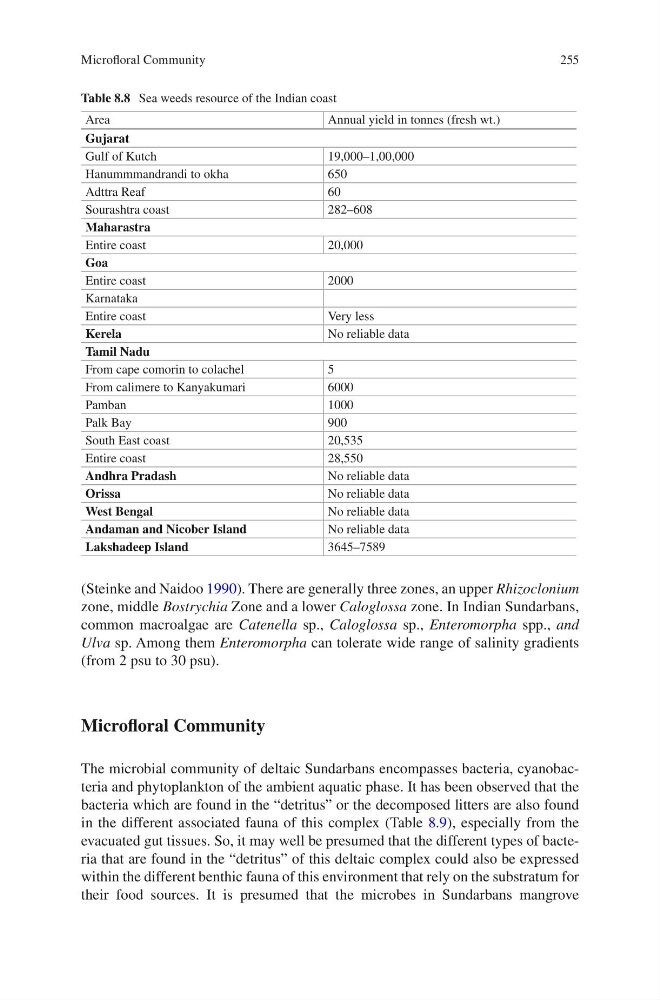
Table 8.8 Sea weeds resource of the Indian coast
Area
Annual yield in tonnes (fresh wt.)
Gujarat
Gulf of Kutch
19,000–1,00,000
Hanummmandrandi to okha
650
Adttra Reaf
60
Sourashtra coast
282–608
Maharastra
Entire coast
20,000
Goa
Entire coast
2000
Karnataka
Entire coast
Very less
Kerela
No reliable data
Tamil Nadu
From cape comorin to colachel
5
From calimere to Kanyakumari
6000
Pamban
1000
Palk Bay
900
South East coast
20,535
Entire coast
28,550
Andhra Pradash
No reliable data
Orissa
No reliable data
West Bengal
No reliable data
Andaman and Nicober Island
No reliable data
Lakshadeep Island
3645–7589
Microfloral Community
(Steinke and Naidoo 1990). There are generally three zones, an upper Rhizoclonium
zone, middle Bostrychia Zone and a lower Caloglossa zone. In Indian Sundarbans,
common macroalgae are Catenella sp., Caloglossa sp., Enteromorpha spp., and
Ulva sp. Among them Enteromorpha can tolerate wide range of salinity gradients
(from 2 psu to 30 psu).
Microfloral Community
The microbial community of deltaic Sundarbans encompasses bacteria, cyanobacteria and phytoplankton of the ambient aquatic phase. It has been observed that the
bacteria which are found in the “detritus” or the decomposed litters are also found
in the different associated fauna of this complex (Table 8.9), especially from the
evacuated gut tissues. So, it may well be presumed that the different types of bacteria that are found in the “detritus” of this deltaic complex could also be expressed
within the different benthic fauna of this environment that rely on the substratum for
their food sources. It is presumed that the microbes in Sundarbans mangrove
Table 8.8 Sea weeds resource of the Indian coast
Area
Annual yield in tonnes (fresh wt.)
Gujarat
Gulf of Kutch
19,000–1,00,000
Hanummmandrandi to okha
650
Adttra Reaf
60
Sourashtra coast
282–608
Maharastra
Entire coast
20,000
Goa
Entire coast
2000
Karnataka
Entire coast
Very less
Kerela
No reliable data
Tamil Nadu
From cape comorin to colachel
5
From calimere to Kanyakumari
6000
Pamban
1000
Palk Bay
900
South East coast
20,535
Entire coast
28,550
Andhra Pradash
No reliable data
Orissa
No reliable data
West Bengal
No reliable data
Andaman and Nicober Island
No reliable data
Lakshadeep Island
3645–7589
Microfloral Community