

252
Mangrove and sea grasses serve more or less parallel functions in their habitats.
Both trap sediments and also help to capture chemical elements including trace metals (Costa and Davy 1992; Lacerda 1998). A number of fish and shellfish often use
sea grass/mangrove habitats as a nursery ground. Tussenbrock (1995) found that sea
grass growth, biomass and primary production were all higher in vicinity of mangrove discharge than they occur in other habitats. Respiratory CO 2 derived from
mangrove particulate organic matter (POM) could be a carbon source for sea grasses
and hence, could promote rapid growth. A pilot study on assessment of stored carbons in the above ground biomass and below ground biomass of sea grass species in
the Gulf of Mannar during December, 2017 was conducted by my team members
Dr. Sufia Zaman and Dr. Rajrupa Ghosh who observed that these mangroves associate species are unique store house of carbon (Tables 8.6 and 8.7).
Three study sites namely Koswari (08
°
52.34′N, 78
°
13.04′E; Stn. 1), Kariyachalli
(08
°
57.36′N, 78
°
14.42′E; Stn. 2) and Vilanguchalli (08
°
56.22′N, 78
°
15.59′E; Stn. 3)
and three species (Cymodocea serrulata, Thalassia hemprichii, Halophila ovalis)
were selected for estimation of stored carbon.
Mangrove ecosystem is highly dynamic with constant phenomena like erosion
and accretion taking place due to waves, tides and currents. The erosion of soil and
dune formation is largely controlled by Ipomoea pes-capre, which is a common
Sand-binder in the Indian Sundarbans (Fig. 8.7). It is a creeper with extended root
system and is noted for serving as indicator species in relation to Zn, Cu, Pb and Fe
of the ambient aquatic phase.
Macroalgal diversity is rich in mangrove habitats where it contributes to primary
production as well as providing habitat and food for a number of invertebrate and
fish species. Among 800 species of Marine algae recorded from different parts of
Indian coasts, about 60 species are commercially important sea weeds. A study conducted by CMFRI, CSMCRI and NIO estimated that total standing crop of seaweeds
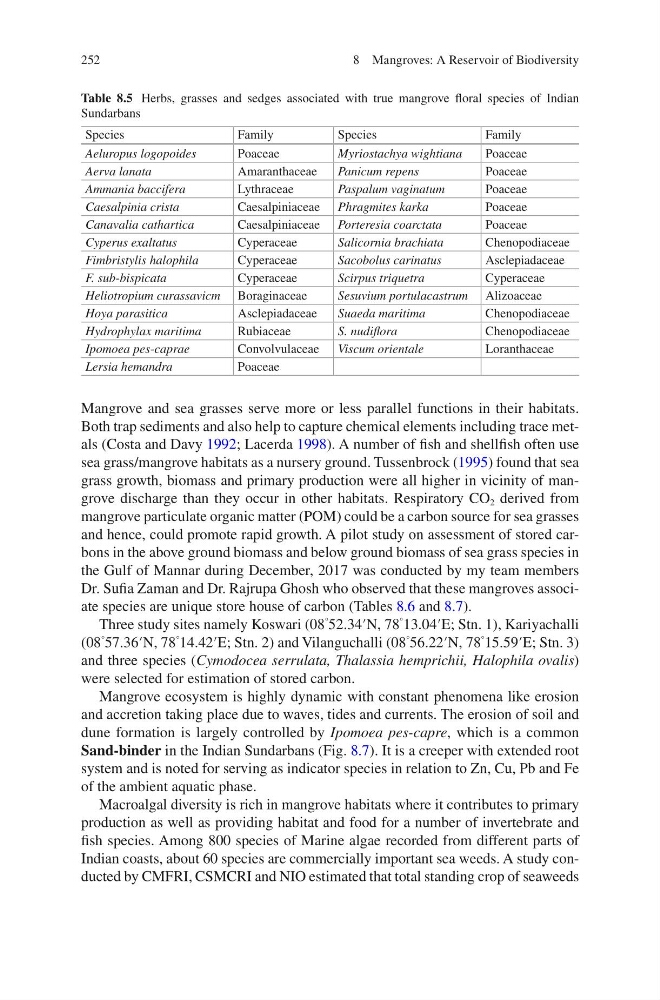
Table 8.5 Herbs, grasses and sedges associated with true mangrove floral species of Indian
Sundarbans
Species
Family
Species
Family
Aeluropus logopoides
Poaceae
Myriostachya wightiana
Poaceae
Aerva lanata
Amaranthaceae
Panicum repens
Poaceae
Ammania baccifera
Lythraceae
Paspalum vaginatum
Poaceae
Caesalpinia crista
Caesalpiniaceae Phragmites karka
Poaceae
Canavalia cathartica
Caesalpiniaceae Porteresia coarctata
Poaceae
Cyperus exaltatus
Cyperaceae
Salicornia brachiata
Chenopodiaceae
Fimbristylis halophila
Cyperaceae
Sacobolus carinatus
Asclepiadaceae
F. sub-bispicata
Cyperaceae
Scirpus triquetra
Cyperaceae
Heliotropium curassavicm Boraginaceae
Sesuvium portulacastrum Alizoaceae
Hoya parasitica
Asclepiadaceae
Suaeda maritima
Chenopodiaceae
Hydrophylax maritima
Rubiaceae
S. nudiflora
Chenopodiaceae
Ipomoea pes-caprae
Convolvulaceae Viscum orientale
Loranthaceae
Lersia hemandra
Poaceae
8 Mangroves: A Reservoir of Biodiversity
Mangrove and sea grasses serve more or less parallel functions in their habitats.
Both trap sediments and also help to capture chemical elements including trace metals (Costa and Davy 1992; Lacerda 1998). A number of fish and shellfish often use
sea grass/mangrove habitats as a nursery ground. Tussenbrock (1995) found that sea
grass growth, biomass and primary production were all higher in vicinity of mangrove discharge than they occur in other habitats. Respiratory CO 2 derived from
mangrove particulate organic matter (POM) could be a carbon source for sea grasses
and hence, could promote rapid growth. A pilot study on assessment of stored carbons in the above ground biomass and below ground biomass of sea grass species in
the Gulf of Mannar during December, 2017 was conducted by my team members
Dr. Sufia Zaman and Dr. Rajrupa Ghosh who observed that these mangroves associate species are unique store house of carbon (Tables 8.6 and 8.7).
Three study sites namely Koswari (08
°
52.34′N, 78
°
13.04′E; Stn. 1), Kariyachalli
(08
°
57.36′N, 78
°
14.42′E; Stn. 2) and Vilanguchalli (08
°
56.22′N, 78
°
15.59′E; Stn. 3)
and three species (Cymodocea serrulata, Thalassia hemprichii, Halophila ovalis)
were selected for estimation of stored carbon.
Mangrove ecosystem is highly dynamic with constant phenomena like erosion
and accretion taking place due to waves, tides and currents. The erosion of soil and
dune formation is largely controlled by Ipomoea pes-capre, which is a common
Sand-binder in the Indian Sundarbans (Fig. 8.7). It is a creeper with extended root
system and is noted for serving as indicator species in relation to Zn, Cu, Pb and Fe
of the ambient aquatic phase.
Macroalgal diversity is rich in mangrove habitats where it contributes to primary
production as well as providing habitat and food for a number of invertebrate and
fish species. Among 800 species of Marine algae recorded from different parts of
Indian coasts, about 60 species are commercially important sea weeds. A study conducted by CMFRI, CSMCRI and NIO estimated that total standing crop of seaweeds
Table 8.5 Herbs, grasses and sedges associated with true mangrove floral species of Indian
Sundarbans
Species
Family
Species
Family
Aeluropus logopoides
Poaceae
Myriostachya wightiana
Poaceae
Aerva lanata
Amaranthaceae
Panicum repens
Poaceae
Ammania baccifera
Lythraceae
Paspalum vaginatum
Poaceae
Caesalpinia crista
Caesalpiniaceae Phragmites karka
Poaceae
Canavalia cathartica
Caesalpiniaceae Porteresia coarctata
Poaceae
Cyperus exaltatus
Cyperaceae
Salicornia brachiata
Chenopodiaceae
Fimbristylis halophila
Cyperaceae
Sacobolus carinatus
Asclepiadaceae
F. sub-bispicata
Cyperaceae
Scirpus triquetra
Cyperaceae
Heliotropium curassavicm Boraginaceae
Sesuvium portulacastrum Alizoaceae
Hoya parasitica
Asclepiadaceae
Suaeda maritima
Chenopodiaceae
Hydrophylax maritima
Rubiaceae
S. nudiflora
Chenopodiaceae
Ipomoea pes-caprae
Convolvulaceae Viscum orientale
Loranthaceae
Lersia hemandra
Poaceae
8 Mangroves: A Reservoir of Biodiversity