

248
there is a pure silt substrate. Both the regions exhibit productive mangrove vegetation, but high salinity in the central region likely reduces their growth. Freshwater
loving mangrove species (Heritiera fomes, Nypa fruticans and Sonneratia apetala)
are extremely rare in the central region.
The results of Shannon-Weiner Index are shown in Table 8.4 and Fig. 8.4.
The variation in the value of the Shannon Weiner Species Diversity Index reflects
(i) the degree of stress (both natural and anthropogenic) (ii) conditions of the ambient environment (in terms of hydrological parameters and soil quality). Greater
value of the index represents a more congenial environment which usually occurs
due to the survival of more number of species or even distribution of the number of
individuals amongst different species in the quadrate.
It is evident from the temporal data that Lothian Island has the highest mangrove
biodiversity in all the 3 years and Canning exhibits the lowest values in similar years.
This spatial variation of diversity Index is significant as revealed through ANOVA
(p < 0.01). The significant spatial variation of diversity index (H) in the study area
might be the result of anthropogenic and natural threats to which these stations are
exposed to. Canning with lowest diversity index value is the gateway of central and
eastern sectors of Indian Sundarbans and hence experiences large tourist pressure
particularly during December to February. Apart from this, busy market places and
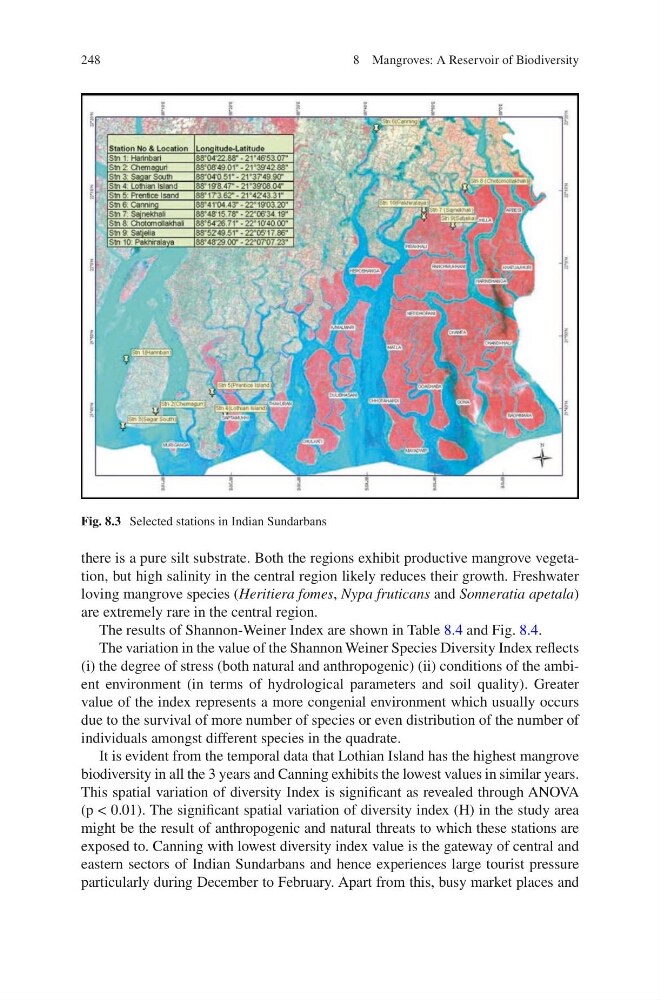
Fig. 8.3 Selected stations in Indian Sundarbans
8 Mangroves: A Reservoir of Biodiversity
there is a pure silt substrate. Both the regions exhibit productive mangrove vegetation, but high salinity in the central region likely reduces their growth. Freshwater
loving mangrove species (Heritiera fomes, Nypa fruticans and Sonneratia apetala)
are extremely rare in the central region.
The results of Shannon-Weiner Index are shown in Table 8.4 and Fig. 8.4.
The variation in the value of the Shannon Weiner Species Diversity Index reflects
(i) the degree of stress (both natural and anthropogenic) (ii) conditions of the ambient environment (in terms of hydrological parameters and soil quality). Greater
value of the index represents a more congenial environment which usually occurs
due to the survival of more number of species or even distribution of the number of
individuals amongst different species in the quadrate.
It is evident from the temporal data that Lothian Island has the highest mangrove
biodiversity in all the 3 years and Canning exhibits the lowest values in similar years.
This spatial variation of diversity Index is significant as revealed through ANOVA
(p < 0.01). The significant spatial variation of diversity index (H) in the study area
might be the result of anthropogenic and natural threats to which these stations are
exposed to. Canning with lowest diversity index value is the gateway of central and
eastern sectors of Indian Sundarbans and hence experiences large tourist pressure
particularly during December to February. Apart from this, busy market places and
Fig. 8.3 Selected stations in Indian Sundarbans
8 Mangroves: A Reservoir of Biodiversity