

245
These very specialized mangrove vegetations play a vital role in maintaining the
economic structure of the people inhabiting the islands of this deltaic lobe as they
are the reservoir of various forestry products ranging from firewood, timber and
construction materials for thatching houses to honey, wax, alcohol, tannins and fisheries. The huge quantum of detritus supplied by this ecosystem provides nutritional
input to adjacent coastal water due to which the coastal habitat has become a unique
nursery and breeding ground of a variety of fin fish and shell fish. Basically mangrove ecosystem is the reservoir of a wide range of flora and fauna with excellent
adaptive potential to cope with the highly dynamic environmental conditions. A
representive picture of the mangrove-centric biodiversity is presented in this chapter
with focus on Indian Sundarbans.
Floral Biodiversity
A total of 69 floral species (included within 29 families and 50 genera) have been
recognized in the Sundarbans area at the north-eastern coast of Indian sub- continent,
out of which 34 species are true mangrove types (Mitra 2000). This ecosystem sustains almost all the mangrove species available in other part of the Indian subcontinent, Burma and other South East Asian countries. The list of the true
mangroves in the Indian Sundarbans is shown in the Table 8.2.
A study conducted in 10 stations of Indian Sundarbans (Table 8.3 and Fig. 8.3)
during three consecutive years (2016, 2017 and 2018) showed significant spatial
variations in mangrove floral diversity, where I have used the Shannon Weiner
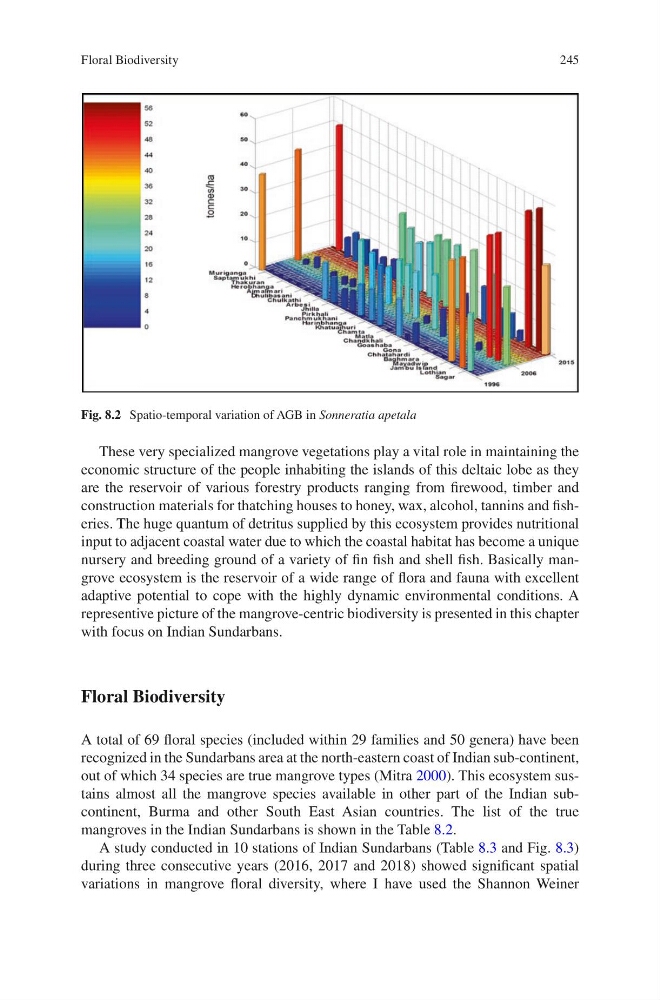
Fig. 8.2 Spatio-temporal variation of AGB in Sonneratia apetala
Floral Biodiversity
These very specialized mangrove vegetations play a vital role in maintaining the
economic structure of the people inhabiting the islands of this deltaic lobe as they
are the reservoir of various forestry products ranging from firewood, timber and
construction materials for thatching houses to honey, wax, alcohol, tannins and fisheries. The huge quantum of detritus supplied by this ecosystem provides nutritional
input to adjacent coastal water due to which the coastal habitat has become a unique
nursery and breeding ground of a variety of fin fish and shell fish. Basically mangrove ecosystem is the reservoir of a wide range of flora and fauna with excellent
adaptive potential to cope with the highly dynamic environmental conditions. A
representive picture of the mangrove-centric biodiversity is presented in this chapter
with focus on Indian Sundarbans.
Floral Biodiversity
A total of 69 floral species (included within 29 families and 50 genera) have been
recognized in the Sundarbans area at the north-eastern coast of Indian sub- continent,
out of which 34 species are true mangrove types (Mitra 2000). This ecosystem sustains almost all the mangrove species available in other part of the Indian subcontinent, Burma and other South East Asian countries. The list of the true
mangroves in the Indian Sundarbans is shown in the Table 8.2.
A study conducted in 10 stations of Indian Sundarbans (Table 8.3 and Fig. 8.3)
during three consecutive years (2016, 2017 and 2018) showed significant spatial
variations in mangrove floral diversity, where I have used the Shannon Weiner
Fig. 8.2 Spatio-temporal variation of AGB in Sonneratia apetala
Floral Biodiversity