

236
Information on nitrogen content of marine organisms is needed in a variety of
studies, such as in environmental research, chemical characterization of species,
or use of organisms as food in both aquaculture and human nutrition, among many
others (Puwastien et al. 1999; Lourenço et al. 2004; Aguilera-Morales et al. 2005).
Since the nineteenth century, several methods have been developed to quantify the
total content of nitrogen in both biological (e.g., seeds, animal tissues, food) and
non-biological (e.g., rocks, soil, water) samples. Considering the data of nitrogen
percentage in mangrove floral species in context to the present study (Tables 7.7,
7.8, 7.9, 7.10, and 7.11), an attempt has been taken to compare them with the nitrogen levels of several other floral species (11 microalgae, 19 seaweeds, 3 sea
grasses, 4 mangrove plants, and 2 salt marsh plants), which were analysed and
compared by Elisabete Barbarino and Sergio O. Lourenço (2009) by both CHN
analyser and the method outlined by Hach et al. (1987), a methodological alternative that holds lower analytical costs compared to elemental composition CHN. The
basic aim of the researchers was to evaluate the quality of the data on nitrogen
percentage and analyze the costing of sample analysis. It is observed the present
data of Sundarban mangroves synchronized well with the values of mangroves as
highlighted in Table 7.12.
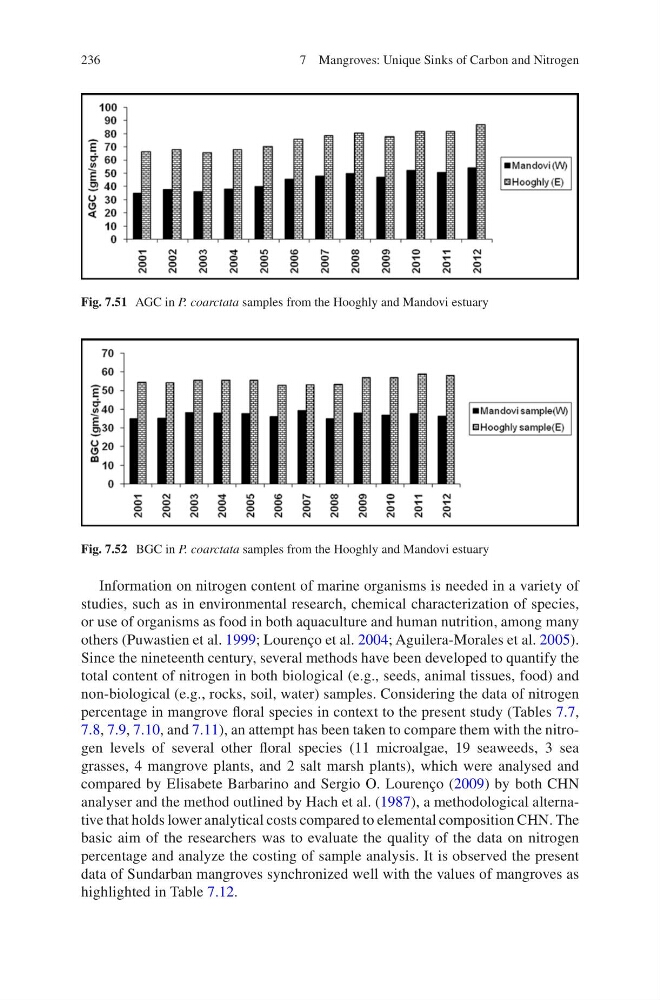
Fig. 7.52 BGC in P. coarctata samples from the Hooghly and Mandovi estuary
Fig. 7.51 AGC in P. coarctata samples from the Hooghly and Mandovi estuary
7 Mangroves: Unique Sinks of Carbon and Nitrogen
Information on nitrogen content of marine organisms is needed in a variety of
studies, such as in environmental research, chemical characterization of species,
or use of organisms as food in both aquaculture and human nutrition, among many
others (Puwastien et al. 1999; Lourenço et al. 2004; Aguilera-Morales et al. 2005).
Since the nineteenth century, several methods have been developed to quantify the
total content of nitrogen in both biological (e.g., seeds, animal tissues, food) and
non-biological (e.g., rocks, soil, water) samples. Considering the data of nitrogen
percentage in mangrove floral species in context to the present study (Tables 7.7,
7.8, 7.9, 7.10, and 7.11), an attempt has been taken to compare them with the nitrogen levels of several other floral species (11 microalgae, 19 seaweeds, 3 sea
grasses, 4 mangrove plants, and 2 salt marsh plants), which were analysed and
compared by Elisabete Barbarino and Sergio O. Lourenço (2009) by both CHN
analyser and the method outlined by Hach et al. (1987), a methodological alternative that holds lower analytical costs compared to elemental composition CHN. The
basic aim of the researchers was to evaluate the quality of the data on nitrogen
percentage and analyze the costing of sample analysis. It is observed the present
data of Sundarban mangroves synchronized well with the values of mangroves as
highlighted in Table 7.12.
Fig. 7.52 BGC in P. coarctata samples from the Hooghly and Mandovi estuary
Fig. 7.51 AGC in P. coarctata samples from the Hooghly and Mandovi estuary
7 Mangroves: Unique Sinks of Carbon and Nitrogen