

143
A study conducted during 2017 and 2018 shows that in P. coarctata samples, the
heavy metals varied as per the order Zn > Cu > Pb. This sequence is uniform in all
the three selected stations. In the present study, the concentration of Zn ranged from
49.80 (at Bali) to 165.48 (at Canning) during 2017 and in 2018 the concentration
ranged from 55.78 (at Bali) to 171.46 (at Canning). Cu ranged from 20.19 (at Bali)
to 63.21 (at Canning) in 2017; 23.74 (at Bali) to 66.36 (at Canning) in 2018. Pb
ranged from 2.66 (at Bali) to 19.22 (at Canning) in 2017 and from 4.31 (at Bali) to
21.67 (at Canning) in 2018 (Tables 5.9, 5.10, and 5.11).
In the International panorama, the most common heavy metals that contaminate
mangrove habitats are lead, zinc, mercury, magnesium, nickel, chromium, cadmium,
and manganese (Basamba et al. 2010). A research study has revealed high lead levels in the grey mangrove sediments of the United Arab Emirates most likely as a
result of massive expansion of developmental construction projects. The vast developmental growth with emphasis on recreational reshaping of coastal beaches has
subjected mangroves to discarded contaminants which could have led to the sedimentation of heavy metals within plant tissue (Shriadah 1999). Research investigations of the status of heavy metal pollution in grey mangrove habitat biota within the
Red Sea coastal areas of Saudi Arabia have also documented a very high concentration particularly for copper and chromium (Usman et al. 2013). Similarly in India
and Hong Kong, the intense development and industrialization have posed an ecological threat to the nearby mangrove forests which have revealed elevated levels of
heavy metals that exceed sediment quality guidelines particularly with lead (Sarika
and Chandramohanakumar 2008; Defew et al. 2005; Lewis et al. 2011). It has been
predicted that the levels of lead within mangrove sediments in the Gulf region and
others could be increasing in the coming few years due to impacts of oil spills and
the higher rate of fuel consumption (Shriadah 1999; Agoramoorthy et al. 2008;
Basamba et al. 2010).
Kakdwip
Harinbari
Chemaguri
Sagar south
Lothian island
Jambu island
Frasergunj
Gosaba
Chotomollakhali
Bali island
Sajnekhali
Bagmara
Root Premonsoon
Stem Premonsoon
Leaf Premonsoon
Leaf Monsoon
Stem Postmonsoon
Leaf Postmonsoon
Stem Monsoon
Root Postmonsoon
Root Monsoon
Concentration of Hg (ppm dry wt.)
0.08
0.07
0.06
0.05
0.04
0.03
0.02
0.01
0
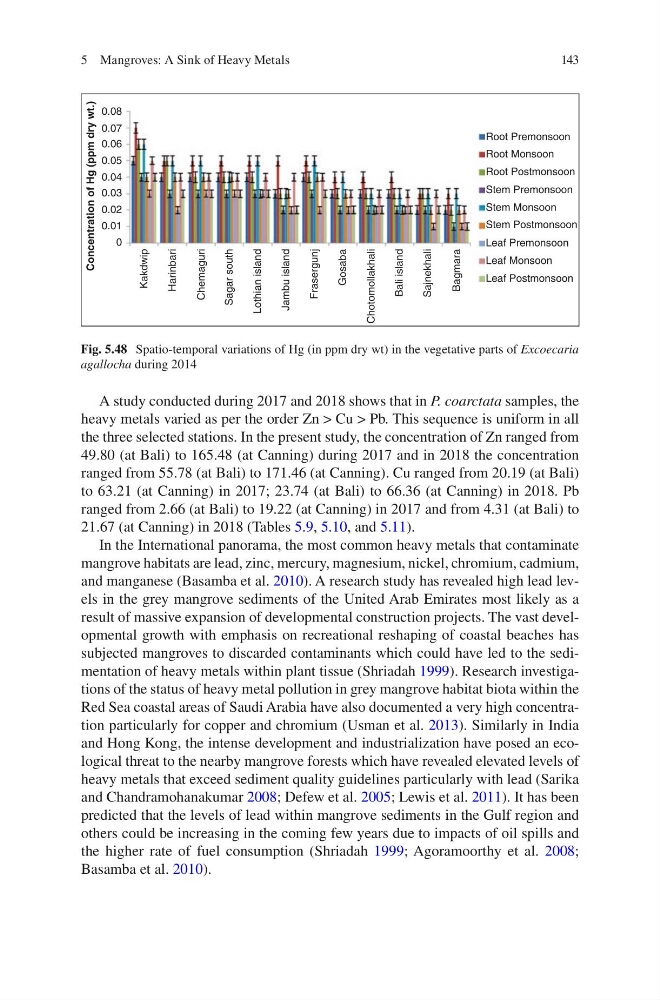
Fig. 5.48 Spatio-temporal variations of Hg (in ppm dry wt) in the vegetative parts of Excoecaria
agallocha during 2014
5 Mangroves: A Sink of Heavy Metals
A study conducted during 2017 and 2018 shows that in P. coarctata samples, the
heavy metals varied as per the order Zn > Cu > Pb. This sequence is uniform in all
the three selected stations. In the present study, the concentration of Zn ranged from
49.80 (at Bali) to 165.48 (at Canning) during 2017 and in 2018 the concentration
ranged from 55.78 (at Bali) to 171.46 (at Canning). Cu ranged from 20.19 (at Bali)
to 63.21 (at Canning) in 2017; 23.74 (at Bali) to 66.36 (at Canning) in 2018. Pb
ranged from 2.66 (at Bali) to 19.22 (at Canning) in 2017 and from 4.31 (at Bali) to
21.67 (at Canning) in 2018 (Tables 5.9, 5.10, and 5.11).
In the International panorama, the most common heavy metals that contaminate
mangrove habitats are lead, zinc, mercury, magnesium, nickel, chromium, cadmium,
and manganese (Basamba et al. 2010). A research study has revealed high lead levels in the grey mangrove sediments of the United Arab Emirates most likely as a
result of massive expansion of developmental construction projects. The vast developmental growth with emphasis on recreational reshaping of coastal beaches has
subjected mangroves to discarded contaminants which could have led to the sedimentation of heavy metals within plant tissue (Shriadah 1999). Research investigations of the status of heavy metal pollution in grey mangrove habitat biota within the
Red Sea coastal areas of Saudi Arabia have also documented a very high concentration particularly for copper and chromium (Usman et al. 2013). Similarly in India
and Hong Kong, the intense development and industrialization have posed an ecological threat to the nearby mangrove forests which have revealed elevated levels of
heavy metals that exceed sediment quality guidelines particularly with lead (Sarika
and Chandramohanakumar 2008; Defew et al. 2005; Lewis et al. 2011). It has been
predicted that the levels of lead within mangrove sediments in the Gulf region and
others could be increasing in the coming few years due to impacts of oil spills and
the higher rate of fuel consumption (Shriadah 1999; Agoramoorthy et al. 2008;
Basamba et al. 2010).
Kakdwip
Harinbari
Chemaguri
Sagar south
Lothian island
Jambu island
Frasergunj
Gosaba
Chotomollakhali
Bali island
Sajnekhali
Bagmara
Root Premonsoon
Stem Premonsoon
Leaf Premonsoon
Leaf Monsoon
Stem Postmonsoon
Leaf Postmonsoon
Stem Monsoon
Root Postmonsoon
Root Monsoon
Concentration of Hg (ppm dry wt.)
0.08
0.07
0.06
0.05
0.04
0.03
0.02
0.01
0
Fig. 5.48 Spatio-temporal variations of Hg (in ppm dry wt) in the vegetative parts of Excoecaria
agallocha during 2014
5 Mangroves: A Sink of Heavy Metals