

340
S. Adeel et al.
Table 14 Fastness properties of irradiated polyester fabrics dyed with different conc. of irradiated
Disperse Red 13 dye solution
Shades (%) Wash fastness Lightfastness Dry rubbing fastness Wet rubbing fastness
0.5
4–5
3–4
3–4
3–4
1
3
4–5
3
3
1.5
4
4
3–4
3–4
2
3–4
4–5
4
4
2.5
4–5
4–5
3–4
3–4
0
1
2
3
4
5
6
7
8
9
10
15
30
45
60
K/S
Ultrasonic Radiation Time (min.)
Sim
RS/RP
RS/NRP
NRS/RP
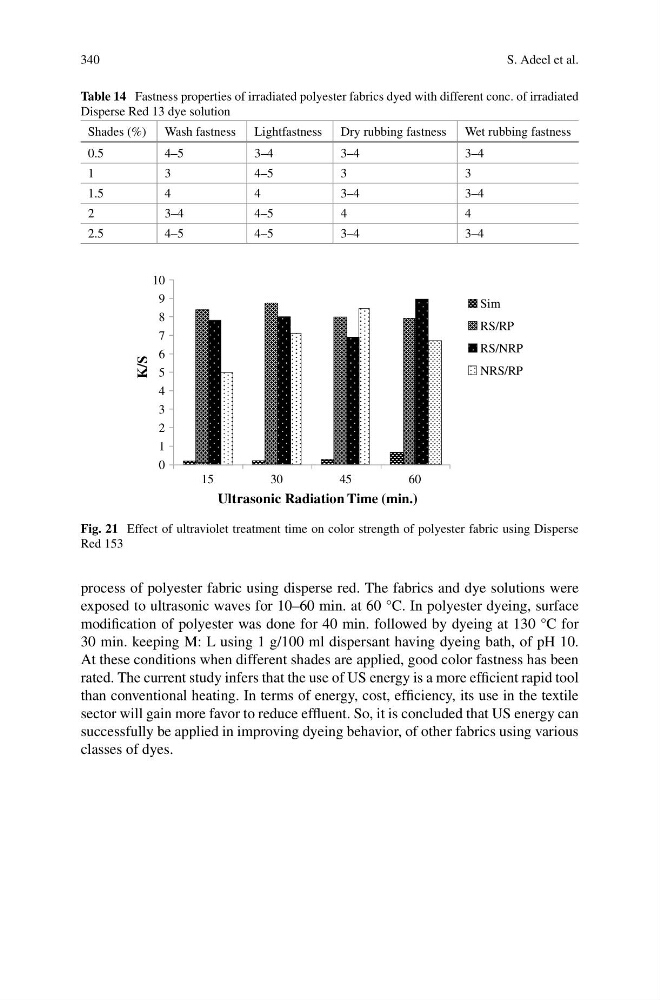
Fig. 21 Effect of ultraviolet treatment time on color strength of polyester fabric using Disperse
Red 153
process of polyester fabric using disperse red. The fabrics and dye solutions were
exposed to ultrasonic waves for 10–60 min. at 60 °C. In polyester dyeing, surface
modification of polyester was done for 40 min. followed by dyeing at 130 °C for
30 min. keeping M: L using 1 g/100 ml dispersant having dyeing bath, of pH 10.
At these conditions when different shades are applied, good color fastness has been
rated. The current study infers that the use of US energy is a more efficient rapid tool
than conventional heating. In terms of energy, cost, efficiency, its use in the textile
sector will gain more favor to reduce effluent. So, it is concluded that US energy can
successfully be applied in improving dyeing behavior, of other fabrics using various
classes of dyes.
S. Adeel et al.
Table 14 Fastness properties of irradiated polyester fabrics dyed with different conc. of irradiated
Disperse Red 13 dye solution
Shades (%) Wash fastness Lightfastness Dry rubbing fastness Wet rubbing fastness
0.5
4–5
3–4
3–4
3–4
1
3
4–5
3
3
1.5
4
4
3–4
3–4
2
3–4
4–5
4
4
2.5
4–5
4–5
3–4
3–4
0
1
2
3
4
5
6
7
8
9
10
15
30
45
60
K/S
Ultrasonic Radiation Time (min.)
Sim
RS/RP
RS/NRP
NRS/RP
Fig. 21 Effect of ultraviolet treatment time on color strength of polyester fabric using Disperse
Red 153
process of polyester fabric using disperse red. The fabrics and dye solutions were
exposed to ultrasonic waves for 10–60 min. at 60 °C. In polyester dyeing, surface
modification of polyester was done for 40 min. followed by dyeing at 130 °C for
30 min. keeping M: L using 1 g/100 ml dispersant having dyeing bath, of pH 10.
At these conditions when different shades are applied, good color fastness has been
rated. The current study infers that the use of US energy is a more efficient rapid tool
than conventional heating. In terms of energy, cost, efficiency, its use in the textile
sector will gain more favor to reduce effluent. So, it is concluded that US energy can
successfully be applied in improving dyeing behavior, of other fabrics using various
classes of dyes.