

Role of Radiation Treatment as a Cost-Effective Tool for Cotton …
331
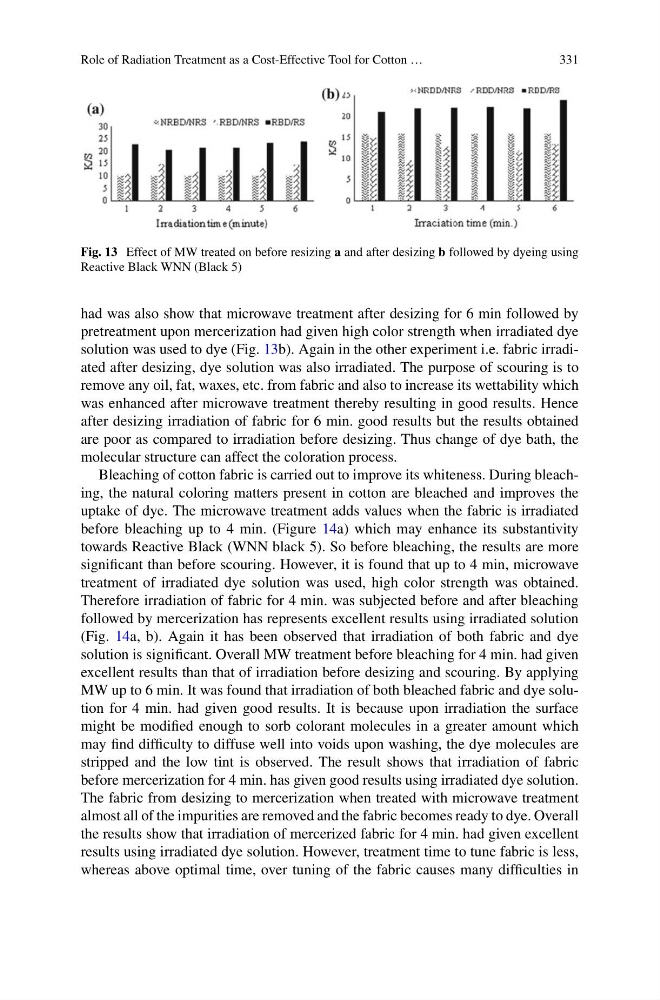
Fig. 13 Effect of MW treated on before resizing a and after desizing b followed by dyeing using
Reactive Black WNN (Black 5)
had was also show that microwave treatment after desizing for 6 min followed by
pretreatment upon mercerization had given high color strength when irradiated dye
solution was used to dye (Fig. 13b). Again in the other experiment i.e. fabric irradiated after desizing, dye solution was also irradiated. The purpose of scouring is to
remove any oil, fat, waxes, etc. from fabric and also to increase its wettability which
was enhanced after microwave treatment thereby resulting in good results. Hence
after desizing irradiation of fabric for 6 min. good results but the results obtained
are poor as compared to irradiation before desizing. Thus change of dye bath, the
molecular structure can affect the coloration process.
Bleaching of cotton fabric is carried out to improve its whiteness. During bleaching, the natural coloring matters present in cotton are bleached and improves the
uptake of dye. The microwave treatment adds values when the fabric is irradiated
before bleaching up to 4 min. (Figure 14a) which may enhance its substantivity
towards Reactive Black (WNN black 5). So before bleaching, the results are more
significant than before scouring. However, it is found that up to 4 min, microwave
treatment of irradiated dye solution was used, high color strength was obtained.
Therefore irradiation of fabric for 4 min. was subjected before and after bleaching
followed by mercerization has represents excellent results using irradiated solution
(Fig. 14a, b). Again it has been observed that irradiation of both fabric and dye
solution is significant. Overall MW treatment before bleaching for 4 min. had given
excellent results than that of irradiation before desizing and scouring. By applying
MW up to 6 min. It was found that irradiation of both bleached fabric and dye solution for 4 min. had given good results. It is because upon irradiation the surface
might be modified enough to sorb colorant molecules in a greater amount which
may find difficulty to diffuse well into voids upon washing, the dye molecules are
stripped and the low tint is observed. The result shows that irradiation of fabric
before mercerization for 4 min. has given good results using irradiated dye solution.
The fabric from desizing to mercerization when treated with microwave treatment
almost all of the impurities are removed and the fabric becomes ready to dye. Overall
the results show that irradiation of mercerized fabric for 4 min. had given excellent
results using irradiated dye solution. However, treatment time to tune fabric is less,
whereas above optimal time, over tuning of the fabric causes many difficulties in
331
Fig. 13 Effect of MW treated on before resizing a and after desizing b followed by dyeing using
Reactive Black WNN (Black 5)
had was also show that microwave treatment after desizing for 6 min followed by
pretreatment upon mercerization had given high color strength when irradiated dye
solution was used to dye (Fig. 13b). Again in the other experiment i.e. fabric irradiated after desizing, dye solution was also irradiated. The purpose of scouring is to
remove any oil, fat, waxes, etc. from fabric and also to increase its wettability which
was enhanced after microwave treatment thereby resulting in good results. Hence
after desizing irradiation of fabric for 6 min. good results but the results obtained
are poor as compared to irradiation before desizing. Thus change of dye bath, the
molecular structure can affect the coloration process.
Bleaching of cotton fabric is carried out to improve its whiteness. During bleaching, the natural coloring matters present in cotton are bleached and improves the
uptake of dye. The microwave treatment adds values when the fabric is irradiated
before bleaching up to 4 min. (Figure 14a) which may enhance its substantivity
towards Reactive Black (WNN black 5). So before bleaching, the results are more
significant than before scouring. However, it is found that up to 4 min, microwave
treatment of irradiated dye solution was used, high color strength was obtained.
Therefore irradiation of fabric for 4 min. was subjected before and after bleaching
followed by mercerization has represents excellent results using irradiated solution
(Fig. 14a, b). Again it has been observed that irradiation of both fabric and dye
solution is significant. Overall MW treatment before bleaching for 4 min. had given
excellent results than that of irradiation before desizing and scouring. By applying
MW up to 6 min. It was found that irradiation of both bleached fabric and dye solution for 4 min. had given good results. It is because upon irradiation the surface
might be modified enough to sorb colorant molecules in a greater amount which
may find difficulty to diffuse well into voids upon washing, the dye molecules are
stripped and the low tint is observed. The result shows that irradiation of fabric
before mercerization for 4 min. has given good results using irradiated dye solution.
The fabric from desizing to mercerization when treated with microwave treatment
almost all of the impurities are removed and the fabric becomes ready to dye. Overall
the results show that irradiation of mercerized fabric for 4 min. had given excellent
results using irradiated dye solution. However, treatment time to tune fabric is less,
whereas above optimal time, over tuning of the fabric causes many difficulties in