

A. Patil et al
305
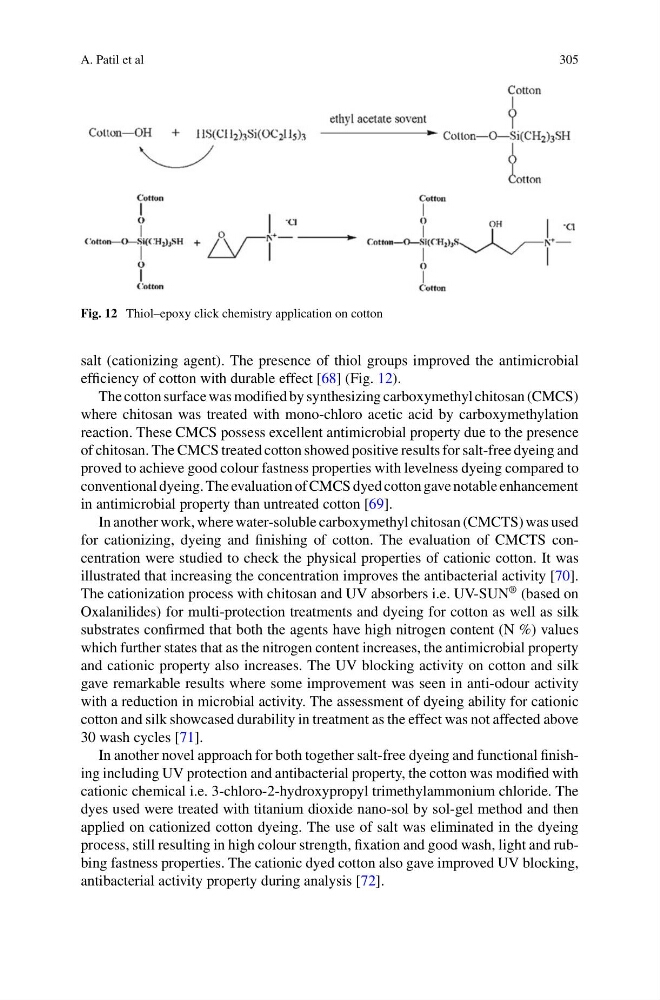
Fig. 12 Thiol–epoxy click chemistry application on cotton
salt (cationizing agent). The presence of thiol groups improved the antimicrobial
efficiency of cotton with durable effect [68] (Fig. 12).
The cotton surface was modified by synthesizing carboxymethyl chitosan (CMCS)
where chitosan was treated with mono-chloro acetic acid by carboxymethylation
reaction. These CMCS possess excellent antimicrobial property due to the presence
of chitosan. The CMCS treated cotton showed positive results for salt-free dyeing and
proved to achieve good colour fastness properties with levelness dyeing compared to
conventional dyeing. The evaluation of CMCS dyed cotton gave notable enhancement
in antimicrobial property than untreated cotton [69].
In another work, where water-soluble carboxymethyl chitosan (CMCTS) was used
for cationizing, dyeing and finishing of cotton. The evaluation of CMCTS concentration were studied to check the physical properties of cationic cotton. It was
illustrated that increasing the concentration improves the antibacterial activity [70].
The cationization process with chitosan and UV absorbers i.e. UV-SUN
® (based on
Oxalanilides) for multi-protection treatments and dyeing for cotton as well as silk
substrates confirmed that both the agents have high nitrogen content (N %) values
which further states that as the nitrogen content increases, the antimicrobial property
and cationic property also increases. The UV blocking activity on cotton and silk
gave remarkable results where some improvement was seen in anti-odour activity
with a reduction in microbial activity. The assessment of dyeing ability for cationic
cotton and silk showcased durability in treatment as the effect was not affected above
30 wash cycles [71].
In another novel approach for both together salt-free dyeing and functional finishing including UV protection and antibacterial property, the cotton was modified with
cationic chemical i.e. 3-chloro-2-hydroxypropyl trimethylammonium chloride. The
dyes used were treated with titanium dioxide nano-sol by sol-gel method and then
applied on cationized cotton dyeing. The use of salt was eliminated in the dyeing
process, still resulting in high colour strength, fixation and good wash, light and rubbing fastness properties. The cationic dyed cotton also gave improved UV blocking,
antibacterial activity property during analysis [72].
305
Fig. 12 Thiol–epoxy click chemistry application on cotton
salt (cationizing agent). The presence of thiol groups improved the antimicrobial
efficiency of cotton with durable effect [68] (Fig. 12).
The cotton surface was modified by synthesizing carboxymethyl chitosan (CMCS)
where chitosan was treated with mono-chloro acetic acid by carboxymethylation
reaction. These CMCS possess excellent antimicrobial property due to the presence
of chitosan. The CMCS treated cotton showed positive results for salt-free dyeing and
proved to achieve good colour fastness properties with levelness dyeing compared to
conventional dyeing. The evaluation of CMCS dyed cotton gave notable enhancement
in antimicrobial property than untreated cotton [69].
In another work, where water-soluble carboxymethyl chitosan (CMCTS) was used
for cationizing, dyeing and finishing of cotton. The evaluation of CMCTS concentration were studied to check the physical properties of cationic cotton. It was
illustrated that increasing the concentration improves the antibacterial activity [70].
The cationization process with chitosan and UV absorbers i.e. UV-SUN
® (based on
Oxalanilides) for multi-protection treatments and dyeing for cotton as well as silk
substrates confirmed that both the agents have high nitrogen content (N %) values
which further states that as the nitrogen content increases, the antimicrobial property
and cationic property also increases. The UV blocking activity on cotton and silk
gave remarkable results where some improvement was seen in anti-odour activity
with a reduction in microbial activity. The assessment of dyeing ability for cationic
cotton and silk showcased durability in treatment as the effect was not affected above
30 wash cycles [71].
In another novel approach for both together salt-free dyeing and functional finishing including UV protection and antibacterial property, the cotton was modified with
cationic chemical i.e. 3-chloro-2-hydroxypropyl trimethylammonium chloride. The
dyes used were treated with titanium dioxide nano-sol by sol-gel method and then
applied on cationized cotton dyeing. The use of salt was eliminated in the dyeing
process, still resulting in high colour strength, fixation and good wash, light and rubbing fastness properties. The cationic dyed cotton also gave improved UV blocking,
antibacterial activity property during analysis [72].