

304
Cationization as Tool for Functionalization of Cotton
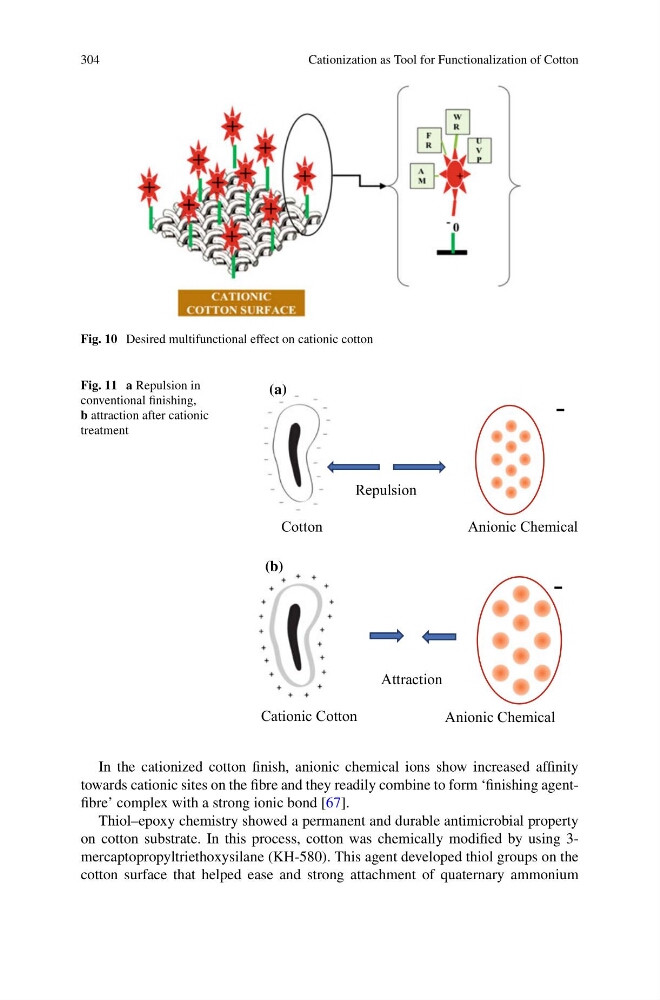
Fig. 10 Desired multifunctional effect on cationic cotton
Fig. 11 a Repulsion in
conventional finishing,
b attraction after cationic
treatment
Repulsion
Cotton
Anionic Chemical
-
Attraction
Cationic Cotton
Anionic Chemical
-
(a)
(b)
In the cationized cotton finish, anionic chemical ions show increased affinity
towards cationic sites on the fibre and they readily combine to form ‘finishing agentfibre’ complex with a strong ionic bond [67].
Thiol–epoxy chemistry showed a permanent and durable antimicrobial property
on cotton substrate. In this process, cotton was chemically modified by using 3mercaptopropyltriethoxysilane (KH-580). This agent developed thiol groups on the
cotton surface that helped ease and strong attachment of quaternary ammonium
Cationization as Tool for Functionalization of Cotton
Fig. 10 Desired multifunctional effect on cationic cotton
Fig. 11 a Repulsion in
conventional finishing,
b attraction after cationic
treatment
Repulsion
Cotton
Anionic Chemical
-
Attraction
Cationic Cotton
Anionic Chemical
-
(a)
(b)
In the cationized cotton finish, anionic chemical ions show increased affinity
towards cationic sites on the fibre and they readily combine to form ‘finishing agentfibre’ complex with a strong ionic bond [67].
Thiol–epoxy chemistry showed a permanent and durable antimicrobial property
on cotton substrate. In this process, cotton was chemically modified by using 3mercaptopropyltriethoxysilane (KH-580). This agent developed thiol groups on the
cotton surface that helped ease and strong attachment of quaternary ammonium