

294
Cationization as Tool for Functionalization of Cotton
Surface Treatment
Physical Methods
1. Mechanical Process
2. Thermal Process
3. Plasma Treatments
4. Ultrasonic treatments
5. UV or gamma irradiation
Chemical Methods
1. Graft copolymerization
2. Enzyme treatment
3. Cationization
4. Cross-link attachment
5. Organic chemical treatmnets
6. Inorganic chemical treatments
7. Nanotechnology
8. Biopolymer treatment
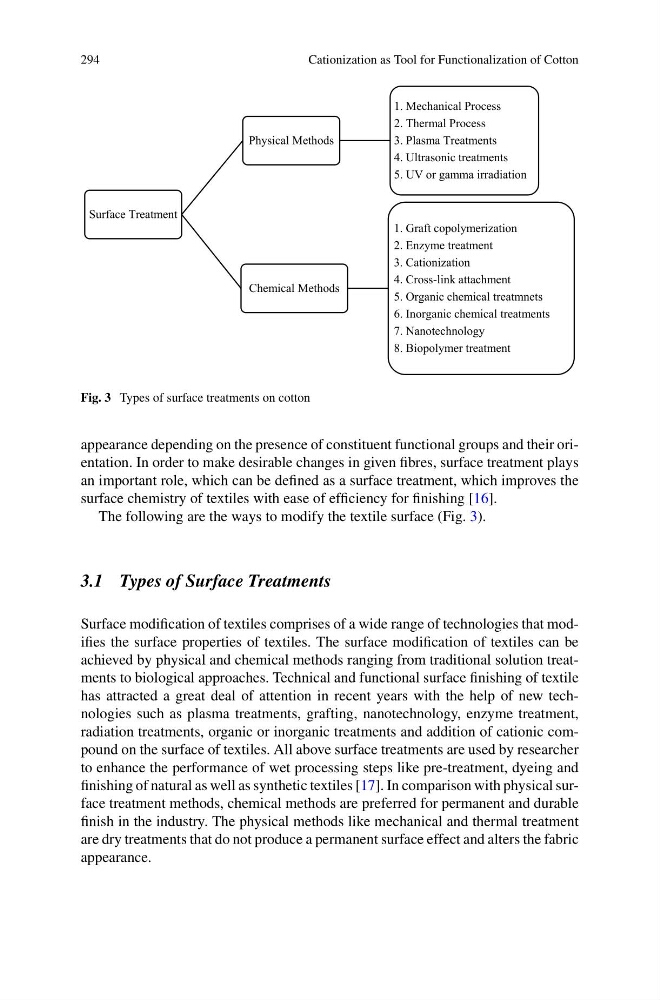
Fig. 3 Types of surface treatments on cotton
appearance depending on the presence of constituent functional groups and their orientation. In order to make desirable changes in given fibres, surface treatment plays
an important role, which can be defined as a surface treatment, which improves the
surface chemistry of textiles with ease of efficiency for finishing [16].
The following are the ways to modify the textile surface (Fig. 3).
3.1 Types of Surface Treatments
Surface modification of textiles comprises of a wide range of technologies that modifies the surface properties of textiles. The surface modification of textiles can be
achieved by physical and chemical methods ranging from traditional solution treatments to biological approaches. Technical and functional surface finishing of textile
has attracted a great deal of attention in recent years with the help of new technologies such as plasma treatments, grafting, nanotechnology, enzyme treatment,
radiation treatments, organic or inorganic treatments and addition of cationic compound on the surface of textiles. All above surface treatments are used by researcher
to enhance the performance of wet processing steps like pre-treatment, dyeing and
finishing of natural as well as synthetic textiles [17]. In comparison with physical surface treatment methods, chemical methods are preferred for permanent and durable
finish in the industry. The physical methods like mechanical and thermal treatment
are dry treatments that do not produce a permanent surface effect and alters the fabric
appearance.
Cationization as Tool for Functionalization of Cotton
Surface Treatment
Physical Methods
1. Mechanical Process
2. Thermal Process
3. Plasma Treatments
4. Ultrasonic treatments
5. UV or gamma irradiation
Chemical Methods
1. Graft copolymerization
2. Enzyme treatment
3. Cationization
4. Cross-link attachment
5. Organic chemical treatmnets
6. Inorganic chemical treatments
7. Nanotechnology
8. Biopolymer treatment
Fig. 3 Types of surface treatments on cotton
appearance depending on the presence of constituent functional groups and their orientation. In order to make desirable changes in given fibres, surface treatment plays
an important role, which can be defined as a surface treatment, which improves the
surface chemistry of textiles with ease of efficiency for finishing [16].
The following are the ways to modify the textile surface (Fig. 3).
3.1 Types of Surface Treatments
Surface modification of textiles comprises of a wide range of technologies that modifies the surface properties of textiles. The surface modification of textiles can be
achieved by physical and chemical methods ranging from traditional solution treatments to biological approaches. Technical and functional surface finishing of textile
has attracted a great deal of attention in recent years with the help of new technologies such as plasma treatments, grafting, nanotechnology, enzyme treatment,
radiation treatments, organic or inorganic treatments and addition of cationic compound on the surface of textiles. All above surface treatments are used by researcher
to enhance the performance of wet processing steps like pre-treatment, dyeing and
finishing of natural as well as synthetic textiles [17]. In comparison with physical surface treatment methods, chemical methods are preferred for permanent and durable
finish in the industry. The physical methods like mechanical and thermal treatment
are dry treatments that do not produce a permanent surface effect and alters the fabric
appearance.