

206
M. Ashraf and S. Riaz
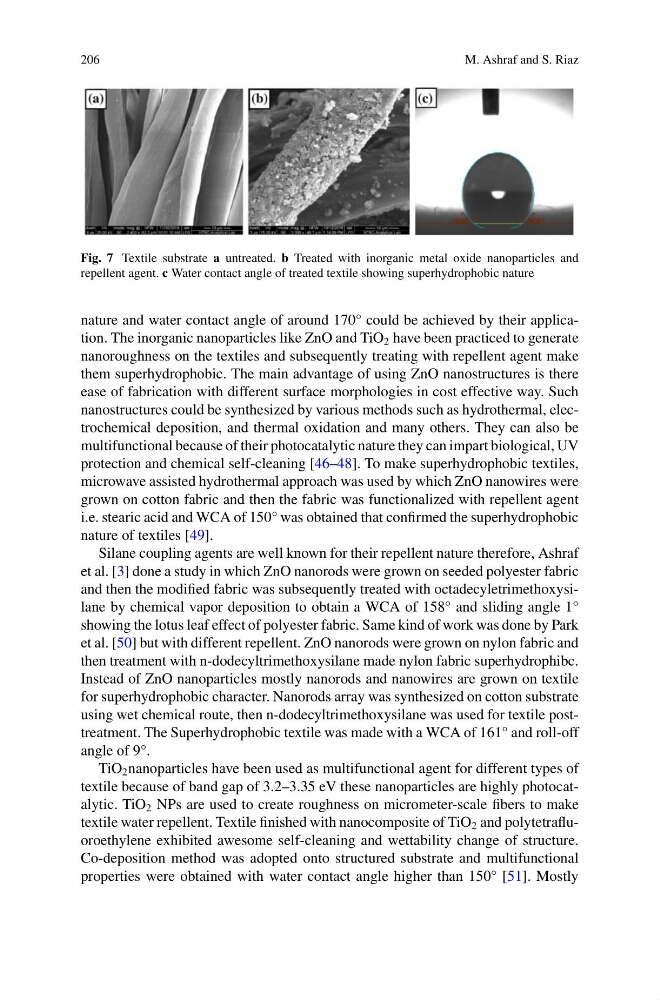
Fig. 7 Textile substrate a untreated. b Treated with inorganic metal oxide nanoparticles and
repellent agent. c Water contact angle of treated textile showing superhydrophobic nature
nature and water contact angle of around 170° could be achieved by their application. The inorganic nanoparticles like ZnO and TiO 2 have been practiced to generate
nanoroughness on the textiles and subsequently treating with repellent agent make
them superhydrophobic. The main advantage of using ZnO nanostructures is there
ease of fabrication with different surface morphologies in cost effective way. Such
nanostructures could be synthesized by various methods such as hydrothermal, electrochemical deposition, and thermal oxidation and many others. They can also be
multifunctional because of their photocatalytic nature they can impart biological, UV
protection and chemical self-cleaning [46–48]. To make superhydrophobic textiles,
microwave assisted hydrothermal approach was used by which ZnO nanowires were
grown on cotton fabric and then the fabric was functionalized with repellent agent
i.e. stearic acid and WCA of 150° was obtained that confirmed the superhydrophobic
nature of textiles [49].
Silane coupling agents are well known for their repellent nature therefore, Ashraf
et al. [3] done a study in which ZnO nanorods were grown on seeded polyester fabric
and then the modified fabric was subsequently treated with octadecyletrimethoxysilane by chemical vapor deposition to obtain a WCA of 158° and sliding angle 1°
showing the lotus leaf effect of polyester fabric. Same kind of work was done by Park
et al. [50] but with different repellent. ZnO nanorods were grown on nylon fabric and
then treatment with n-dodecyltrimethoxysilane made nylon fabric superhydrophibc.
Instead of ZnO nanoparticles mostly nanorods and nanowires are grown on textile
for superhydrophobic character. Nanorods array was synthesized on cotton substrate
using wet chemical route, then n-dodecyltrimethoxysilane was used for textile posttreatment. The Superhydrophobic textile was made with a WCA of 161° and roll-off
angle of 9°.
TiO 2 nanoparticles have been used as multifunctional agent for different types of
textile because of band gap of 3.2–3.35 eV these nanoparticles are highly photocatalytic. TiO 2 NPs are used to create roughness on micrometer-scale fibers to make
textile water repellent. Textile finished with nanocomposite of TiO 2 and polytetrafluoroethylene exhibited awesome self-cleaning and wettability change of structure.
Co-deposition method was adopted onto structured substrate and multifunctional
properties were obtained with water contact angle higher than 150° [51]. Mostly
M. Ashraf and S. Riaz
Fig. 7 Textile substrate a untreated. b Treated with inorganic metal oxide nanoparticles and
repellent agent. c Water contact angle of treated textile showing superhydrophobic nature
nature and water contact angle of around 170° could be achieved by their application. The inorganic nanoparticles like ZnO and TiO 2 have been practiced to generate
nanoroughness on the textiles and subsequently treating with repellent agent make
them superhydrophobic. The main advantage of using ZnO nanostructures is there
ease of fabrication with different surface morphologies in cost effective way. Such
nanostructures could be synthesized by various methods such as hydrothermal, electrochemical deposition, and thermal oxidation and many others. They can also be
multifunctional because of their photocatalytic nature they can impart biological, UV
protection and chemical self-cleaning [46–48]. To make superhydrophobic textiles,
microwave assisted hydrothermal approach was used by which ZnO nanowires were
grown on cotton fabric and then the fabric was functionalized with repellent agent
i.e. stearic acid and WCA of 150° was obtained that confirmed the superhydrophobic
nature of textiles [49].
Silane coupling agents are well known for their repellent nature therefore, Ashraf
et al. [3] done a study in which ZnO nanorods were grown on seeded polyester fabric
and then the modified fabric was subsequently treated with octadecyletrimethoxysilane by chemical vapor deposition to obtain a WCA of 158° and sliding angle 1°
showing the lotus leaf effect of polyester fabric. Same kind of work was done by Park
et al. [50] but with different repellent. ZnO nanorods were grown on nylon fabric and
then treatment with n-dodecyltrimethoxysilane made nylon fabric superhydrophibc.
Instead of ZnO nanoparticles mostly nanorods and nanowires are grown on textile
for superhydrophobic character. Nanorods array was synthesized on cotton substrate
using wet chemical route, then n-dodecyltrimethoxysilane was used for textile posttreatment. The Superhydrophobic textile was made with a WCA of 161° and roll-off
angle of 9°.
TiO 2 nanoparticles have been used as multifunctional agent for different types of
textile because of band gap of 3.2–3.35 eV these nanoparticles are highly photocatalytic. TiO 2 NPs are used to create roughness on micrometer-scale fibers to make
textile water repellent. Textile finished with nanocomposite of TiO 2 and polytetrafluoroethylene exhibited awesome self-cleaning and wettability change of structure.
Co-deposition method was adopted onto structured substrate and multifunctional
properties were obtained with water contact angle higher than 150° [51]. Mostly