

Recent Advances in Development of Antimicrobial Textiles
155
CH 3
H 3 C
HO
H 3 C
CH 3
H 3 C
CH 3
CH 2
HO
O
CH 3
(a)
(b)
(c)
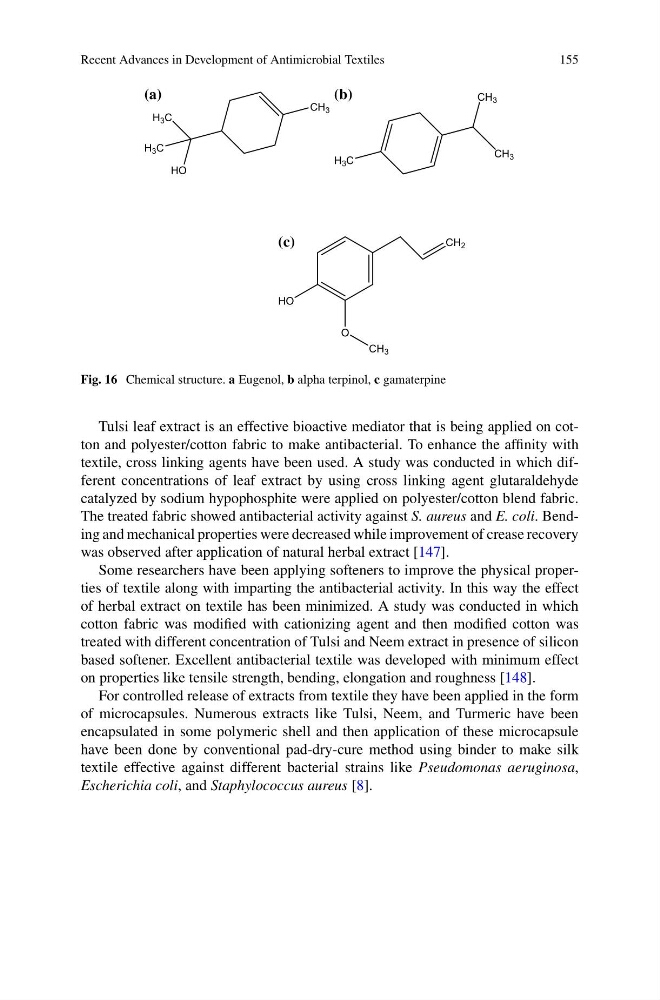
Fig. 16 Chemical structure. a Eugenol, b alpha terpinol, c gamaterpine
Tulsi leaf extract is an effective bioactive mediator that is being applied on cotton and polyester/cotton fabric to make antibacterial. To enhance the affinity with
textile, cross linking agents have been used. A study was conducted in which different concentrations of leaf extract by using cross linking agent glutaraldehyde
catalyzed by sodium hypophosphite were applied on polyester/cotton blend fabric.
The treated fabric showed antibacterial activity against S. aureus and E. coli. Bending and mechanical properties were decreased while improvement of crease recovery
was observed after application of natural herbal extract [147].
Some researchers have been applying softeners to improve the physical properties of textile along with imparting the antibacterial activity. In this way the effect
of herbal extract on textile has been minimized. A study was conducted in which
cotton fabric was modified with cationizing agent and then modified cotton was
treated with different concentration of Tulsi and Neem extract in presence of silicon
based softener. Excellent antibacterial textile was developed with minimum effect
on properties like tensile strength, bending, elongation and roughness [148].
For controlled release of extracts from textile they have been applied in the form
of microcapsules. Numerous extracts like Tulsi, Neem, and Turmeric have been
encapsulated in some polymeric shell and then application of these microcapsule
have been done by conventional pad-dry-cure method using binder to make silk
textile effective against different bacterial strains like Pseudomonas aeruginosa,
Escherichia coli, and Staphylococcus aureus [8].
155
CH 3
H 3 C
HO
H 3 C
CH 3
H 3 C
CH 3
CH 2
HO
O
CH 3
(a)
(b)
(c)
Fig. 16 Chemical structure. a Eugenol, b alpha terpinol, c gamaterpine
Tulsi leaf extract is an effective bioactive mediator that is being applied on cotton and polyester/cotton fabric to make antibacterial. To enhance the affinity with
textile, cross linking agents have been used. A study was conducted in which different concentrations of leaf extract by using cross linking agent glutaraldehyde
catalyzed by sodium hypophosphite were applied on polyester/cotton blend fabric.
The treated fabric showed antibacterial activity against S. aureus and E. coli. Bending and mechanical properties were decreased while improvement of crease recovery
was observed after application of natural herbal extract [147].
Some researchers have been applying softeners to improve the physical properties of textile along with imparting the antibacterial activity. In this way the effect
of herbal extract on textile has been minimized. A study was conducted in which
cotton fabric was modified with cationizing agent and then modified cotton was
treated with different concentration of Tulsi and Neem extract in presence of silicon
based softener. Excellent antibacterial textile was developed with minimum effect
on properties like tensile strength, bending, elongation and roughness [148].
For controlled release of extracts from textile they have been applied in the form
of microcapsules. Numerous extracts like Tulsi, Neem, and Turmeric have been
encapsulated in some polymeric shell and then application of these microcapsule
have been done by conventional pad-dry-cure method using binder to make silk
textile effective against different bacterial strains like Pseudomonas aeruginosa,
Escherichia coli, and Staphylococcus aureus [8].