

130
7 Rubber Reinforcement with Lignin
probe microscopy (SPM) for 0, 10, and 40 phr lignin content specimens (NR-L0-Ssoft, NR-L10-S-soft, and NR-L40-S-soft, respectively) [45]. Here, NR-L0-S-soft is
without lignin, equivalent to a pure gum stock, as a reference. In their phase images,
bright and dark parts correspond to hard and soft phases, indicating the lignin and
the NR phases, respectively. As expected similarly to the in situ silica-filled NR
nanocomposites prepared by the soft processing [46], it is recognizable that lignin
is present around the rubber particles in the NR latex. The observed morphology of
lignin is originated from the dispersion of the rubber latex. In other words, the rubber
particles in the NR latex are functioning as a template to the dispersing lignin in the
soft processing step. As a result, network-like structures of lignin were detected in
the biphasic structured morphologies in both NR-L10-S-soft and NR-L40-S-soft.
The height images also clearly showed filler network-like structures. It is interesting
to note that the nanofiller networking is somewhat an intrinsic behavior of nanofillers
(see Sects. 5.3–5.5), and in the soft processing, this tendency is enhanced due to the
presence of a template (see Figs. 6.5 and 6.8).
In the filler reinforcement of rubber, the network formation of nanofiller is playing
a crucial role as described so far in the present book. The soft processing has to be
designed so as to afford filler networks for the higher reinforcement. The presence of
the template for network formation as suggested (in NR latex, the rubber particles)
is also to be taken into account in designing the filler reinforcement.
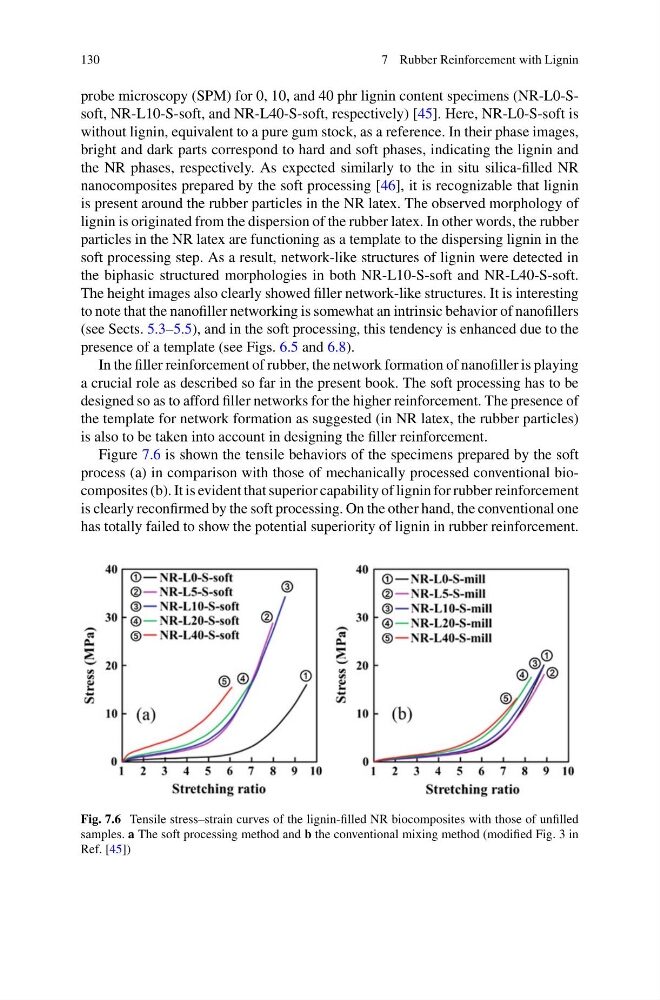
Figure 7.6 is shown the tensile behaviors of the specimens prepared by the soft
process (a) in comparison with those of mechanically processed conventional biocomposites (b). It is evident that superior capability of lignin for rubber reinforcement
is clearly reconfirmed by the soft processing. On the other hand, the conventional one
has totally failed to show the potential superiority of lignin in rubber reinforcement.
Fig. 7.6 Tensile stress–strain curves of the lignin-filled NR biocomposites with those of unfilled
samples. a The soft processing method and b the conventional mixing method (modified Fig. 3 in
Ref. [45])
7 Rubber Reinforcement with Lignin
probe microscopy (SPM) for 0, 10, and 40 phr lignin content specimens (NR-L0-Ssoft, NR-L10-S-soft, and NR-L40-S-soft, respectively) [45]. Here, NR-L0-S-soft is
without lignin, equivalent to a pure gum stock, as a reference. In their phase images,
bright and dark parts correspond to hard and soft phases, indicating the lignin and
the NR phases, respectively. As expected similarly to the in situ silica-filled NR
nanocomposites prepared by the soft processing [46], it is recognizable that lignin
is present around the rubber particles in the NR latex. The observed morphology of
lignin is originated from the dispersion of the rubber latex. In other words, the rubber
particles in the NR latex are functioning as a template to the dispersing lignin in the
soft processing step. As a result, network-like structures of lignin were detected in
the biphasic structured morphologies in both NR-L10-S-soft and NR-L40-S-soft.
The height images also clearly showed filler network-like structures. It is interesting
to note that the nanofiller networking is somewhat an intrinsic behavior of nanofillers
(see Sects. 5.3–5.5), and in the soft processing, this tendency is enhanced due to the
presence of a template (see Figs. 6.5 and 6.8).
In the filler reinforcement of rubber, the network formation of nanofiller is playing
a crucial role as described so far in the present book. The soft processing has to be
designed so as to afford filler networks for the higher reinforcement. The presence of
the template for network formation as suggested (in NR latex, the rubber particles)
is also to be taken into account in designing the filler reinforcement.
Figure 7.6 is shown the tensile behaviors of the specimens prepared by the soft
process (a) in comparison with those of mechanically processed conventional biocomposites (b). It is evident that superior capability of lignin for rubber reinforcement
is clearly reconfirmed by the soft processing. On the other hand, the conventional one
has totally failed to show the potential superiority of lignin in rubber reinforcement.
Fig. 7.6 Tensile stress–strain curves of the lignin-filled NR biocomposites with those of unfilled
samples. a The soft processing method and b the conventional mixing method (modified Fig. 3 in
Ref. [45])