

In a large part of the reported cases, the azobenzene chromophore enters the
polymerization reaction already incorporated in a reactive monomer, as described
above. Alternatively, it is also possible, as a final step, the post-functionalization with
azobenzene units of a polymeric scaffold provided with reactive groups. In this
sense, the covalent union of the azo groups has been demonstrated by using
azocoupling, esterification, and click chemistry reactions. Interestingly, it has also
been demonstrated the linking of the azobenzene chromophore units through
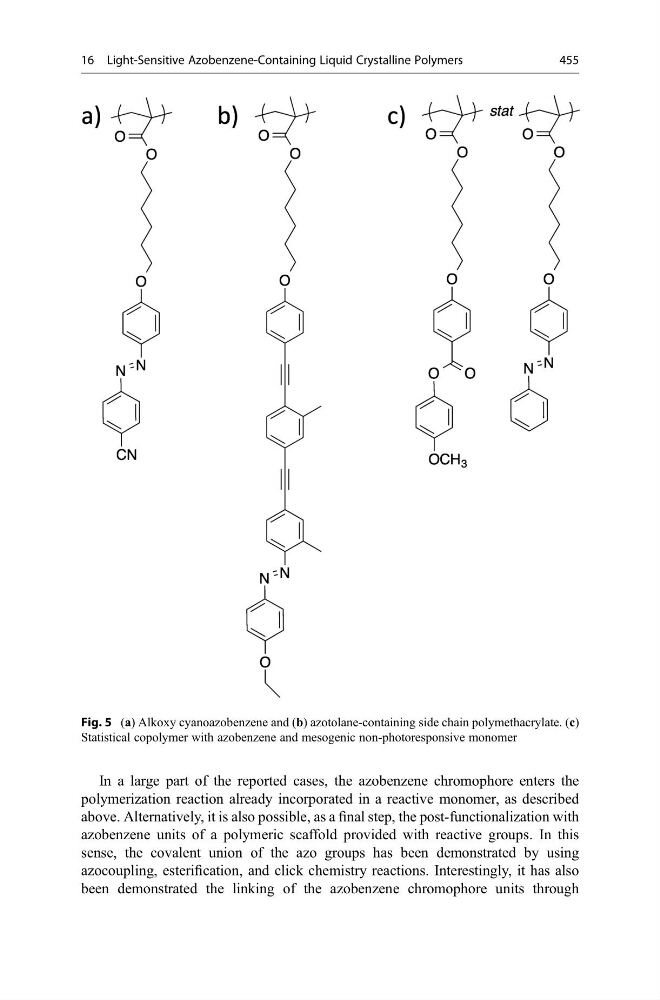
Fig. 5 (a) Alkoxy cyanoazobenzene and (b) azotolane-containing side chain polymethacrylate. (c)
Statistical copolymer with azobenzene and mesogenic non-photoresponsive monomer
16 Light-Sensitive Azobenzene-Containing Liquid Crystalline Polymers
455
polymerization reaction already incorporated in a reactive monomer, as described
above. Alternatively, it is also possible, as a final step, the post-functionalization with
azobenzene units of a polymeric scaffold provided with reactive groups. In this
sense, the covalent union of the azo groups has been demonstrated by using
azocoupling, esterification, and click chemistry reactions. Interestingly, it has also
been demonstrated the linking of the azobenzene chromophore units through
Fig. 5 (a) Alkoxy cyanoazobenzene and (b) azotolane-containing side chain polymethacrylate. (c)
Statistical copolymer with azobenzene and mesogenic non-photoresponsive monomer
16 Light-Sensitive Azobenzene-Containing Liquid Crystalline Polymers
455