

elongational flow leading to the alignment of the director. There are two essential
requirements for a high degree of molecular orientations in LCP-based spun fibers.
One, these solutions should have a high degree of molecular orientation with respect
to the local director. Second, during the process of elongation or drawing, the
director should be fully aligned. This is possible when during the process of fiber
spinning, the order parameter is about 0.95 (Picken 1996).
From an application point of view, the main-chain LCPs are extensively used
for the fabrication of high strength and high modulus fibers made by spinning,
whereas the side-chain LCPs are specifically important in the field of optics. The
most important application area remains optical displays. The side-chain LCPs
can be utilized for the fabrication of optical films with a defined birefringence
used as a passive component in displays based on LCPs with improved viewing
angle and contrast. Also, these find applications in areas such as optical videotape, compact disks, etc. In the fabrication process of fibers by spinning, at first,
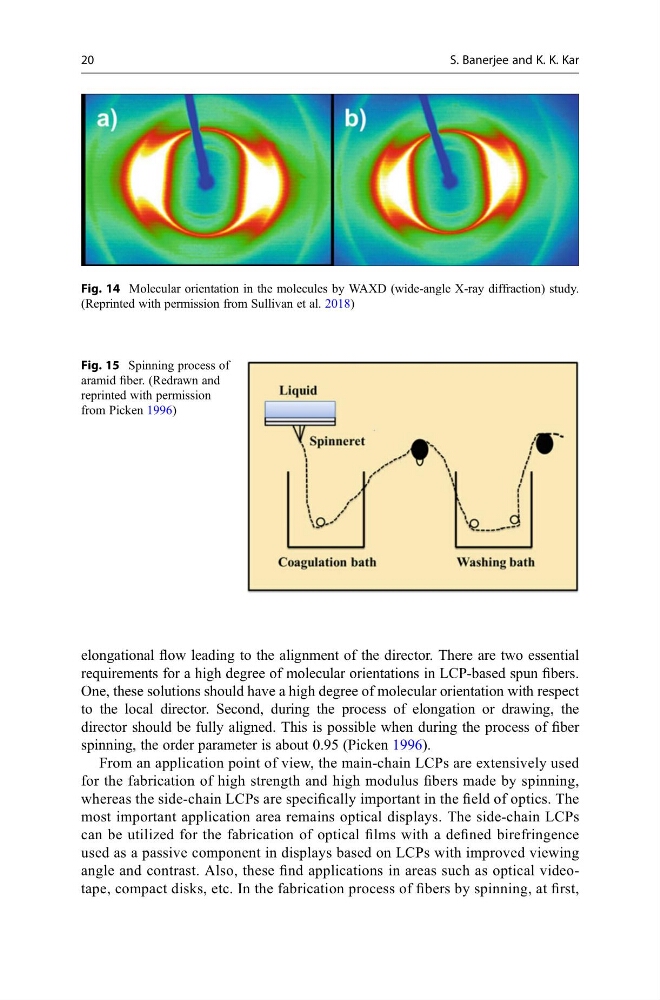
Fig. 14 Molecular orientation in the molecules by WAXD (wide-angle X-ray diffraction) study.
(Reprinted with permission from Sullivan et al. 2018)
Fig. 15 Spinning process of
aramid fiber. (Redrawn and
reprinted with permission
from Picken 1996)
20
S. Banerjee and K. K. Kar
requirements for a high degree of molecular orientations in LCP-based spun fibers.
One, these solutions should have a high degree of molecular orientation with respect
to the local director. Second, during the process of elongation or drawing, the
director should be fully aligned. This is possible when during the process of fiber
spinning, the order parameter is about 0.95 (Picken 1996).
From an application point of view, the main-chain LCPs are extensively used
for the fabrication of high strength and high modulus fibers made by spinning,
whereas the side-chain LCPs are specifically important in the field of optics. The
most important application area remains optical displays. The side-chain LCPs
can be utilized for the fabrication of optical films with a defined birefringence
used as a passive component in displays based on LCPs with improved viewing
angle and contrast. Also, these find applications in areas such as optical videotape, compact disks, etc. In the fabrication process of fibers by spinning, at first,
Fig. 14 Molecular orientation in the molecules by WAXD (wide-angle X-ray diffraction) study.
(Reprinted with permission from Sullivan et al. 2018)
Fig. 15 Spinning process of
aramid fiber. (Redrawn and
reprinted with permission
from Picken 1996)
20
S. Banerjee and K. K. Kar