

XRD results imply that the PCH LC moieties and hence the polyene main chain
are aligned parallel and perpendicular to the rubbing direction, respectively (Fig. 6i).
In PA14, the PCH LC moiety aligns parallel to the rubbing direction, and thus it
exhibits side chain type LC alignment. The stilbene moieties aligned parallel to the
rubbing direction are the dominant emission sources; thus PA14 exhibits a higher PL
intensity parallel to the rubbing direction. Figure 7 shows an image of the LPL of
PA14 under polarizing plates. PA12 and PA14 exhibit side chain type LC alignment
and dominant emission from the stilbene moiety.
The PAs show LPLs with fairly low DR values that range from 1.2 to 2.4. These
values are mainly due to the situation characteristic of the di-LCPAs where not only
the LC side chain but also the conjugated polyene main chain directly linked with
phenyl or phenylene moiety behave as mesogens to the external force. Since the LC
side chain and the main chain are almost orthogonal in the polymer structure, the
externally forced alignments of the side and main chains are substantially cancelled
each other out, thus giving a low degree of alignment.
From the above results, we can deduce that when one designs emissive polyacetylene derivatives with linearly dichroic nature, it is essential for the polymers to
have phenylene moieties that are directly or indirectly attached to the main chain and
also to introduce LC moieties in one side or both side chains. However, these
polymers inevitably encounter the competitive orientation or even partial
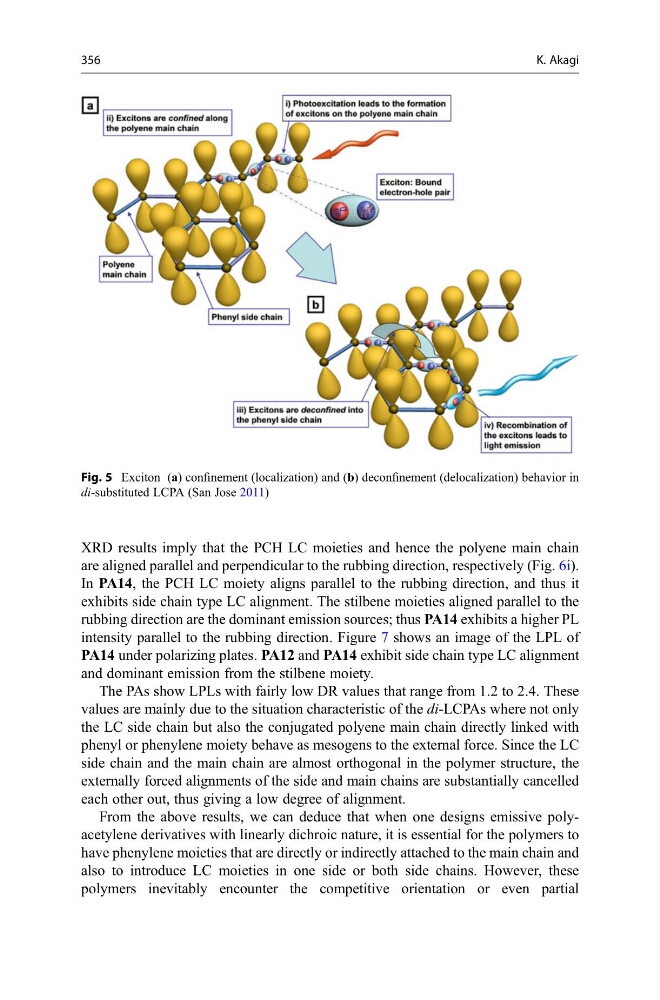
Fig. 5 Exciton (a) confinement (localization) and (b) deconfinement (delocalization) behavior in
di-substituted LCPA (San Jose 2011)
356
K. Akagi
are aligned parallel and perpendicular to the rubbing direction, respectively (Fig. 6i).
In PA14, the PCH LC moiety aligns parallel to the rubbing direction, and thus it
exhibits side chain type LC alignment. The stilbene moieties aligned parallel to the
rubbing direction are the dominant emission sources; thus PA14 exhibits a higher PL
intensity parallel to the rubbing direction. Figure 7 shows an image of the LPL of
PA14 under polarizing plates. PA12 and PA14 exhibit side chain type LC alignment
and dominant emission from the stilbene moiety.
The PAs show LPLs with fairly low DR values that range from 1.2 to 2.4. These
values are mainly due to the situation characteristic of the di-LCPAs where not only
the LC side chain but also the conjugated polyene main chain directly linked with
phenyl or phenylene moiety behave as mesogens to the external force. Since the LC
side chain and the main chain are almost orthogonal in the polymer structure, the
externally forced alignments of the side and main chains are substantially cancelled
each other out, thus giving a low degree of alignment.
From the above results, we can deduce that when one designs emissive polyacetylene derivatives with linearly dichroic nature, it is essential for the polymers to
have phenylene moieties that are directly or indirectly attached to the main chain and
also to introduce LC moieties in one side or both side chains. However, these
polymers inevitably encounter the competitive orientation or even partial
Fig. 5 Exciton (a) confinement (localization) and (b) deconfinement (delocalization) behavior in
di-substituted LCPA (San Jose 2011)
356
K. Akagi