

Fullerene LCs with Lamellar Supramolecular Structure
When the head-to-tail stacking is prohibited, lamella stacking will be preferred, as
reported by Matsuo and Nakamura et al. in their [60]fullerene derivatives 17–22
(Fig. 8). The fullerene core is connected to many hydrocarbon groups by silyl
acetylene tethering (Zhong et al. 2007), where the silicon atom facilitates installation
of the hydrocarbon substituents through a simple Grignard reaction. A methyl group
was installed to the center of the molecular cavity to prevent the head-to-tail
stacking.
The lamellar structure can be formed by the crystal 17 and the liquid crystal 20
where the distance between the fullerene layers is 22.44 Å and 22.6 Å separately.
The molecules are arranged alternately with the R groups and the methyl group
attached to the fullerene core upward and downward. The short distances (9.80 and
10.16 Å) between neighboring fullerene cores suggest a strong fullerene/fullerene
interaction within the same layer.
In 2008, Li et al. reported another fullerene LC system with lamellar assembly
structure from amphiphilic oligothiophene-C 60 dyad (Fig. 9). The molecular structures
of 23 and 24 are similar to each other except for the terminal wedges (Li et al. 2008).
Compound 23 bears a hydrophilic wedge with triethylene glycol chains and, on the
other side, a hydrophobic wedge with paraffinic chains. Dyad 23 formed a LC smectic A
mesophase over a wide temperature range from 136.1
C to 18.3
C. Polarized optical
microscopy (POM) of LC 23 displayed a typical focal conic texture. Synchrotron
radiation small-angle X-ray scattering (SAXS) analysis showed sharp peaks with dspacings of 10.6, 5.3, 3.5, and 2.6 nm, which can be indexed as (100), (200), (300), and
(400) reflections of a lamellar structure with a layer width of 10.6 nm.
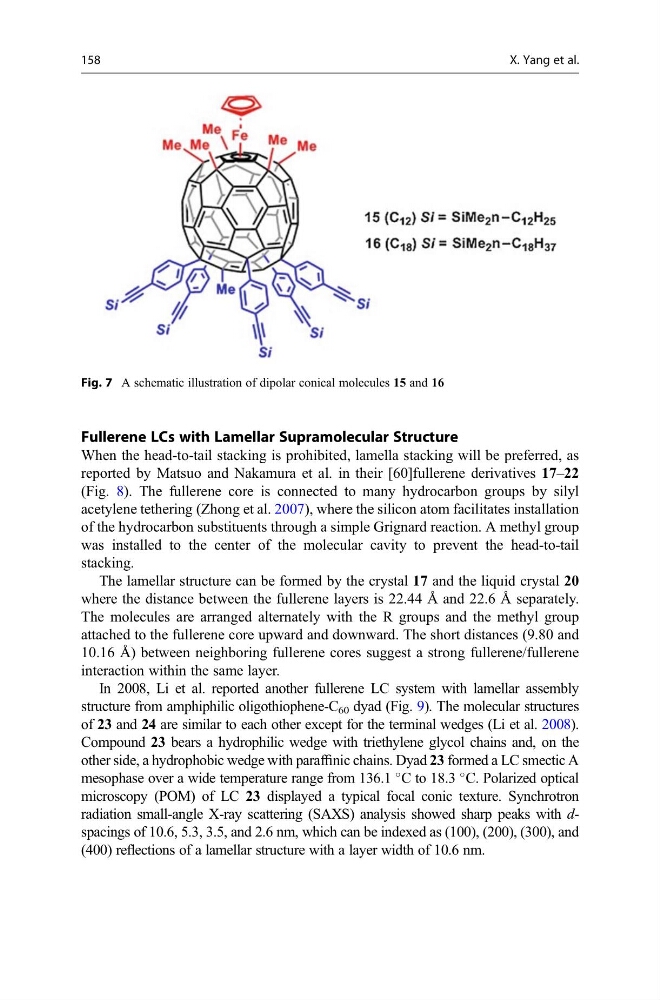
Fig. 7 A schematic illustration of dipolar conical molecules 15 and 16
158
X. Yang et al.
When the head-to-tail stacking is prohibited, lamella stacking will be preferred, as
reported by Matsuo and Nakamura et al. in their [60]fullerene derivatives 17–22
(Fig. 8). The fullerene core is connected to many hydrocarbon groups by silyl
acetylene tethering (Zhong et al. 2007), where the silicon atom facilitates installation
of the hydrocarbon substituents through a simple Grignard reaction. A methyl group
was installed to the center of the molecular cavity to prevent the head-to-tail
stacking.
The lamellar structure can be formed by the crystal 17 and the liquid crystal 20
where the distance between the fullerene layers is 22.44 Å and 22.6 Å separately.
The molecules are arranged alternately with the R groups and the methyl group
attached to the fullerene core upward and downward. The short distances (9.80 and
10.16 Å) between neighboring fullerene cores suggest a strong fullerene/fullerene
interaction within the same layer.
In 2008, Li et al. reported another fullerene LC system with lamellar assembly
structure from amphiphilic oligothiophene-C 60 dyad (Fig. 9). The molecular structures
of 23 and 24 are similar to each other except for the terminal wedges (Li et al. 2008).
Compound 23 bears a hydrophilic wedge with triethylene glycol chains and, on the
other side, a hydrophobic wedge with paraffinic chains. Dyad 23 formed a LC smectic A
mesophase over a wide temperature range from 136.1
C to 18.3
C. Polarized optical
microscopy (POM) of LC 23 displayed a typical focal conic texture. Synchrotron
radiation small-angle X-ray scattering (SAXS) analysis showed sharp peaks with dspacings of 10.6, 5.3, 3.5, and 2.6 nm, which can be indexed as (100), (200), (300), and
(400) reflections of a lamellar structure with a layer width of 10.6 nm.
Fig. 7 A schematic illustration of dipolar conical molecules 15 and 16
158
X. Yang et al.