

Polymer composites composed of organic monomers and inorganic ceramic
fillers are used as the dental restorative materials. Compared with amalgam or
gold, the conventional composites reveal better esthetics, fast processing time, and
biocompatibility. However, the rupture at the interface between the resin and tooth
triggered by volumetric shrinkage during the photopolymerization often generates
microleakages. Much effort has been made to develop the low shrinkage materials.
Epoxy-based monomers have been proposed, but the slow reaction rates are
unsuitable for the practical uses. The RMs may be the promising alternatives because
of the exceptionally low polymerization shrinkage in an ordered state (Oei et al.
2013). The layered alignment of mesogenic LC groups is helpful to produce a close
packing structure. Shrinkage can be reduced from 5% for the conventional restorative monomers to 2% for RM.
Anisotropic LC Gels
Basic Principles and Characteristics
A combination of nonreactive LMWLC with polymer networks is attractive because
of the simple manipulation of optical properties and responsive characteristics.
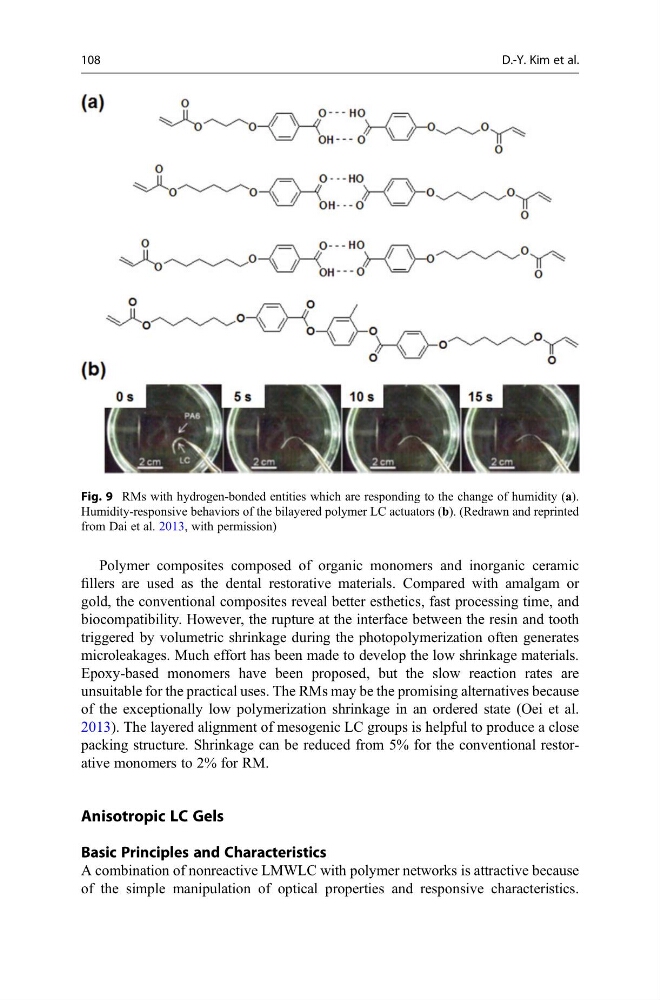
Fig. 9 RMs with hydrogen-bonded entities which are responding to the change of humidity (a).
Humidity-responsive behaviors of the bilayered polymer LC actuators (b). (Redrawn and reprinted
from Dai et al. 2013, with permission)
108
D.-Y. Kim et al.
fillers are used as the dental restorative materials. Compared with amalgam or
gold, the conventional composites reveal better esthetics, fast processing time, and
biocompatibility. However, the rupture at the interface between the resin and tooth
triggered by volumetric shrinkage during the photopolymerization often generates
microleakages. Much effort has been made to develop the low shrinkage materials.
Epoxy-based monomers have been proposed, but the slow reaction rates are
unsuitable for the practical uses. The RMs may be the promising alternatives because
of the exceptionally low polymerization shrinkage in an ordered state (Oei et al.
2013). The layered alignment of mesogenic LC groups is helpful to produce a close
packing structure. Shrinkage can be reduced from 5% for the conventional restorative monomers to 2% for RM.
Anisotropic LC Gels
Basic Principles and Characteristics
A combination of nonreactive LMWLC with polymer networks is attractive because
of the simple manipulation of optical properties and responsive characteristics.
Fig. 9 RMs with hydrogen-bonded entities which are responding to the change of humidity (a).
Humidity-responsive behaviors of the bilayered polymer LC actuators (b). (Redrawn and reprinted
from Dai et al. 2013, with permission)
108
D.-Y. Kim et al.