

Topics in Current Chemistry (2019) 377:22
1 3
wall reactors, the fluid phase (gas or liquid) is generally a non-participating medium.
Then there is no need to solve the RTE, since the radiation intensity along the ray
path does not change [29]. Nevertheless, the incident radiation flux on the photocatalytic wall must be evaluated as a boundary condition in order to calculate the
LSRPA by the photocatalyst.
3.1.1 Radiation Boundary Conditions
The incident net radiation flux on the photocatalytic wall is defined by:
where q is the spectral net radiation flux, q
the spectral radiation flux vector, n the
outwardly directed unit vector normal to the photocatalytic surface, and I the spectral radiation intensity in the direction of the unit vector Ω corresponding to the solid
angle Ω.
Radiation boundary conditions can be evaluated through the resolution of lamp
emission or solar radiation models, or by means of experimental measurements.
The most frequently applied lamp emission models in photocatalytic reactors are
the rigorous voluminal and surface lamp emission models [29] and the simplified
linear source with spherical emission model [30–32]. The experimental determination of the incident radiation flux includes radiometer measurements (of the total
or spectral radiation flux) or actinometric reactions in liquid or gas phase [33–35].
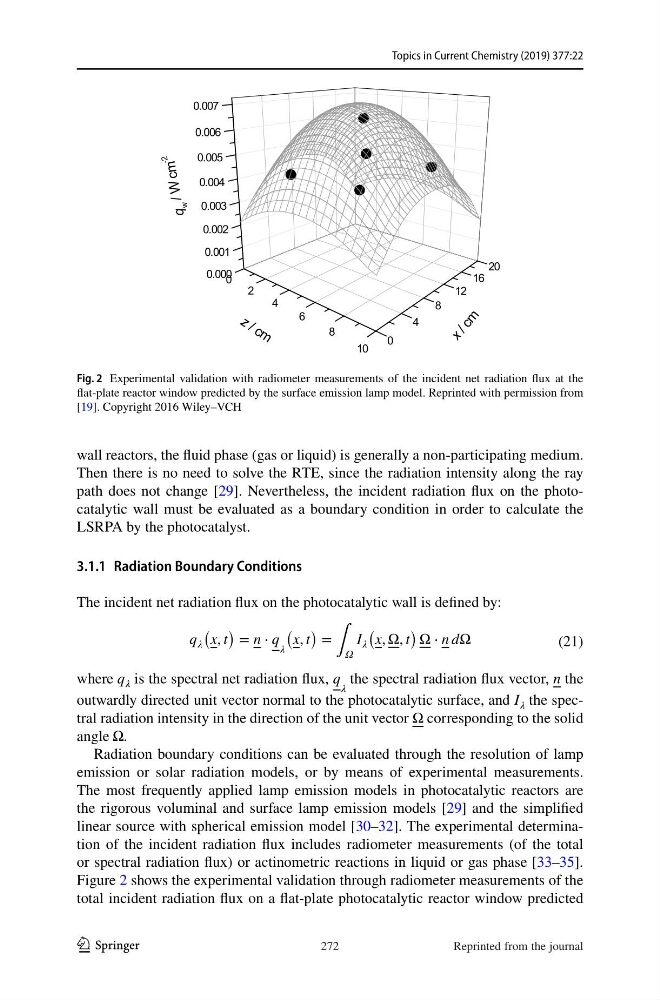
Figure 2 shows the experimental validation through radiometer measurements of the
total incident radiation flux on a flat-plate photocatalytic reactor window predicted
(21)
q
x, t
= n ⋅ q
x, t
= ∫
I
x, Ω, t
Ω ⋅ n dΩ
0 2
4
6
8
10
0.000
0.001
0.002
0.003
0.004
0.005
0.006
0.007
0
4
8
12
16
20
q w
/
W
cm
-2
x / c m
z / c m
Fig. 2 Experimental validation with radiometer measurements of the incident net radiation flux at the
flat-plate reactor window predicted by the surface emission lamp model. Reprinted with permission from
[19]. Copyright 2016 Wiley–VCH
272
Reprinted from the journal
1 3
wall reactors, the fluid phase (gas or liquid) is generally a non-participating medium.
Then there is no need to solve the RTE, since the radiation intensity along the ray
path does not change [29]. Nevertheless, the incident radiation flux on the photocatalytic wall must be evaluated as a boundary condition in order to calculate the
LSRPA by the photocatalyst.
3.1.1 Radiation Boundary Conditions
The incident net radiation flux on the photocatalytic wall is defined by:
where q is the spectral net radiation flux, q
the spectral radiation flux vector, n the
outwardly directed unit vector normal to the photocatalytic surface, and I the spectral radiation intensity in the direction of the unit vector Ω corresponding to the solid
angle Ω.
Radiation boundary conditions can be evaluated through the resolution of lamp
emission or solar radiation models, or by means of experimental measurements.
The most frequently applied lamp emission models in photocatalytic reactors are
the rigorous voluminal and surface lamp emission models [29] and the simplified
linear source with spherical emission model [30–32]. The experimental determination of the incident radiation flux includes radiometer measurements (of the total
or spectral radiation flux) or actinometric reactions in liquid or gas phase [33–35].
Figure 2 shows the experimental validation through radiometer measurements of the
total incident radiation flux on a flat-plate photocatalytic reactor window predicted
(21)
q
x, t
= n ⋅ q
x, t
= ∫
I
x, Ω, t
Ω ⋅ n dΩ
0 2
4
6
8
10
0.000
0.001
0.002
0.003
0.004
0.005
0.006
0.007
0
4
8
12
16
20
q w
/
W
cm
-2
x / c m
z / c m
Fig. 2 Experimental validation with radiometer measurements of the incident net radiation flux at the
flat-plate reactor window predicted by the surface emission lamp model. Reprinted with permission from
[19]. Copyright 2016 Wiley–VCH
272
Reprinted from the journal