

4 Summary
The selective transformation of organic compounds through reduction and/or oxidation is a fundamental challenge in synthetic chemistry. This review focused on
recently developed high-performance metal NP catalysts for selective reduction and
oxidation under liquid-phase conditions using molecular hydrogen and molecular
oxygen, respectively. Traditional heterogeneous catalysts, including metal NP catalysts, have significant intrinsic advantages of easy separation and robustness but
generally show lower catalytic performance (activity and selectivity) and require
harsh reaction conditions, such as high temperature, compared with homogeneous
catalysts. Compared with premodern heterogeneous catalysts, the state-of-the-art
metal NP catalysts introduced here have higher activity and selectivity for the
chemoselective hydrogenations of carbonyl, nitro, and alkynyl compounds while
retaining C¼C bonds and the aerobic oxidation of alcohols and the Wacker oxidation of alkenes. This improved catalytic performance is due to significant advances
in the precise fabrication of nanoscale metals, which has made it possible to explore
novel catalysis and design metal active centers. The rapid expansion of characterization methods for the nanostructured catalysts has also greatly contributed to
catalytic improvement. Spectroscopic analysis, especially operand analysis, enabled
deep understanding of the role of supports and the relationship between structure and
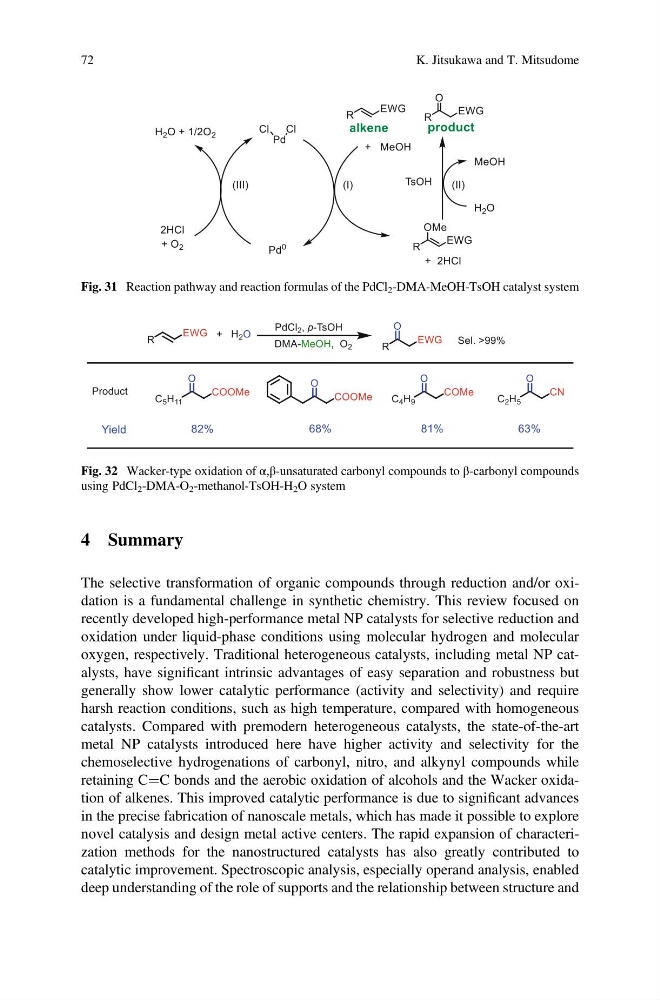
Fig. 32 Wacker-type oxidation of α,β-unsaturated carbonyl compounds to β-carbonyl compounds
using PdCl 2 -DMA-O 2 -methanol-TsOH-H 2 O system
Fig. 31 Reaction pathway and reaction formulas of the PdCl 2 -DMA-MeOH-TsOH catalyst system
72
K. Jitsukawa and T. Mitsudome
The selective transformation of organic compounds through reduction and/or oxidation is a fundamental challenge in synthetic chemistry. This review focused on
recently developed high-performance metal NP catalysts for selective reduction and
oxidation under liquid-phase conditions using molecular hydrogen and molecular
oxygen, respectively. Traditional heterogeneous catalysts, including metal NP catalysts, have significant intrinsic advantages of easy separation and robustness but
generally show lower catalytic performance (activity and selectivity) and require
harsh reaction conditions, such as high temperature, compared with homogeneous
catalysts. Compared with premodern heterogeneous catalysts, the state-of-the-art
metal NP catalysts introduced here have higher activity and selectivity for the
chemoselective hydrogenations of carbonyl, nitro, and alkynyl compounds while
retaining C¼C bonds and the aerobic oxidation of alcohols and the Wacker oxidation of alkenes. This improved catalytic performance is due to significant advances
in the precise fabrication of nanoscale metals, which has made it possible to explore
novel catalysis and design metal active centers. The rapid expansion of characterization methods for the nanostructured catalysts has also greatly contributed to
catalytic improvement. Spectroscopic analysis, especially operand analysis, enabled
deep understanding of the role of supports and the relationship between structure and
Fig. 32 Wacker-type oxidation of α,β-unsaturated carbonyl compounds to β-carbonyl compounds
using PdCl 2 -DMA-O 2 -methanol-TsOH-H 2 O system
Fig. 31 Reaction pathway and reaction formulas of the PdCl 2 -DMA-MeOH-TsOH catalyst system
72
K. Jitsukawa and T. Mitsudome