

noncovalent interactions to orient the reactant to promote aldehyde-selective
hydrogenation.
Pt catalysts are not chemoselective for the hydrogenation of nitro groups in nitro
aromatic compounds bearing other reducible groups. However, the thiolmodification approach transforms nonchemoselective Pt catalysts into highly
chemoselective Pt catalysts for the hydrogenation of 4-nitrostyrene to
4-aminostyrene [53]. The TiO 2 -supported Pt NPs with a mean diameter of 1.4 nm
treated with some thiols, such as thioglycerol, 1,6-hexanedithiol, and α-lipoic acid,
gave 100% selectivity for aminostyrene at conversion levels close to 100%. In
contrast, an unmodified Pt/TiO 2 catalyst provided C¼C bond-hydrogenated products, 4-ethylnitrobenzene, and 4-ethylaniline. Therefore, thiol modification produced a 100% switch in selectivity to 4-aminostyrene.
As shown above, surface modification through SAMs construction on the metal
NP surface is a powerful method to improve the selectivity of hydrogenations.
However, the modifiers often suppressed diffusion and the adsorption of reactants
and protected active sites, unavoidably resulting in the low activity of metal NPs.
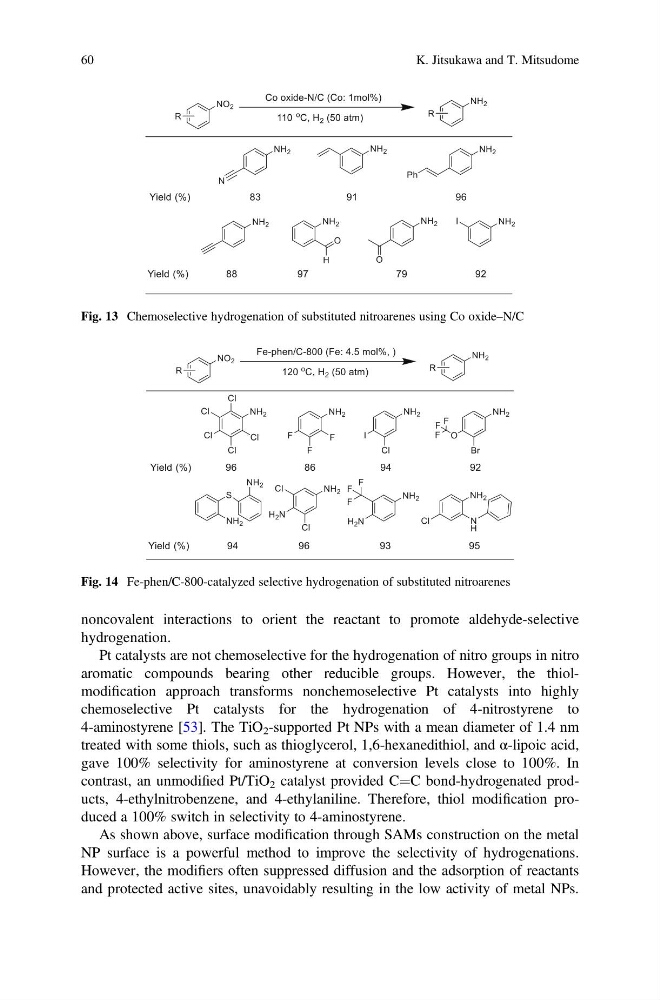
Fig. 13 Chemoselective hydrogenation of substituted nitroarenes using Co oxide–N/C
Fig. 14 Fe-phen/C-800-catalyzed selective hydrogenation of substituted nitroarenes
60
K. Jitsukawa and T. Mitsudome
hydrogenation.
Pt catalysts are not chemoselective for the hydrogenation of nitro groups in nitro
aromatic compounds bearing other reducible groups. However, the thiolmodification approach transforms nonchemoselective Pt catalysts into highly
chemoselective Pt catalysts for the hydrogenation of 4-nitrostyrene to
4-aminostyrene [53]. The TiO 2 -supported Pt NPs with a mean diameter of 1.4 nm
treated with some thiols, such as thioglycerol, 1,6-hexanedithiol, and α-lipoic acid,
gave 100% selectivity for aminostyrene at conversion levels close to 100%. In
contrast, an unmodified Pt/TiO 2 catalyst provided C¼C bond-hydrogenated products, 4-ethylnitrobenzene, and 4-ethylaniline. Therefore, thiol modification produced a 100% switch in selectivity to 4-aminostyrene.
As shown above, surface modification through SAMs construction on the metal
NP surface is a powerful method to improve the selectivity of hydrogenations.
However, the modifiers often suppressed diffusion and the adsorption of reactants
and protected active sites, unavoidably resulting in the low activity of metal NPs.
Fig. 13 Chemoselective hydrogenation of substituted nitroarenes using Co oxide–N/C
Fig. 14 Fe-phen/C-800-catalyzed selective hydrogenation of substituted nitroarenes
60
K. Jitsukawa and T. Mitsudome