

than DET devices, they are less attractive for biomedical applications since they
always come with the risk of the electrolyte solution leaking out, which is
associated with severe health risks [85]. Hence, the research that has been aimed
at developing energy solutions for smaller microscale devices has in recent years
focused on DET devices. Approaches to improve the performances of DET-based
EBCs have, for example, included the development of different immobilization
methods that not only enable high loadings of enzymes onto the electrode surfaces
but which also allow for control of the orientation of the enzymes, which translate
into enhanced electron transfer processes. This research area has benefitted
tremendously from the fast-growing nanotechnology field, which has provided
many new conductive nanomaterials used for coating electrodes.
An important milestone in the development of DET devices was the discovery
that the interfacing of enzyme-based electrodes with Au NPs could greatly
enhance the electron transfer process. In 2011, the groups of Atanassov and Banta
rationally designed a hybrid glucose oxidase (GOx) from Aspergillus niger with
a site-specific modification (H447C), which allowed it to efficiently coordinate to
an Au NP [86]. Immobilization of this GOx:Au NP hybrid onto an electrode surface
resulted in a DET bioanode with significantly improved oxygen reduction
kinetics. Although the electrochemical output of this particular electrode was
poor, it provided an important proof of concept that showed that the integration of
transition metal NPs with enzyme-based electrodes could be a promising strategy
for designing more efficient EBCs.
The full potential of this strategy was later demonstrated by the groups of
Atanassov and Martinez in 2015, with the design of a bioelectrode composed
of bilirubin oxidase (BOx) and DNA-templated Au nanoclusters (Fig. 2) [87].
The used DNA ligand was found to be very effective in controlling the growth
of the Au particles, as characterization experiments by TEM revealed that the
Au nanoclusters were only ~0.9 nm in size on average. Furthermore, the X-ray
photoelectron spectroscopy (XPS) analysis indicated that the Au formed mixedvalence clusters of Au(0) and Au(I) in a ratio 1:3.7. Interestingly, the interfacing
of the electrode surface with these Au nanoclusters led to dramatically reduced
overpotentials for the BOx-catalyzed O 2 reduction (by $15 mV). Additionally, the
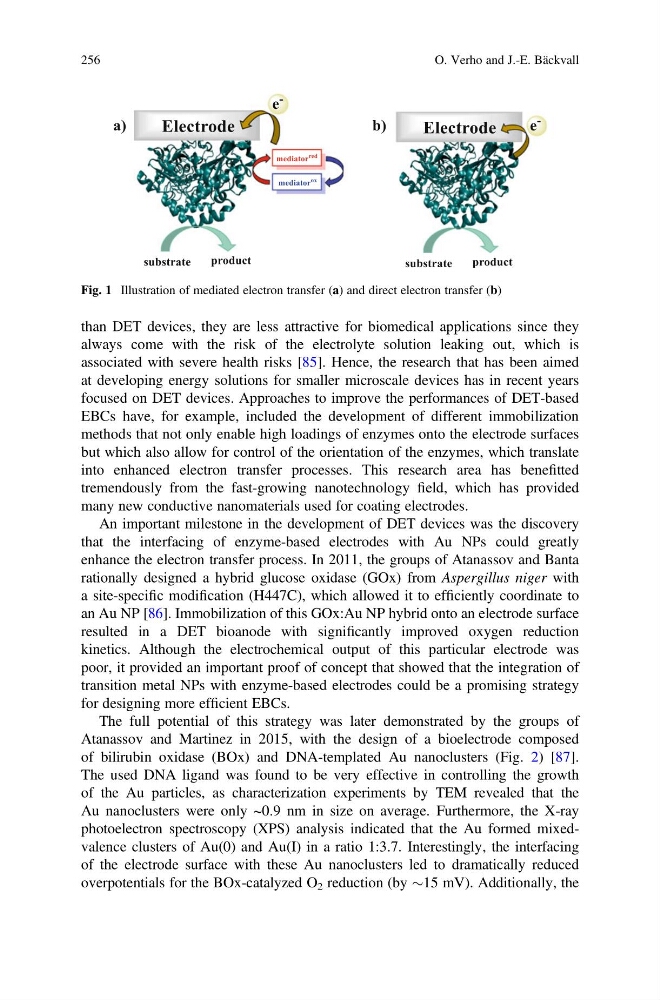
Fig. 1 Illustration of mediated electron transfer (a) and direct electron transfer (b)
256
O. Verho and J.-E. Bäckvall
always come with the risk of the electrolyte solution leaking out, which is
associated with severe health risks [85]. Hence, the research that has been aimed
at developing energy solutions for smaller microscale devices has in recent years
focused on DET devices. Approaches to improve the performances of DET-based
EBCs have, for example, included the development of different immobilization
methods that not only enable high loadings of enzymes onto the electrode surfaces
but which also allow for control of the orientation of the enzymes, which translate
into enhanced electron transfer processes. This research area has benefitted
tremendously from the fast-growing nanotechnology field, which has provided
many new conductive nanomaterials used for coating electrodes.
An important milestone in the development of DET devices was the discovery
that the interfacing of enzyme-based electrodes with Au NPs could greatly
enhance the electron transfer process. In 2011, the groups of Atanassov and Banta
rationally designed a hybrid glucose oxidase (GOx) from Aspergillus niger with
a site-specific modification (H447C), which allowed it to efficiently coordinate to
an Au NP [86]. Immobilization of this GOx:Au NP hybrid onto an electrode surface
resulted in a DET bioanode with significantly improved oxygen reduction
kinetics. Although the electrochemical output of this particular electrode was
poor, it provided an important proof of concept that showed that the integration of
transition metal NPs with enzyme-based electrodes could be a promising strategy
for designing more efficient EBCs.
The full potential of this strategy was later demonstrated by the groups of
Atanassov and Martinez in 2015, with the design of a bioelectrode composed
of bilirubin oxidase (BOx) and DNA-templated Au nanoclusters (Fig. 2) [87].
The used DNA ligand was found to be very effective in controlling the growth
of the Au particles, as characterization experiments by TEM revealed that the
Au nanoclusters were only ~0.9 nm in size on average. Furthermore, the X-ray
photoelectron spectroscopy (XPS) analysis indicated that the Au formed mixedvalence clusters of Au(0) and Au(I) in a ratio 1:3.7. Interestingly, the interfacing
of the electrode surface with these Au nanoclusters led to dramatically reduced
overpotentials for the BOx-catalyzed O 2 reduction (by $15 mV). Additionally, the
Fig. 1 Illustration of mediated electron transfer (a) and direct electron transfer (b)
256
O. Verho and J.-E. Bäckvall