

The size dependence was studied for Au/C (3.4 and 8.9 nm) [87] and
Au/polymers (2.6–20 nm) [88, 89], and all the results suggested that the smaller
Au NPs showed higher catalytic activity.
The TOFs for the oxidation of 1-phenylethanol under solvent- and base-free
conditions are summarized in Table 2. Not only Au on highly reducible MO x but
also Au on non-reducible MO x , non-oxides, and polymers can exhibit high catalytic
activity by adding second metals into the supports or rational design of the supports.
2.6 Non-supported Au
2.6.1 Nanoporous Au
Nanoporous Au (NPG) has a three-dimensional having sponge-like morphology
consisting of the interconnecting ligament with diameters in the range of 10–50 nm
and is prepared by dealloying of Ag from the AuAg alloys. Asao et al. demonstrated
that NPG catalyzed the base-free oxidation of alcohols in both batch and flow
systems [65]. Ding et al. also reported that NPG catalyzed the glucose oxidation to
gluconic acid, although the catalytic activity was inferior to other supported Au NPs
[90]. They concluded that the corner and edge atoms of NPG might be the active
sites for glucose oxidation, but it should be noted that the residual Ag remained in
NPG, and the residual Ag were concentrated to the outer surface of NPG [91], and
the Ag 2 O on NPG surface should be taken into consideration. Wittstock et al.
investigated the effect of the residual Ag content on the oxidations of methanol
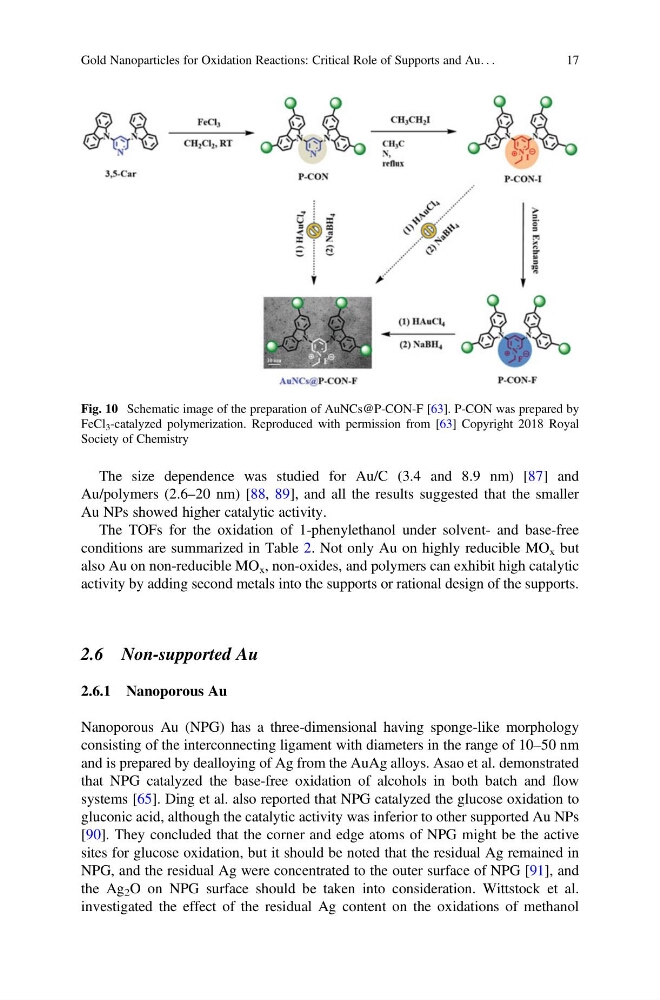
Fig. 10 Schematic image of the preparation of AuNCs@P-CON-F [63]. P-CON was prepared by
FeCl 3 -catalyzed polymerization. Reproduced with permission from [63] Copyright 2018 Royal
Society of Chemistry
Gold Nanoparticles for Oxidation Reactions: Critical Role of Supports and Au. . .
17
Au/polymers (2.6–20 nm) [88, 89], and all the results suggested that the smaller
Au NPs showed higher catalytic activity.
The TOFs for the oxidation of 1-phenylethanol under solvent- and base-free
conditions are summarized in Table 2. Not only Au on highly reducible MO x but
also Au on non-reducible MO x , non-oxides, and polymers can exhibit high catalytic
activity by adding second metals into the supports or rational design of the supports.
2.6 Non-supported Au
2.6.1 Nanoporous Au
Nanoporous Au (NPG) has a three-dimensional having sponge-like morphology
consisting of the interconnecting ligament with diameters in the range of 10–50 nm
and is prepared by dealloying of Ag from the AuAg alloys. Asao et al. demonstrated
that NPG catalyzed the base-free oxidation of alcohols in both batch and flow
systems [65]. Ding et al. also reported that NPG catalyzed the glucose oxidation to
gluconic acid, although the catalytic activity was inferior to other supported Au NPs
[90]. They concluded that the corner and edge atoms of NPG might be the active
sites for glucose oxidation, but it should be noted that the residual Ag remained in
NPG, and the residual Ag were concentrated to the outer surface of NPG [91], and
the Ag 2 O on NPG surface should be taken into consideration. Wittstock et al.
investigated the effect of the residual Ag content on the oxidations of methanol
Fig. 10 Schematic image of the preparation of AuNCs@P-CON-F [63]. P-CON was prepared by
FeCl 3 -catalyzed polymerization. Reproduced with permission from [63] Copyright 2018 Royal
Society of Chemistry
Gold Nanoparticles for Oxidation Reactions: Critical Role of Supports and Au. . .
17