

significant evidence that such polar solvents can have influence on stabilisation and
propagation of nanoparticles in cross-coupling processes. Obora et al. have
synthesised and characterised highly catalytically active DMF-stabilised PdNPs
and Cu/PdNPs; these catalysts can be produced in a facile manner by simply
refluxing PdCl 2 in DMF [41]. Since palladaphilic solvents, such as DMF, along
with high-temperature conditions are commonly employed in C–H bond activation
process, a role for DMF-stabilised PdNPs for catalytically active leached species or
as directly acting heterogeneous surfaces should not be dismissed. PdNPs in DMF
have additionally been observed in direct arylations of benzothiazole [51]. Choi et al.
have developed a HPLC-MS-based method to analyse DMF-PdNPs, which may be
too small (and thus perhaps highly active) to be visualised by TEM imaging
[52]. Building on results from Dupont et al. (vide supra), highly polar ionic liquids
have additionally been used to stabilise catalytically competent PdNPs of a narrow
size-distribution (around 2 nm), generated from both Pd 2 (dba) 3 and Pd(OAc) 2
[36, 53].
An important study by Hii et al. discovered a link between polar solvent and Pd
0
proliferation from Pd(OAc) 2 under ligand-free Suzuki–Miyaura cross-coupling conditions [54]. It was found that a water-mediated dissociation of Pd 3 (OAc) 6 occurred
prior to reduction to Pd
0 by arylboronic acid. Thus stoichiometry (relative to Pd) of
water present has a direct bearing on the amount of catalytically available Pd
0 . The
bulk solvent present additionally constitutes a factor, with the nuclearity of Pd
(OAc) 2 being correlated to the dipole moment of the tested solvent. These results
marry with structural studies subsequently carried out by Bedford et al. who found
that alcohols and H 2 O induce facile dissociation of the Pd 3 (OAc) 6 trimer [55]. A
direct effect of trace levels of H 2 O on trans-Pd(OAc) 2 (piperidyl) 2 active catalyst
speciation has also been so observed in Pd-catalysed arylcyanation reactions [56].
γ-Valerolactone (GVL), a lignocellulose-derived solvent, has been put forth as a
green alternative to toxic and less environmentally friendly polar aprotic solvents
such as DMF and NMP [57] (Fig. 6).
Computational analysis (DFT) has indicated that GVL had a similar co-ordination
affinity to Pd as DMAc and thus is likely to behave similarly in activation and
N
OH
O
HO
N
N
N
H
NH 2
Pd(OAc) 2 (5 mol%)
piperidine (0.4 mol%)
CuI, Cs 2 CO 3 , DMF
80
o
C, 15 h
N
OH
O
HO
N
N
N
NH 2
Pd DMF
DMF H
N
N
H
via
R
I
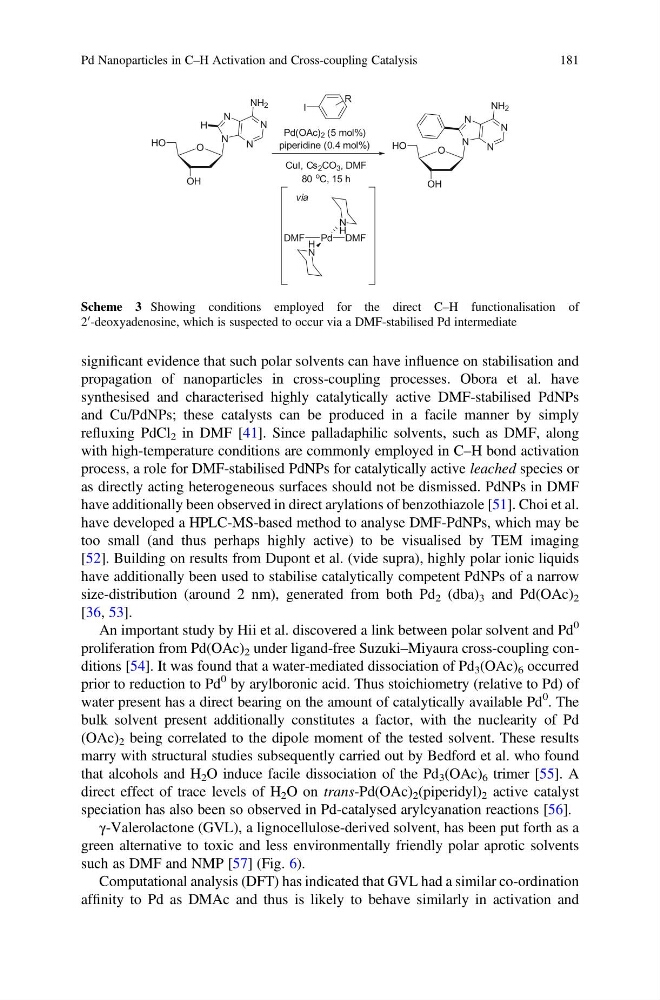
Scheme 3 Showing conditions employed for the direct C–H functionalisation of
2
0 -deoxyadenosine, which is suspected to occur via a DMF-stabilised Pd intermediate
Pd Nanoparticles in C–H Activation and Cross-coupling Catalysis
181
propagation of nanoparticles in cross-coupling processes. Obora et al. have
synthesised and characterised highly catalytically active DMF-stabilised PdNPs
and Cu/PdNPs; these catalysts can be produced in a facile manner by simply
refluxing PdCl 2 in DMF [41]. Since palladaphilic solvents, such as DMF, along
with high-temperature conditions are commonly employed in C–H bond activation
process, a role for DMF-stabilised PdNPs for catalytically active leached species or
as directly acting heterogeneous surfaces should not be dismissed. PdNPs in DMF
have additionally been observed in direct arylations of benzothiazole [51]. Choi et al.
have developed a HPLC-MS-based method to analyse DMF-PdNPs, which may be
too small (and thus perhaps highly active) to be visualised by TEM imaging
[52]. Building on results from Dupont et al. (vide supra), highly polar ionic liquids
have additionally been used to stabilise catalytically competent PdNPs of a narrow
size-distribution (around 2 nm), generated from both Pd 2 (dba) 3 and Pd(OAc) 2
[36, 53].
An important study by Hii et al. discovered a link between polar solvent and Pd
0
proliferation from Pd(OAc) 2 under ligand-free Suzuki–Miyaura cross-coupling conditions [54]. It was found that a water-mediated dissociation of Pd 3 (OAc) 6 occurred
prior to reduction to Pd
0 by arylboronic acid. Thus stoichiometry (relative to Pd) of
water present has a direct bearing on the amount of catalytically available Pd
0 . The
bulk solvent present additionally constitutes a factor, with the nuclearity of Pd
(OAc) 2 being correlated to the dipole moment of the tested solvent. These results
marry with structural studies subsequently carried out by Bedford et al. who found
that alcohols and H 2 O induce facile dissociation of the Pd 3 (OAc) 6 trimer [55]. A
direct effect of trace levels of H 2 O on trans-Pd(OAc) 2 (piperidyl) 2 active catalyst
speciation has also been so observed in Pd-catalysed arylcyanation reactions [56].
γ-Valerolactone (GVL), a lignocellulose-derived solvent, has been put forth as a
green alternative to toxic and less environmentally friendly polar aprotic solvents
such as DMF and NMP [57] (Fig. 6).
Computational analysis (DFT) has indicated that GVL had a similar co-ordination
affinity to Pd as DMAc and thus is likely to behave similarly in activation and
N
OH
O
HO
N
N
N
H
NH 2
Pd(OAc) 2 (5 mol%)
piperidine (0.4 mol%)
CuI, Cs 2 CO 3 , DMF
80
o
C, 15 h
N
OH
O
HO
N
N
N
NH 2
Pd DMF
DMF H
N
N
H
via
R
I
Scheme 3 Showing conditions employed for the direct C–H functionalisation of
2
0 -deoxyadenosine, which is suspected to occur via a DMF-stabilised Pd intermediate
Pd Nanoparticles in C–H Activation and Cross-coupling Catalysis
181