

Bimetallic NPs composed of noble and base metal alloys are expected to exhibit
interesting physical and chemical properties. Astruc et al. investigated the catalytic
performance of AgCu and AuCu alloys that were prepared by the partial displacement method in G1 click dendrimer with a TEG termini [138]. Exposure of the
AgCu alloy to air led only to Cu(0) oxidation to Cu(I), whereas Cu(0) was not
oxidized in AuCu alloyed NPs. The AgCu catalyst underwent an almost quantitative
reaction during the catalytic ACC reaction due to the efficient formation of Cu
(I) species under air (Fig. 39). The PtCo nanoalloys in a 1:1 ratio stabilized by the
same click dendrimer are much more efficient for hydrolysis of ammonia borane
than either the dendrimer-stabilized Co or Pt analogue alone [139]. The synergy
effect of the alloy is suggested to involve its intradendritic triazole ligands that
activate the NP surface.
Incorporation of Cu into Pt NPs in the bimetallic NPs caused a CO absorption
peak that was red-shifted by 10–15 cm
À1 from the original Pt 45 -CO peak at
2075 cm
À1 (Fig. 40) [140]. The peak shift is attributed to weak donation from Cu,
which is more electropositive than Pt. The bimetallic CuPt catalysts enhanced the
CO oxidation rate and decreased the activation energy due to the fluxional nature of
the CO ligand. A possible explanation is that surface Cu atoms provide new sites that
bind CO more weakly than monometallic Pt sites. In contrast, toluene hydrogenation
was suppressed by Cu addition, and the catalysis was effectively shut off at a 2:1
Cu/Pt ratio. TiO 2 -supported bimetallic AuNi NPs with sizes of approximately 2 nm,
which were prepared using PAMAM dendrimer templates, enhanced oxygen activation for CO oxidation [141]. Incorporation of Ni into Au resulted in stronger
adsorption of O and CO on the Au surfaces, as estimated by theoretical calculations.
At the same time, the introduction of Ni reduced the relative number of catalytically
active sites. Pt n @Cu core@shell NPs (average n of 55, 147, and 255) encapsulated
by PAMAMG6-OH were prepared via underpotential deposition of a Cu monolayer
on a Pt core, which was immobilized on glassy carbon [142]. A small amount of Cu
(only 2%) on Pt NPs accelerated the CO oxidation rate, compared to that for Cu-free
Pt NPs. The isolated Cu atoms on Pt surface possess OH groups and act as binding
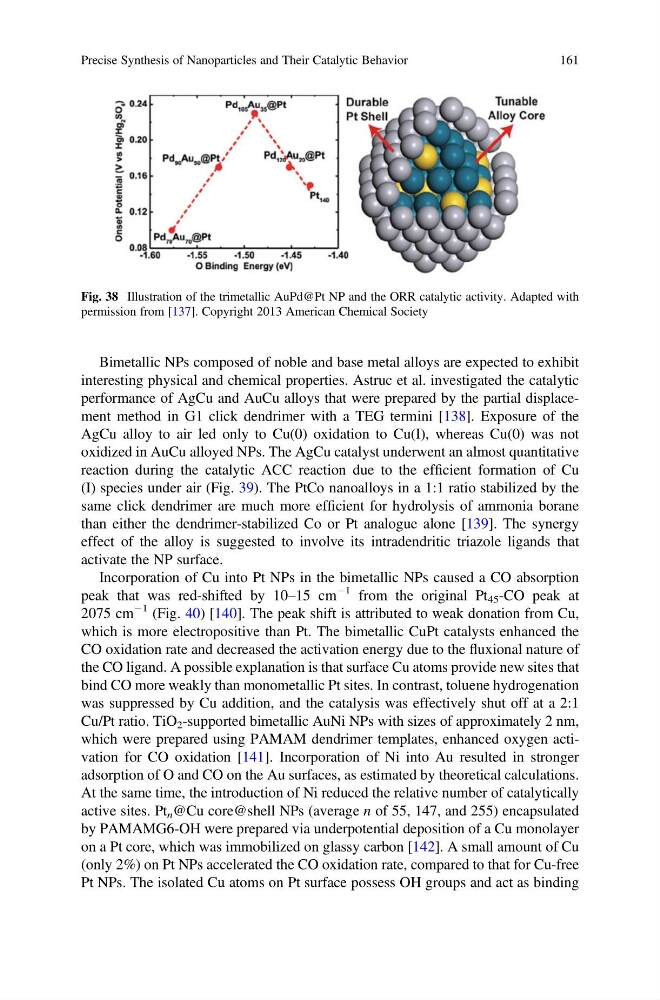
Fig. 38 Illustration of the trimetallic AuPd@Pt NP and the ORR catalytic activity. Adapted with
permission from [137]. Copyright 2013 American Chemical Society
Precise Synthesis of Nanoparticles and Their Catalytic Behavior
161
interesting physical and chemical properties. Astruc et al. investigated the catalytic
performance of AgCu and AuCu alloys that were prepared by the partial displacement method in G1 click dendrimer with a TEG termini [138]. Exposure of the
AgCu alloy to air led only to Cu(0) oxidation to Cu(I), whereas Cu(0) was not
oxidized in AuCu alloyed NPs. The AgCu catalyst underwent an almost quantitative
reaction during the catalytic ACC reaction due to the efficient formation of Cu
(I) species under air (Fig. 39). The PtCo nanoalloys in a 1:1 ratio stabilized by the
same click dendrimer are much more efficient for hydrolysis of ammonia borane
than either the dendrimer-stabilized Co or Pt analogue alone [139]. The synergy
effect of the alloy is suggested to involve its intradendritic triazole ligands that
activate the NP surface.
Incorporation of Cu into Pt NPs in the bimetallic NPs caused a CO absorption
peak that was red-shifted by 10–15 cm
À1 from the original Pt 45 -CO peak at
2075 cm
À1 (Fig. 40) [140]. The peak shift is attributed to weak donation from Cu,
which is more electropositive than Pt. The bimetallic CuPt catalysts enhanced the
CO oxidation rate and decreased the activation energy due to the fluxional nature of
the CO ligand. A possible explanation is that surface Cu atoms provide new sites that
bind CO more weakly than monometallic Pt sites. In contrast, toluene hydrogenation
was suppressed by Cu addition, and the catalysis was effectively shut off at a 2:1
Cu/Pt ratio. TiO 2 -supported bimetallic AuNi NPs with sizes of approximately 2 nm,
which were prepared using PAMAM dendrimer templates, enhanced oxygen activation for CO oxidation [141]. Incorporation of Ni into Au resulted in stronger
adsorption of O and CO on the Au surfaces, as estimated by theoretical calculations.
At the same time, the introduction of Ni reduced the relative number of catalytically
active sites. Pt n @Cu core@shell NPs (average n of 55, 147, and 255) encapsulated
by PAMAMG6-OH were prepared via underpotential deposition of a Cu monolayer
on a Pt core, which was immobilized on glassy carbon [142]. A small amount of Cu
(only 2%) on Pt NPs accelerated the CO oxidation rate, compared to that for Cu-free
Pt NPs. The isolated Cu atoms on Pt surface possess OH groups and act as binding
Fig. 38 Illustration of the trimetallic AuPd@Pt NP and the ORR catalytic activity. Adapted with
permission from [137]. Copyright 2013 American Chemical Society
Precise Synthesis of Nanoparticles and Their Catalytic Behavior
161