

6 Dendritic Poly(phenylazomethnine) (DPA)
As described above, the dendrimers containing aliphatic chains possess the
polydentate coordination sites with the same basicity. Precise accumulation of the
metal halides is not possible even by specifying the loading ratio of the dendrimer
and metal salts, resulting in statically distribution of the particle size. When accommodation of a metal ion to the N or P atoms of the common dendrimers was random,
the number of metals accumulated in one dendrimer should be a Poisson distribution
[101]. For example, in the case of random accumulation of the common monomer,
the molar ratio of [metal ions]/[dendrimer] ¼ 5 coexists not only with 5 but also with
3, 4, 6, and 7, resulting in a slightly broader distribution (Fig. 24). To obtain more
narrow distribution of the accumulated numbers, the enthalpic driving force making
the accumulation of metal ions should be used to reduce the distribution. Electronic
gradient properties of the dendrimers can coordinate the metal ion to the suitable N
sites in a regular order. In this case, the metal ion starts a stepwise assembly from the
inner parts. The accumulated number of the metal leads to special numbers of
5, similar to the molar ratio at the calculated values (25/5 ¼ 5).
To achieve an atomically monodispersed assembly of metals with a dendrimer,
metal complexation to dendrimers should proceed in a stepwise, not random,
fashion, which was developed by Yamamoto and co-workers [102–106]. Each
imine nitrogen in the fourth-generation phenylazomethine dendrimer with paraphenylene unit (DPAG4-pPh) formed a stepwise complex with SnCl 2 via a Lewis
acid-base interaction (Fig. 25a) [107, 108]. Systematic analysis of this complexation
revealed that SnCl 2 binds to imines of each generation of the dendrimer with
different complexation constants. The fourth-generation dendrimer had four types
of azomethines with slightly different basicity. This gradient enabled the stepwise
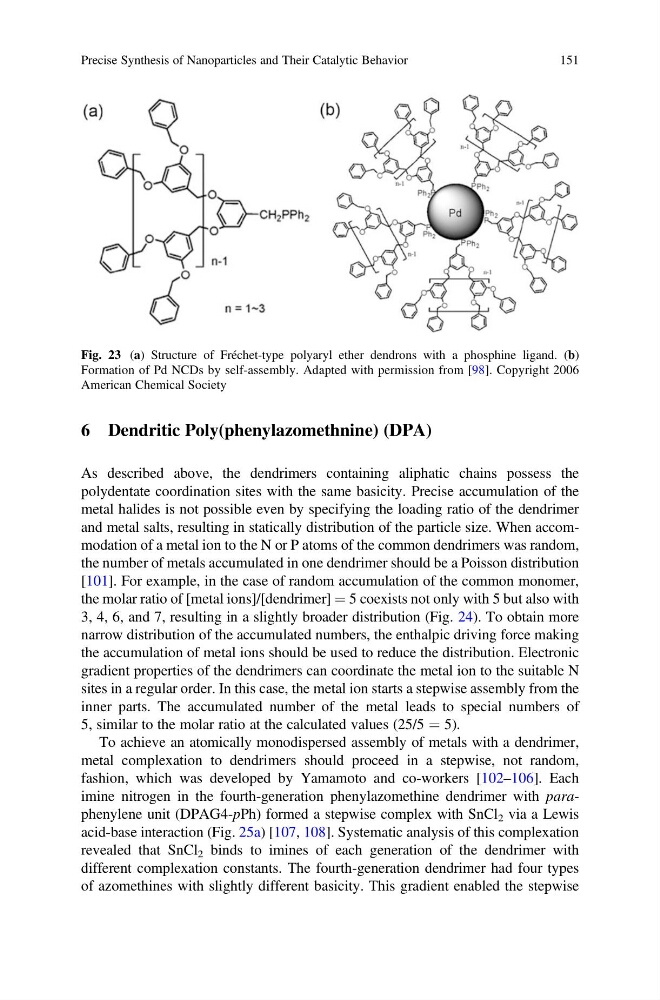
Fig. 23 (a) Structure of Fréchet-type polyaryl ether dendrons with a phosphine ligand. (b)
Formation of Pd NCDs by self-assembly. Adapted with permission from [98]. Copyright 2006
American Chemical Society
Precise Synthesis of Nanoparticles and Their Catalytic Behavior
151
As described above, the dendrimers containing aliphatic chains possess the
polydentate coordination sites with the same basicity. Precise accumulation of the
metal halides is not possible even by specifying the loading ratio of the dendrimer
and metal salts, resulting in statically distribution of the particle size. When accommodation of a metal ion to the N or P atoms of the common dendrimers was random,
the number of metals accumulated in one dendrimer should be a Poisson distribution
[101]. For example, in the case of random accumulation of the common monomer,
the molar ratio of [metal ions]/[dendrimer] ¼ 5 coexists not only with 5 but also with
3, 4, 6, and 7, resulting in a slightly broader distribution (Fig. 24). To obtain more
narrow distribution of the accumulated numbers, the enthalpic driving force making
the accumulation of metal ions should be used to reduce the distribution. Electronic
gradient properties of the dendrimers can coordinate the metal ion to the suitable N
sites in a regular order. In this case, the metal ion starts a stepwise assembly from the
inner parts. The accumulated number of the metal leads to special numbers of
5, similar to the molar ratio at the calculated values (25/5 ¼ 5).
To achieve an atomically monodispersed assembly of metals with a dendrimer,
metal complexation to dendrimers should proceed in a stepwise, not random,
fashion, which was developed by Yamamoto and co-workers [102–106]. Each
imine nitrogen in the fourth-generation phenylazomethine dendrimer with paraphenylene unit (DPAG4-pPh) formed a stepwise complex with SnCl 2 via a Lewis
acid-base interaction (Fig. 25a) [107, 108]. Systematic analysis of this complexation
revealed that SnCl 2 binds to imines of each generation of the dendrimer with
different complexation constants. The fourth-generation dendrimer had four types
of azomethines with slightly different basicity. This gradient enabled the stepwise
Fig. 23 (a) Structure of Fréchet-type polyaryl ether dendrons with a phosphine ligand. (b)
Formation of Pd NCDs by self-assembly. Adapted with permission from [98]. Copyright 2006
American Chemical Society
Precise Synthesis of Nanoparticles and Their Catalytic Behavior
151